



By Steve Gorski
Parking has long been a major challenge in urban mobility, causing drivers to waste time searching for spaces and contributing to congestion, pollution, and frustration. For operators, this inefficiency results in underused assets, lost revenue, and dissatisfied customers.
In recent years, artificial intelligence (AI) has emerged as a powerful solution, especially in predictive wayfinding. By forecasting parking availability and guiding drivers directly to open spots, AI-driven systems are revolutionizing the parking experience.
What is predictive wayfinding?
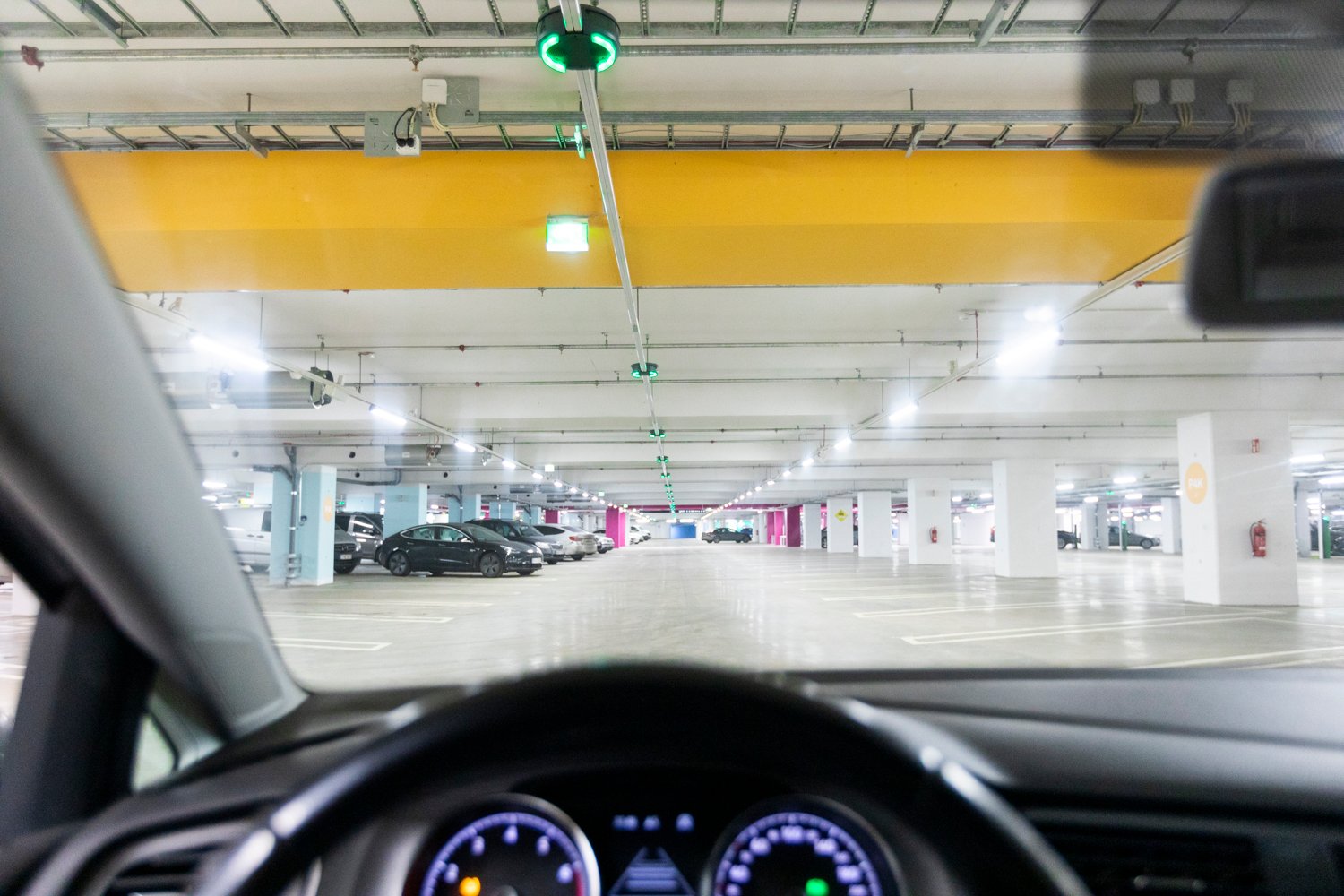
Traditional parking guidance systems help drivers locate available spaces using sensors, cameras, or gate counters to monitor real-time occupancy. While highly effective, these systems monitor current conditions.
AI-powered predictive wayfinding enhances this by forecasting when and where spaces will become available, often several minutes in advance. It analyzes historical data, external factors such as time of day or local events, and real-time inputs from sensors and connected vehicles. This enables guidance systems to not only show drivers where spots are now but also predict where they will be upon arrival.
The technology behind predictive wayfinding
Predictive wayfinding combines several technologies:
• AI and machine learning: Models analyze parking demand, seasonality, and dwell times, learning patterns such as an office building garage emptying at 5:30 p.m. or a stadium filling up before events.
• Computer vision: AI-equipped cameras detect occupancy more accurately than traditional sensors and provide detailed data on vehicle turnover.
• Cloud computing and the Internet of Things (IoT): Sensors, cameras, and apps feed real-time data into cloud systems for large-scale processing. The IoT ensures continuous data flow.
• Connected vehicles and apps: Integration with navigation systems, vehicle dashboards, and apps delivers predictive insights directly to drivers.
Benefits for drivers and operators
Predictive wayfinding offers advantages, including:
• Reduced search time: Direct routing to available spaces shortens search times and reduces stress.
• Lower emissions: Less circling means lower emissions, supporting sustainability efforts.
• Improved asset utilization: Operators can manage lots more efficiently, filling them closer to capacity without creating bottlenecks.
• Revenue optimization: AI enables dynamic pricing and promotion strategies based on demand.
• Data-driven planning: Analytics provide insight into usage patterns, aiding staffing, maintenance, and investment planning.
Use cases and adoption trends
Predictive wayfinding is being used in:
• Airports, to balance short- and long-term parking, improving flow and traveler satisfaction
• Downtown garages, to help cities combat congestion and encourage space turnover
• Event venues, to manage surges in demand at stadiums and arenas before and after events
• Universities and hospitals, to balance needs among diverse users like students, staff, and patients with predictive models
Challenges and considerations
Current challenges include:
• Data quality: Incomplete or inaccurate data can undermine AI predictions.
• Integration costs: Upgrading facilities with modern tech can be expensive.
• User adoption: Even advanced systems require drivers to use the technology, making education important.
• Privacy concerns: Tracking vehicle movements requires transparency and commitment to data protection.
Looking ahead
As cities and mobility networks become smarter and more connected, predictive wayfinding will continue to evolve. Integrations with autonomous vehicles, electric vehicle charging, and multi-modal travel will make parking a seamless step in journeys.
Soon, AI-powered predictive wayfinding will become a standard feature of modern parking, promising greater convenience for drivers and transforming parking assets into smart, sustainable, and profitable components of urban mobility.
Steve Gorski is vice president of Portier USA. He can be reached at [email protected].