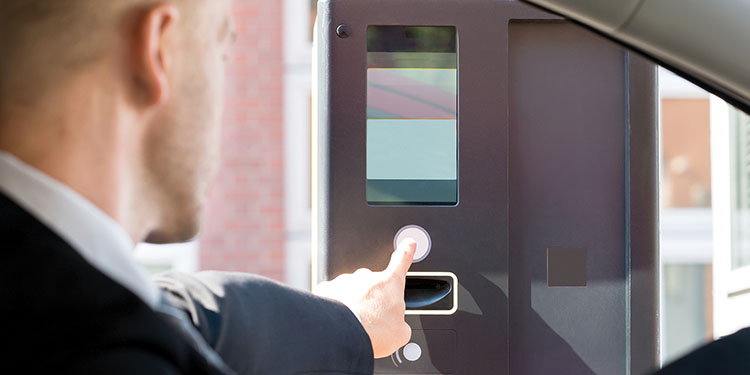
As World Environment Day approaches, ZipBy is proud to highlight the growing role digital parking technology plays in creating more sustainable, efficient and connected communities across North America.
While parking is not often associated with environmental sustainability, the modernization of parking infrastructure is quietly helping reduce waste, emissions, resource consumption and congestion every day.
Across North America, digital parking platforms now facilitate hundreds of millions of parking transactions annually. These technologies have transformed the parking experience by replacing traditional paper-based systems with mobile payments, digital permits, reservations, ticketless access, Scan-to-Pay, Text-to-Pay, and License Plate Recognition (LPR) solutions.
The environmental impact of this transition extends far beyond convenience.
Based on industry data and environmental impact modeling, digital parking adoption across North America may help avoid:
• More than 300 million printed parking tickets and receipts annually
• More than 3,000 mature trees worth of paper production
• More than 125 metric tons of thermal paper waste
• More than 5 million hours of unnecessary vehicle idling
• More than 25,000 metric tons of carbon dioxide emissions
Traditional parking systems often require drivers to stop for tickets, retrieve receipts, interact with payment kiosks, or wait in queues at entry and exit points. Across hundreds of millions of parking transactions each year, these seemingly small delays collectively contribute to fuel consumption, vehicle emissions, congestion, paper waste and operational inefficiencies.
Digital parking helps eliminate many of these inefficiencies by allowing drivers to pay, access facilities, manage permits and complete parking sessions directly from their smartphones or through automated technologies such as License Plate Recognition (LPR).
Gross Impact vs. Net Impact
Like any digital service, mobile parking is not entirely impact-free.
Every digital parking session requires a smartphone, wireless network, cloud infrastructure and payment processing systems, all of which consume energy.
However, the environmental footprint of these digital services is significantly smaller than the combined impact of paper production, thermal receipt printing, physical permit distribution, pay station operation, cash handling logistics and unnecessary vehicle idling.
In simple terms, the environmental footprint created by a digital parking transaction is substantially smaller than the environmental footprint it replaces.
The result is a measurable net-positive environmental outcome that benefits both drivers and communities.
Putting the Impact into Perspective
To better understand the scale of digital parking’s environmental benefits, consider the following:
🌳 Saving More Than 3,000 Trees
The estimated reduction in paper production is equivalent to preserving more than 3,000 mature trees annually. That’s enough to fill multiple urban parks and continue absorbing carbon for decades.
🚗 Removing More Than 5,400 Vehicles from the Road
Avoiding more than 25,000 metric tons of carbon emissions is comparable to taking over 5,400 passenger vehicles off the road for an entire year.
⛽ Eliminating More Than 570 Years of Vehicle Idling
The estimated 5 million hours of idling avoided equals more than 570 years of continuous engine operation, reducing unnecessary fuel consumption and air pollution.
🏠 Powering Thousands of Homes
The carbon emissions avoided are comparable to the annual electricity consumption of several thousand North American households.
🧾 Preventing Hundreds of Millions of Printed Tickets
More than 300 million parking tickets and receipts avoided annually represents a significant reduction in paper manufacturing, transportation, storage and landfill waste.
What makes these environmental benefits particularly meaningful is that they occur naturally through everyday parking experiences without requiring any change in driver behavior.
Every mobile payment, digital permit, reservation, or ticketless entry contributes to a more efficient and sustainable parking ecosystem.
“What excites us most is that sustainability can happen through everyday experiences,” said Shirley Rodriguez, CEO of ZipBy North America. “Digital parking demonstrates how technology can simultaneously improve convenience, efficiency and environmental outcomes. Small actions, repeated millions of times can create meaningful change.”
Elias Fadel, Marketing Director at ZipBy, added:
“Parking may not be the first thing people think about when discussing sustainability, but it is one of the most frequent interactions drivers have with urban infrastructure. The shift from paper tickets and manual processes to digital parking demonstrates how small technological improvements, when adopted at scale, can create measurable environmental benefits. Every digital parking session may seem insignificant on its own, but across hundreds of millions of transactions, the impact becomes substantial.”
As cities, universities, airports, municipalities and parking operators continue investing in smarter mobility infrastructure, digital parking technologies are becoming an increasingly important component of sustainable urban development.
This World Environment Day, ZipBy remains committed to helping build cleaner, more efficient communities through frictionless digital parking experiences across North America and beyond.
Small Actions. Big Impact.
About ZipBy
ZipBy is a smart parking platform delivering seamless digital parking experiences across North America and Australia. Through mobile payments, reservations, digital permits, validations, Scan-to-Pay, Text-to-Pay, License Plate Recognition and ticketless garage access, ZipBy helps simplify parking while supporting smarter mobility and more sustainable urban infrastructure.
For more information, visit ZipBy.app.