

As parking structures approach their 50-year lifespan, owners need specialist teams to assess deterioration and determine the best path among repair, retrofit, or replacement.
By Steven Jeter, Carl Schneeman, and Fernando Sanchez
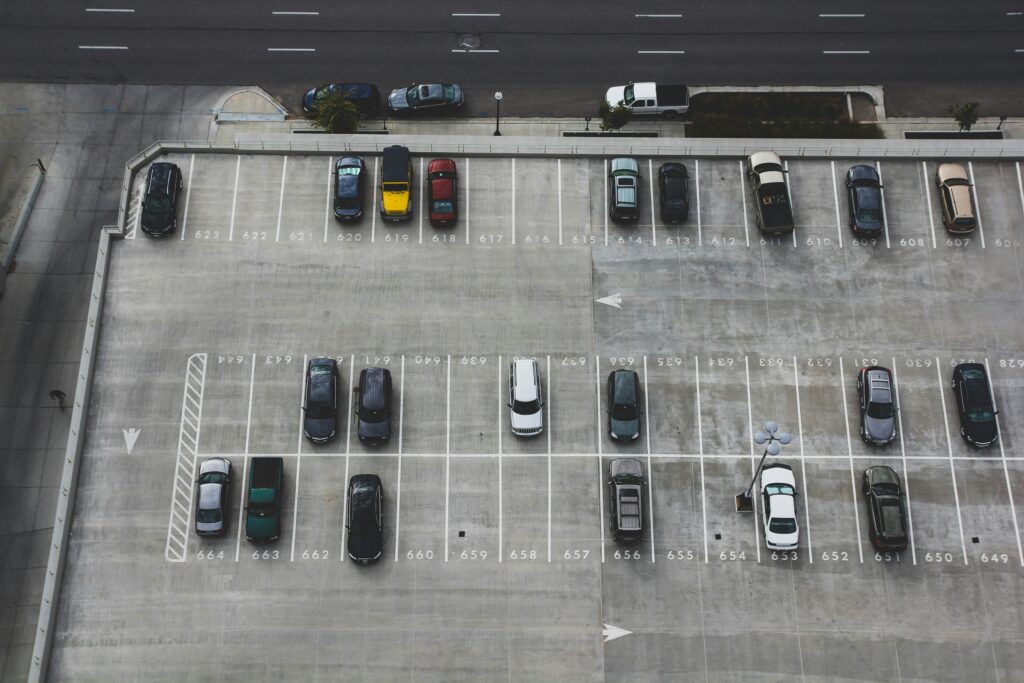
Across the U.S., parking facilities built in the 1970s and 1980s are now reaching a critical inflection point. For hospitals, universities, airports, and public agencies, these assets are essential to daily operations, even if they are often overlooked. Today, many of these structures are approaching or exceeding their intended 50-year lifespan, forcing owners to confront a fundamental question: repair, retrofit, or replace?
This is not a future problem. It is already surfacing with increasing frequency, particularly among institutional owners balancing limited budgets with aging infrastructure that can no longer be deferred. Most owners do not need to become parking experts themselves. Rather, they need the right combination of specialists to help them understand the condition of the structure, frame real options, and execute the chosen approach.
The reality behind 50 years
Parking structures, which are primarily constructed with cast-in-place concrete, precast concrete, and/or structural steel, are all designed with similar service-life expectations. However, a facility’s lifespan is heavily dependent on proper maintenance. In practice, many structures fall short due to years of deferred upkeep.
The primary driver of deterioration is exposure. Deicing salts are one of the most well-known culprits. They can lead to deterioration of concrete surfaces and corrosion of embedded steel reinforcement. However, deicing salts are far from the only factor. Water intrusion from wind-driven rain, failed waterproofing systems, poor drainage, and standing water can further accelerate deterioration. Other forces that contribute to long-term wear include freeze-thaw cycles, thermal movement, normal oxidation (corrosion) of exposed metals, atmospheric carbonation, and everyday traffic loading. Over time, these combined forces accelerate metal corrosion, concrete deterioration, and overall degradation, regardless of construction type.
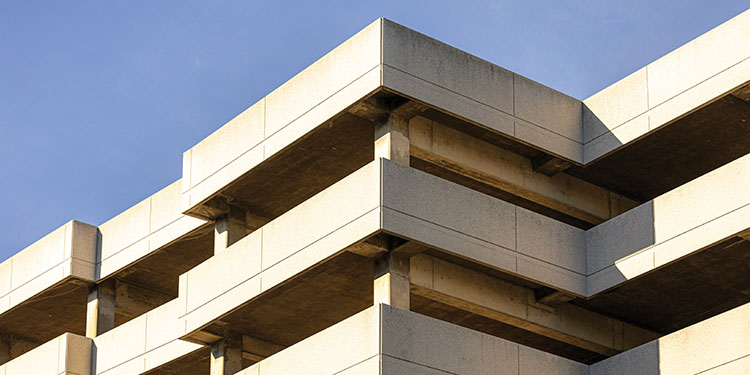
Construction types also influence how deterioration presents itself. Precast structures introduce a significant number of joints with structural connections, which are one of the most common locations of deterioration over time. Cast-in-place structures, which have fewer joints, tend to commonly exhibit corrosion of embedded reinforcement in areas where concrete cover is low and deterioration at areas of high stress, whether through normal loading or thermal movement. Meanwhile, steel-framed structures are susceptible to advanced forms of corrosion from direct exposure, if not properly protected and maintained, and from poorly managed drainage.
The owner decision tree
Reaching 50 years does not automatically necessitate replacement of the structure. However, it does require a more structured evaluation.
The first step is understanding the structural integrity of the asset: whether the system is still fundamentally sound or whether deterioration has reached a point that limits long-term viability. From there, code requirements become a critical consideration. Major repairs or upgrades can trigger thresholds that require bringing the entire structure up to current standards, significantly affecting project cost and scope.
Modernization is also an increasingly important factor. Many older facilities were not designed to support electric vehicle (EV) charging infrastructure, solar panel integration, or other electrification needs. Evaluating whether these upgrades are feasible within the existing structure is now part of the decision-making process.
Operational impact cannot be overlooked. For hospitals, campuses, and revenue-generating facilities, maintaining access during construction is essential. Phasing, temporary parking solutions, and potential revenue disruption all influence the path forward.
At this point, most owners benefit from assembling a small team of specialists rather than trying to solve the problem alone. In practice, that team often includes:
• A parking consultant and/or structural engineer experienced in parking structures to evaluate the structure, quantify risk, and frame scenarios for horizons of 10, 20, and 50 years
• A lifecycle maintenance and monitoring consultant and/or engineer to translate those scenarios into prioritized repairs, protection strategies, and inspection programs over time
• A builder that specializes in structured parking to define real costs, schedules, and phasing plans for each option, considering campus logistics and impacts
Together, this group helps owners answer the question, “What’s wrong with the facility?” At the same time, the team also address such questions as, “What are the viable choices, what are the associated costs, and how will they affect operations?”
Maintenance: a deciding factor
Across all scenarios, maintenance history is often the single biggest driver of available options. Parking structures experience constant environmental exposure and cyclical loading, meaning small issues can escalate quickly when left unaddressed. Taking care of predictive and small items consistently is what ultimately extends service life.
This approach starts with routine inspections and oversight conducted in accordance with the “Parking Facility Maintenance Manual.” Published by the National Parking Association, the manual is the industry-leading resource guiding on-site and management teams. Staff who regularly work in the facility should conduct weekly and monthly checks, with a more formal annual inspection layered in to assess broader conditions.
Basic housekeeping also plays a critical role: Cleaning decks, removing dirt and debris, and clearing deicing salt buildup help limit long-term damage. Drainage is another key factor that is often overlooked. Confirming water flows to drains, ensuring drains remain clear, and periodically flushing drainage systems help prevent water from sitting on decks and accelerating deterioration.
Seasonal conditions require additional attention. Harsh temperature swings and winter cycles make it important to clear surfaces of debris, dirt, standing water, snow, ice, and salt buildup and monitor how the structure is responding. Over time, consistent observation on a set cadence helps identify early warning signs before they become more significant issues.
Just as important is having the right expertise involved. Parking structures are nuanced, and having someone familiar with the original construction or with specialized knowledge of parking building systems can make a meaningful difference in how issues are identified and addressed. Engaging licensed engineers knowledgeable about parking structures is critical, not only to assess current conditions but to align recommendations with the owner’s intended outcome, whether that is extending service life, planning a phased repair, or preparing for replacement.
In other words, maintenance history is not just a technical footnote; it is the context that shapes which options remain on the table. A well-documented pattern of inspections and timely repairs often affords owners more flexibility to choose between repair, retrofit, and replacement. By contrast, long periods of deferred maintenance tend to limit those choices and necessitate major capital work. The role of the specialist team is to turn that maintenance story into a clear, prioritized roadmap, noting what must be addressed now, what can be phased, and when money is better spent on a new facility rather than upgrading an older one.
Repair, retrofit, or replace?
There is no universal answer to the question of whether to repair, retrofit, or replace an existing parking structure. In practice, owners usually must choose among three paths:
• Repair, when deterioration is localized, the underlying frame is sound, and targeted work can safely restore capacity and protect against further damage
• Retrofit, when the structure is fundamentally viable but needs seismic, code, or systems upgrades, such as EV, lighting, or access control, to remain reliable for continued use
• Replace, when deterioration is widespread, code triggers push the project toward a near-rebuild, or long-term campus plans clearly point toward a new facility with different capacity, circulation, or electrification needs
Some structures, particularly those with advanced deterioration of the main framing system, may be nearing the end of their viable life. Others can be extended through targeted repairs or selective upgrades, especially if the underlying system remains sound.
In some cases, retrofit opportunities such as EV charging integration or improved access systems can extend the usefulness of an existing facility. Retrofitting lighting systems can be one of the most cost-effective improvements to bolster safety. In others, particularly where long-term performance and reliability are critical, replacement may provide the strongest value.
The same specialist team plays a different role in each path. The parking consultant and/or structural engineer defines what is structurally realistic for repair or retrofit and where risk remains. The maintenance partner consultant and/or engineer builds a program to support the chosen option, so today’s investment actually improves the long-term trajectory of the asset. The structured-parking builder, in turn, converts those technical ideas into comparative budgets, schedules, and phasing plans that reflect real-world site constraints to keep operations online. That combination is what enables owners to choose a path with eyes open, rather than defaulting into the next short-term fix.
A practical path forward
For owners of older parking structures, timing is critical. Waiting too long limits flexibility, increases the magnitude of distress, and drives up costs, while early evaluation opens the door to more strategic campus-wide planning.
Understanding current conditions, defining long-term goals, and carefully weighing repair, retrofit, and replacement options with input from specialized partners enables owners to move from reactive fixes to proactive planning.
For owners planning their next growth cycle, the most practical step is to make structured parking part of the capital planning conversation early and bring the right specialists to the table. Start with a qualified parking consultant or structural engineer to establish a clear condition baseline. From there, engage a lifecycle maintenance partner to help prioritize the work, alongside a builder of structured parking to evaluate repair, retrofit, and replacement options against real cost, schedule, and logistics data.
With the right specialists at the table early, a 50-year facility stops being a looming liability and becomes a managed decision for operational success. The question of repair, retrofit, or replace is easily answered with a clear rationale behind whichever path is chosen.
STEVEN JETER is a principal engineer at StructureCare. He can be reached at [email protected].
CARL SCHNEEMAN is a managing principal at Walker Consultants. He can be reached at [email protected].
FERNANDO SANCHEZ is the integrated design director for parking buildings at McCarthy Building Companies, Inc. He can be reached at [email protected].