

How one young planner discovered that solving parking challenges can make a real difference in people’s lives.
By Beth Mercer
Me? A parking professional?
If you asked me 10 years ago what career I wanted to pursue, the answer would’ve been “a peacekeeper with the United Nations.” So, how did I end up in the parking industry?
My journey began with a pivot, from social work to planning, after realizing that changing the world wasn’t as easy as I had hoped. Although I loved my job, I wanted to affect people on a larger scale. That’s when I discovered a program called Sustainable Smart Cities in the School of Engineering at the University of Alabama at Birmingham.
Through that program, I stumbled upon the world of parking and transportation and realized just how significantly it shapes our daily lives and overall well-being.
People are always on the move, and our livelihood depends on how efficiently we can get from one place to another. In my role as an analyst at Walker Consultants, I’ve become captivated by the interconnectedness of parking, mobility, and livability. These days, I can’t go on a simple outing without critiquing how the parking could have been better planned!
Lessons from Walker
Since entering this industry just one year ago, I’ve become hyper-aware of how parking and mobility affect my daily life. You could say I am becoming a “parking nerd.”
Living in the Tampa Bay area in Florida, I rely heavily on my car and can’t imagine life without it, especially because the bus system here is inefficient. I often think back to my undergrad days, where I circled the parking lots for 30 minutes, banking on finding a spot as close to my class as possible. This stressful start to the day often resulted in arriving late for class. Still, I preferred driving, rather than relying on the bus or, God forbid, walking 10 minutes.
While obtaining my planning degree, I learned about the benefits of a well-planned city and its effects on the environment. Imagine how not sitting in traffic each day could improve our mental health! My newfound experience reinforces this idea, highlighting the burden of poorly planned parking. Today, I appreciate walking and love to smell the fresh air and be surrounded by nature. I wish I could shake my younger self and tell her what I know now.
Lesson one: the perception problem
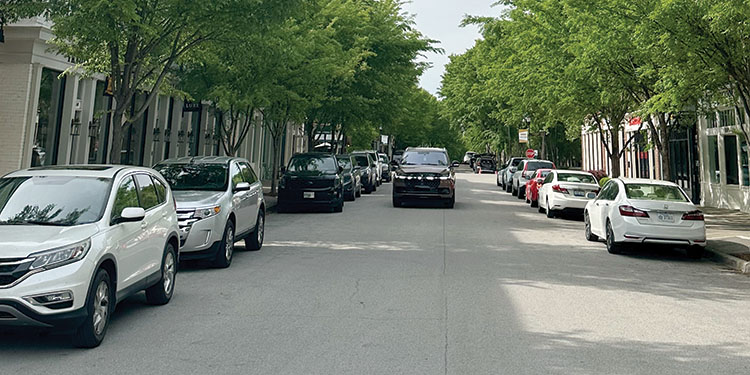
People tend to fixate on finding a parking spot directly in front of their destination. We get upset if there isn’t a spot and conclude, “This place has no parking!” We’re spoiled and do not believe a short walk to our destination is reasonable.
Our perception is skewed, a finding that I’ve increasingly encountered in the demand analyses that I’ve been conducting. I’m finding that most mid-sized, drivable cities have ample parking on side streets or down the block.
Lesson two: more than meets the eye
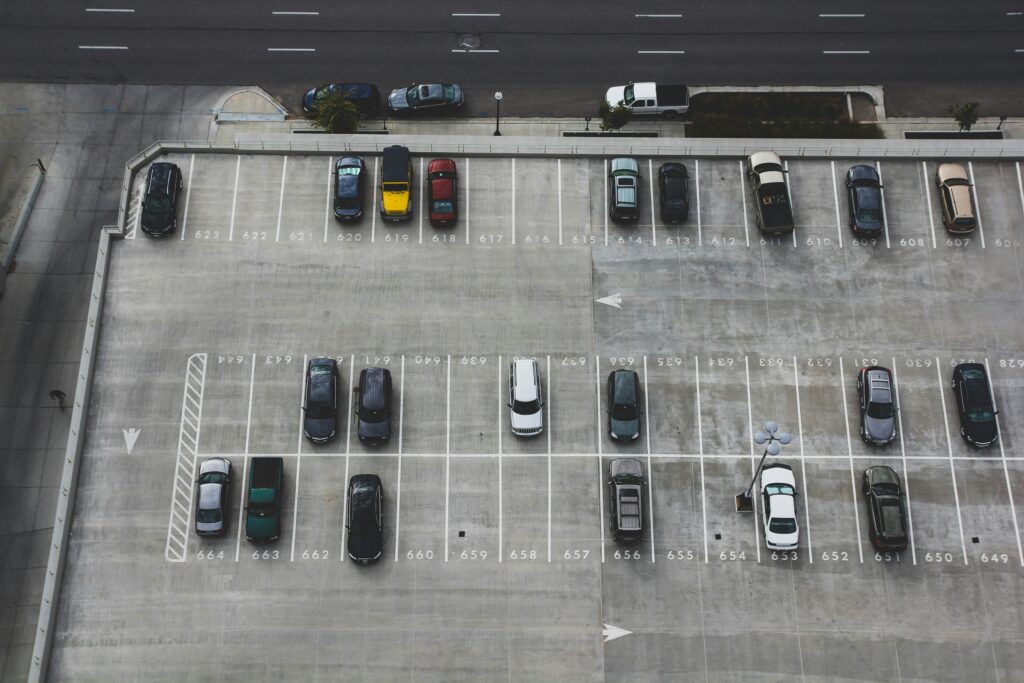
I had no idea how much science and strategy go into managing parking. Experts use complex formulas and data sets to assess demand, determine the right size for facilities, and apply best practices. There’s a lot more to this field than I initially thought.
Lesson three: planning versus reality
It’s difficult to practice what you preach in mobility planning when transportation systems aren’t designed to be as efficient as driving a car. My city’s downtown offers scooters, bikes, a free trolley, a bus, and ride-share. But do I use them? No, especially not when I’m late, lazy, or holding multiple bags. Driving feels more convenient; it’s what we’re used to.
Recently, I have been motivated to consider these alternatives, especially with the construction of three high-rise buildings near me. The new construction will cause more congestion downtown, making it more difficult for me to find a parking spot. Parking farther away and scootering to my destination may also add an extra layer of fun.
Lesson four: more parking isn’t always the answer
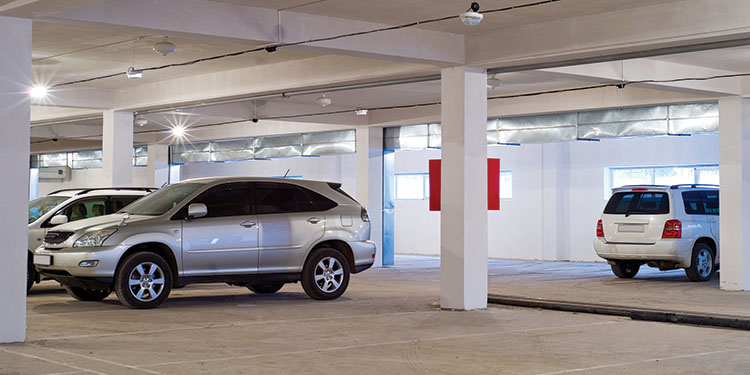
I always assumed that the answer to every (perceived) parking problem was to simply build a parking garage. I’ve since learned it’s not that simple. Building structured parking is surprisingly costly and may not always be the best answer.
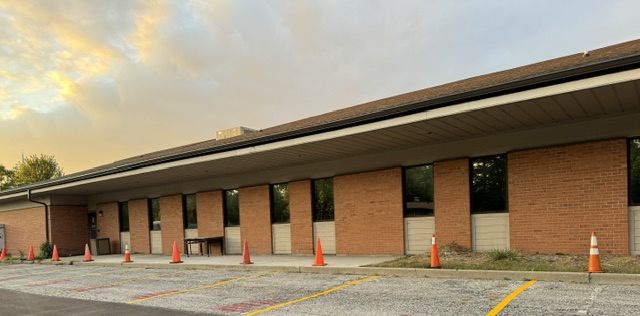
Instead, better utilization of underused spaces — combined with strategies like directional signage, price incentives, micromobility options, and physical cues such as cones or barriers — can influence behavior and improve access. Considering how much land parking consumes, we should be thoughtful about how we use it, especially with sustainability in mind. My assumptions have shifted thanks to what I’ve learned about these strategies.
Lesson five: high-tech doesn’t always mean better
On my first parking data collection assignment, I found it amusing that some consultants still manually count cars with a clicker, paper, and pen. It felt old-fashioned, and I thought there must be a better way to execute this task. However, as I began to collect data, I realized that I preferred to keep things “old school,” despite the iPad on my lap.
Parking analysis technology such as license plate recognition, parking meter data collection, and video cameras are great, but they’ve yet to surpass the human eye and its ability to observe human behavior and patterns.
Final thoughts
I’ve been pleasantly surprised to work at a firm focused on making communities more efficient, convenient, and happier. I’m even more surprised that the parking industry aligns with my past pursuits and current goals of improving the quality of life for the communities around me.
I may not be saving the world in the way I originally imagined, but through parking, I’m contributing to something that affects people every day. Between the evolving technology, insightful colleagues, and meaningful work, I’m beginning to understand just how far thoughtful planning can go.
BETH MERCER is an analyst for mobility, parking, and operations and a technology planner for Walker Consultants. She can be reached at [email protected].