



By Steve Gorski
Parking technology has come a long way. What started as coin slots and painted lines has evolved into sophisticated guidance networks, real-time occupancy data, and seamless digital payments. Now comes the next chapter. Artificial intelligence (AI) is being layered onto that proven infrastructure, giving operators and cities tools that not only show what’s happening but also anticipate what’s coming.
The gap AI is closing
Here’s a startling number: Up to 30% of urban traffic congestion is caused by drivers circling for parking. Not commuting, not running errands, just looking for a place to park. All that wasted fuel, all those added emissions, all that time. It’s one of the most solvable problems in urban mobility, yet for a long time it simply went unsolved.
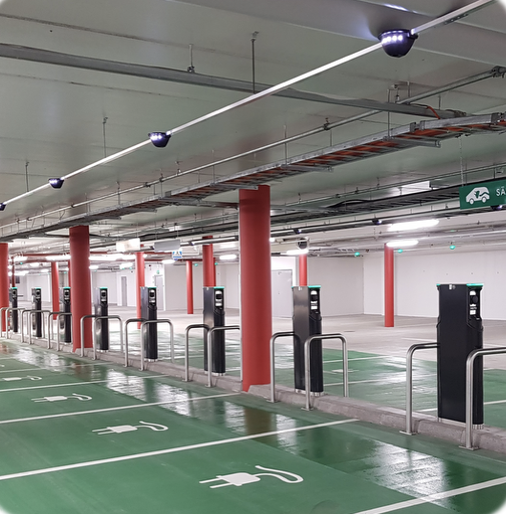
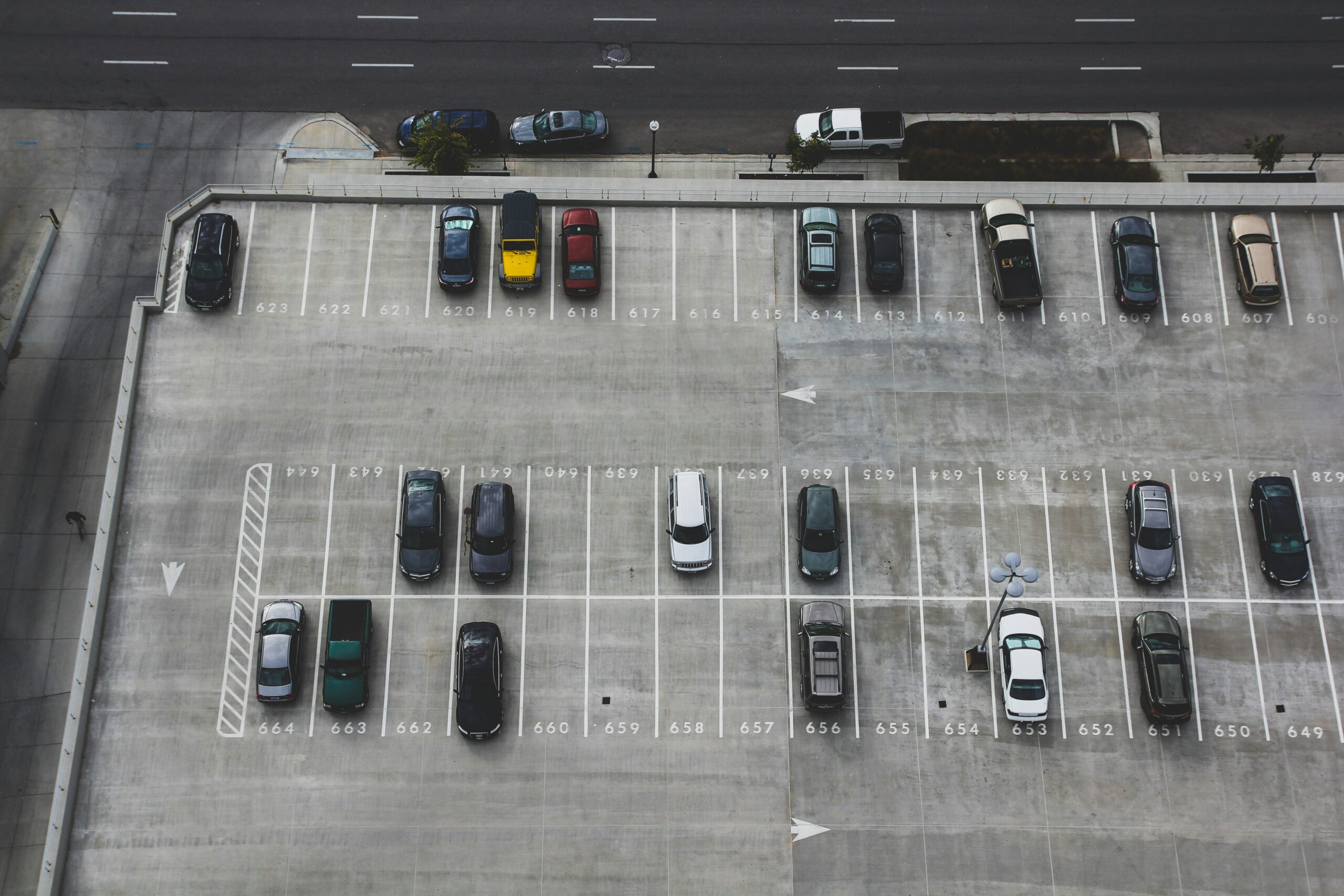
Parking guidance systems changed the game at the facility level. Sensors, cameras, space-level indicators, and real-time occupancy displays eliminated guesswork for drivers once they were already searching. Operators gained visibility into their assets that they simply didn’t have before. The question they answer is a good one: What’s available right now?
AI asks another question: What will be available when you arrive?
How predictive AI actually works
The mechanics aren’t magic, but they are impressive. Modern AI platforms ingest real-time sensor feeds, historical occupancy patterns, event calendars, weather data, and transit signals, and then run them through machine learning models trained on billions of parking events.
The output is a continuously updated forecast of space availability, at the block or structure level, up to 60 minutes out. It’s not a guess, but a probability-weighted prediction that grows sharper over time as the system learns from its own results.
For drivers, this appears as pre-trip routing, with an app telling you where to park before you’ve even left the house, not after you’ve already joined the queue. For operators, it means dynamic signage that updates ahead of demand shifts, not after they occur. And when a first-choice facility fills, the system generates alternatives automatically, avoiding dead ends.
The downstream effects are real: less congestion, lower emissions, and trips that go as drivers planned.
Beyond wayfinding: AI across the parking ecosystem
Predictive wayfinding gets most of the attention, but it’s far from the only place AI is showing up in parking operations.
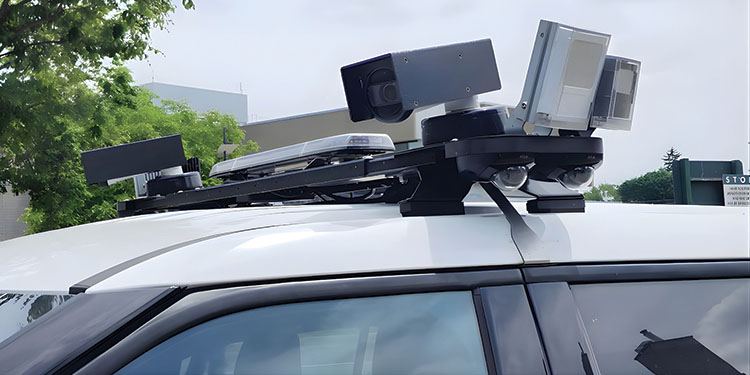
License plate recognition (LPR) is a good example. LPR has long been a reliable access-and-enforcement tool. But AI has substantially raised its ceiling. Systems trained on millions of plate images across all 50 states, Canadian provinces, and international formats can now push recognition accuracy from around 95% to 99.9% under normal conditions. In low light, accuracy jumps from roughly 50% to 95%. With partial obstructions, it jumps from 30% to 85%. That’s not a marginal improvement; it’s the difference between a functional system and a frictionless one. Add automated payment, seamless garage access, and integration with law enforcement watchlists, and you have something genuinely new.
Valet operations are another area where AI earns its keep quickly. Anyone who has managed a busy valet stand knows how contentious damage disputes can be. AI-assisted documentation, including timestamped photo capture at check-in, pixel-level comparison at check-out, and a side-by-side report generated in seconds, takes the argument out of the equation. Pre-existing damage is on the record. Wrong-car handoffs are caught. It protects operators and customers alike and resolves disputes on the spot rather than days later.
The smart city connection
Parking doesn’t operate in a silo, and neither does the pressure on cities to modernize it. Municipal leaders are viewing AI-powered parking through several lenses at once: congestion relief, emissions targets, federal funding opportunities, post-pandemic budget recovery, and the basic expectation that city services should work as well as residents’ smartphones. That’s a lot of reasons pointing in the same direction.
The proof is already in. San Francisco’s SFpark program applied demand-responsive pricing to more than 7,000 metered spaces and saw a 30% drop in vehicle miles spent searching for parking, a 25% reduction in greenhouse gas emissions, and $1.9 million in additional net revenue in year one. Los Angeles’s Express Park program achieved a 43% reduction in cruising and a 7% increase in meter revenue and, perhaps the most telling stat, parking violations dropped. When prices are set fairly based on real demand, more people pay. That’s not a theory anymore.
What comes next
During the next three to five years, a few shifts seem inevitable. Fragmented city parking systems will consolidate into unified platforms, making all inventory visible in one place. Dynamic pricing will move beyond pilot programs and become standard practice. Cities that hold out will notice the revenue gap. Curb management will become smarter, with loading zones, pick-up areas, and bike parking allocated by time of day rather than permanently painted into the asphalt. As electric vehicle adoption grows and autonomous vehicles move from concept to deployment, AI parking systems will serve as the data layer that those vehicles rely on to determine where to go, where to wait, and how to move.
None of this requires operators to start from scratch. The guidance systems, LPR infrastructure, and data platforms already in place provide the exact foundation AI needs to perform well. What’s changing is what that infrastructure can now do, shifting parking from a reactive service to a predictive one. For cities and operators willing to make that move, the upside is real: less congestion, stronger revenue, and a parking experience that finally works the way drivers expect.
Steve Gorski is vice president of Portier USA. He can be reached at [email protected].