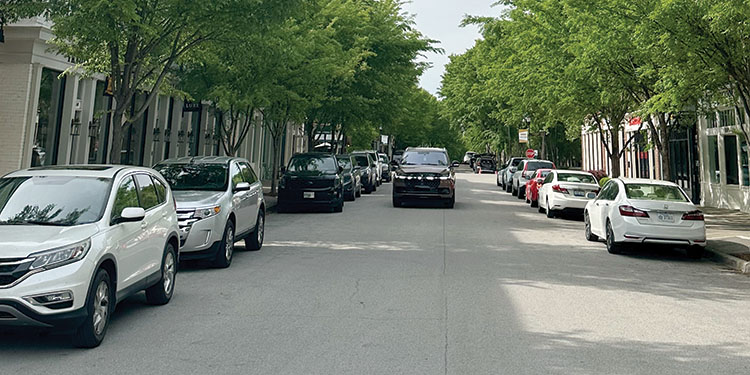


University parking directors can lead innovative public-private partnerships that transform campus parking systems into powerful funding engines.
By David Teed
Universities today face unprecedented financial pressures from declining enrollment, reduced state funding, and shifting federal policies in higher education. These challenges are forcing institutions to seek innovative funding solutions while maintaining their core academic mission.
One approach that has gained attention — and evolved significantly — is parking monetization through long-term concession agreements. The first major example, the 2012 deal involving The Ohio State University (OSU), blazed the trail but also revealed important lessons that have shaped how these transactions work today.
The first major campus parking monetization
In 2012, OSU entered into a groundbreaking 50-year lease and concession agreement for its parking system, receiving a lump sum payment of $483 million at financial close. The proceeds were invested in the university’s endowment fund, with investment earnings used for hiring tenure-track faculty and funding scholarships and programs and select campus developments.
The OSU parking concession was funded with private capital from an infrastructure fund, with investment returns derived from surplus cash flows from parking operations after payment of operating and capital costs. Although the transaction achieved its financial objectives, this profit-driven structure created ongoing tension between university constituents and the concession owners. Aware they were paying a private company to park on campus, parkers sometimes lost sight of the original benefits and risk transfers that flowed to the university.
How the model has evolved
Since the OSU transaction, parking monetization has evolved in three significant ways that address the limitations of the original approach:
• Expanded scope beyond parking
• Shorter terms reflecting technological change
• Nonprofit structure eliminates profit tensions
Alternative transportation modes have grown substantially since 2012. Modern concessions now encompass all modes of campus access, making them more accurately described as access and mobility concessions rather than simple parking deals. This broader scope enables more comprehensive transportation planning and management.
The accelerating pace of technological change has made 50-year terms less appropriate. Current deals typically use 35-year terms that better accommodate financing considerations while allowing for more frequent technology updates and operational adjustments.
Most importantly, the concession structure itself has evolved to address the political and operational tensions experienced at OSU. The newer model uses a nonprofit concessionaire, whose interests align closely with university objectives, utilizing investment-grade tax-exempt bonds rather than private equity. This structure provides a much lower cost of capital than equity-based models.
The non-profit concessionaire performs its concession obligations through an asset manager under a long-term asset management agreement, and the asset manager in turn oversees the day-to-day operations of the parking system by a parking operator. Operating costs of the asset manager and operator include management fees that, along with capital lifecycle costs, are funded out of operating cash flow with the surplus cash flow available for distribution.
Rather than paying returns to private investors, this approach directs 100% of surplus cash flow back to the university. Universities receive both the upfront lump sum payment and continuing annual distributions over the life of the agreement, while avoiding the “privatization” concerns that can arise with for-profit structures.
Recent examples demonstrate the improved model
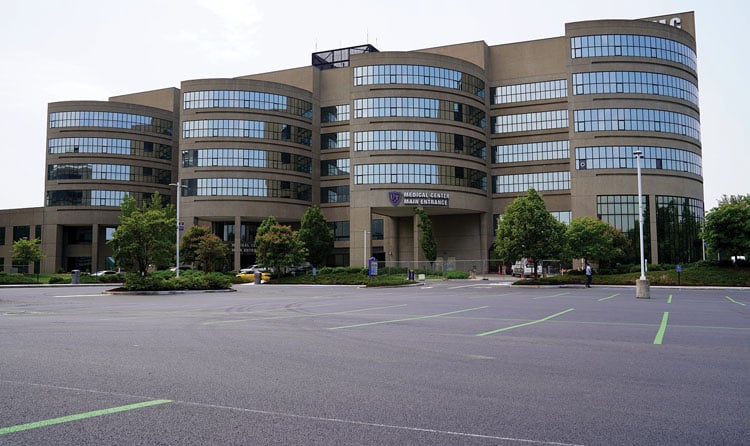
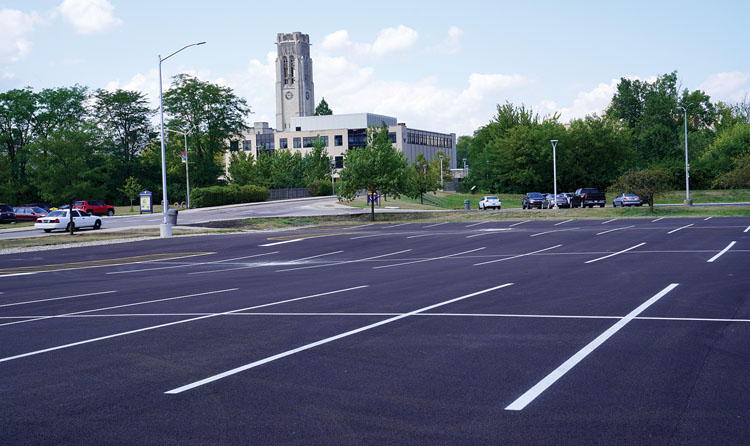
The University of Toledo’s 2021 transaction illustrates the evolved approach. Through a 35-year lease, Toledo received $52.5 million at closing, plus $10 million for deferred maintenance and an estimated $45 million in lifecycle capital costs. The university expects an additional $140 million in surplus distributions over the concession term. At the time of this transaction the University of Toledo’s parking system comprised 11,000 spaces in 68 lots servicing approximately 15,000 students, 6,000 full-time equivalent (FTE) employees, and 25,000 outpatient visits at the University Medical center.
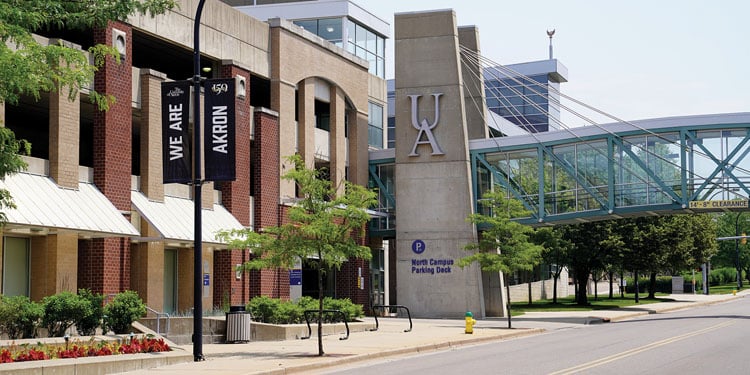
Similarly, the University of Akron monetized its parking system in 2023, receiving $55 million at closing, $11 million for deferred maintenance, and an estimated $61.7 million in lifecycle capital costs. Akron projects a further $75 million in surplus distributions over the concession term and used the upfront proceeds for balance sheet repair to protect its credit rating. The University’s parking system included 11,000 spaces across 8 garages and 33 lots servicing approximately 12,000 students and 1,200 FTEs.
In each case, the amounts set aside for deferred maintenance are invested by the concessionaire in upgrading facilities during the first few years of the concessions to bring them to a standard where they can be more efficiently maintained during the 35-year term of the concessions.
Key advantages of the current model
The nonprofit concession structure offers several distinct benefits:
• Comprehensive mobility management rather than a parking-only focus, enabling integrated transportation planning
• Tax-exempt bond financing that reduces capital costs and eliminates equity investor returns
• Complete cash flow participation for the university, rather than sharing returns with private investors
• Elimination of privatization concerns through the nonprofit structure
• Retained ownership and control over system access, land use, eligibility, and rate decisions
Universities maintain all ownership rights while transferring operating and maintenance risk. The nonprofit concessionaire commits to agreed operating standards and key performance indicators, with lease cancellation rights ensuring universities can enforce performance standards.
Parking expertise required
Although the financial and structural evolution of these deals is significant, successful implementation still requires deep operational expertise. University parking directors play a crucial role in establishing the operating standards by which concessionaires are evaluated and held accountable.
Their intimate knowledge of campus operations, stakeholder relationships, and local conditions proves invaluable during both the negotiation phase and ongoing operations. Parking directors who have been involved in these transactions have found opportunities to continue their leadership roles within the new structure, often with expanded responsibilities for comprehensive mobility management and enhanced resources for system improvements.
The nonprofit model removes the political risk of perceived “privatization” while enabling universities to monetize non-core assets without losing ownership or control rights. For institutions facing financial pressures, this evolved approach offers a way to generate substantial upfront capital and ongoing revenue streams while maintaining their commitment to serving campus communities effectively.
This transformation from the original for-profit model demonstrates how innovative financing can adapt to address real-world implementation challenges, creating structures that better serve both universities and their constituents.
David Teed is the managing partner of Diogenes Capital, which serves as the asset manager for the parking concessions at the University of Toledo and the University of Akron. He can be reached at [email protected].