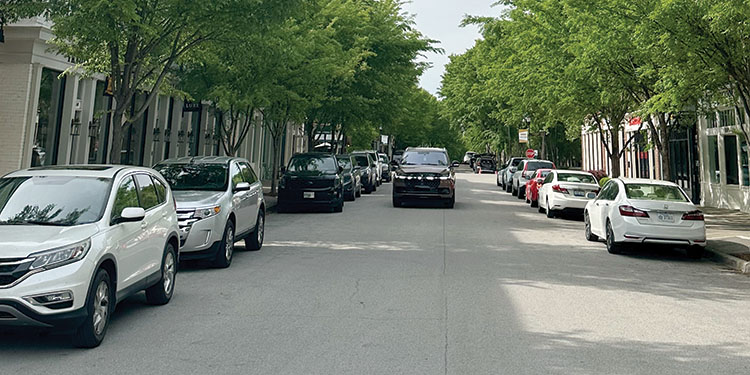


Cities can solve parking challenges by implementing guidance technology that connects drivers to existing spaces rather than building costly new infrastructure.
By Colin Knell
Despite what many municipal planners — and drivers — believe, the United States is not suffering from a parking shortage. In fact, the country is awash in parking. The country has an estimated 2 billion parking spaces, or about 7 for every car, according to a March 28, 2023, New York Times article by Jane Margolies. That’s enough asphalt to pave over entire cities.
Yet according to a 2017 INRIX parking study, 63% of drivers say they avoid destinations — shopping districts, events, even social outings — because finding parking feels too difficult or frustrating.
This paradox highlights a central truth in today’s urban mobility landscape: The problem isn’t the amount of parking; it’s our inability to find and manage it efficiently. In many cases, the solution lies not in building more spaces, but in implementing parking guidance technology that connects drivers with the spaces that already exist.
Perceived scarcity versus reality
The disconnect between parking availability and public perception of scarcity has real-world consequences. When drivers circle for spots, make last-minute decisions to leave an area, or avoid destinations entirely, local businesses lose customers and traffic congestion increases. Parking-related stress drives frustration and erodes public trust in city planning.
Research shows that this perception gap has an equity dimension as well. Urban and lower-income communities — often with denser populations and higher transit reliance — report greater dissatisfaction with parking. Ironically, these are also the neighborhoods where every inch of public space is most valuable.
The legacy of parking minimums
Historically, cities have addressed perceived parking shortages through parking minimums — zoning requirements that dictate the number of off-street parking spaces developers must include when developing new buildings or complexes. For example, a retail development might be required to build three spaces per 1,000 square feet, or an apartment complex might need one or two spaces per unit.
Parking minimums became widespread in the mid-20th century, as American cities reshaped themselves around the automobile. On the surface, these regulations seemed logical: More development meant more cars, and more cars required more parking. But over time, the unintended consequences have become impossible to ignore.
Excess development costs and housing affordability
The cost of parking minimums to developers can be monumental. Parking minimums can make entire projects financially unfeasible, especially affordable housing or mixed-use developments, because they limit density, increase construction timelines, and often necessitate land acquisition or expensive excavation.
Structured parking costs anywhere from $20,000 to $75,000 per space, according to sources including the WGI Parking Structure Cost Outlook, RSMeans Data from the facility and construction cost data provider Gordian, and the National Parking Association. Developers pass these costs on to tenants and buyers, even those who don’t drive. In areas with good transit or bike infrastructure, these mandated spaces may sit largely empty while driving up rents and purchase prices. Parking minimums have made it harder to build affordable, transit-oriented, or car-free housing.
Environmental and social effects
Lengthy searches to find available parking lead to more driving, contributing to greenhouse gas emissions, air pollution, and traffic congestion. Vast paved surfaces increase stormwater runoff and contribute to the urban heat island effect, making cities hotter and more vulnerable to climate extremes.
Not everyone drives, but everyone pays. Low-income residents, seniors, students, and city dwellers often walk, bike, or use public transportation, yet housing and services include built-in costs for parking. Parking minimums effectively subsidize car ownership at the expense of other mobility choices.
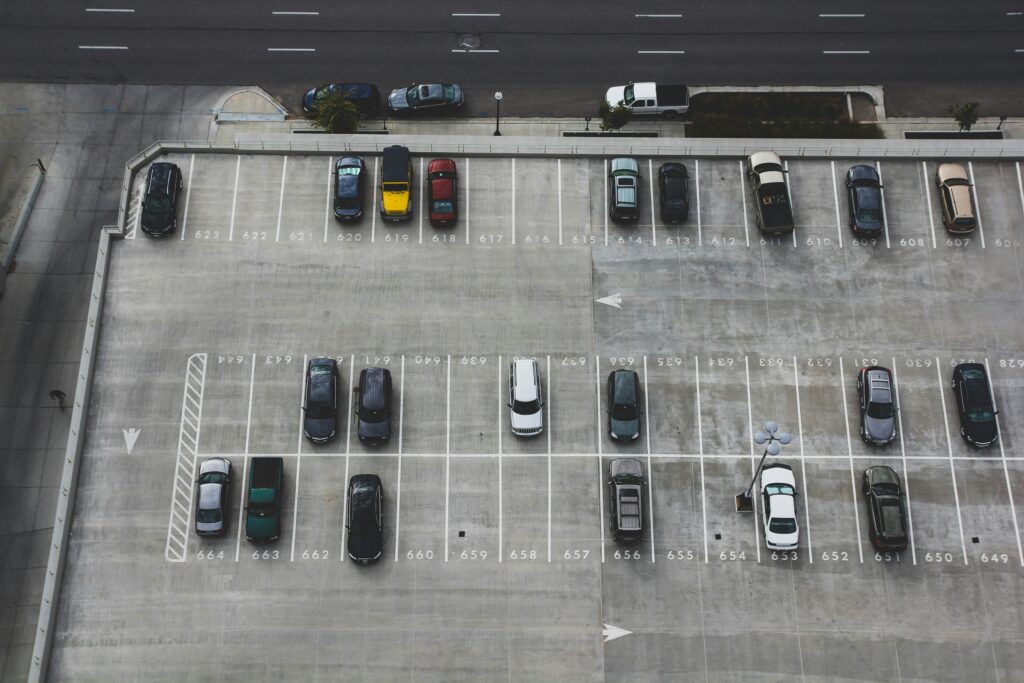
Even in high-demand areas, many lots remain half-empty, especially during off-peak hours. Overbuilding parking leads to poor land utilization and wasted resources. These “ghost spaces” don’t support housing, commerce, or community: They just sit there, often unmonitored and hidden from public use.
Cities embrace parking reform
Recognizing these issues, a growing number of cities are now repealing parking minimums and rethinking how to better use existing space. For example, Buffalo, San Francisco, and Minneapolis have eliminated parking minimums citywide. In 2022, California passed legislation prohibiting parking minimums near public transit for many developments.
This shift signals a broader understanding: The solution to parking challenges isn’t building more — it’s managing better.
Technology-based solutions for existing parking
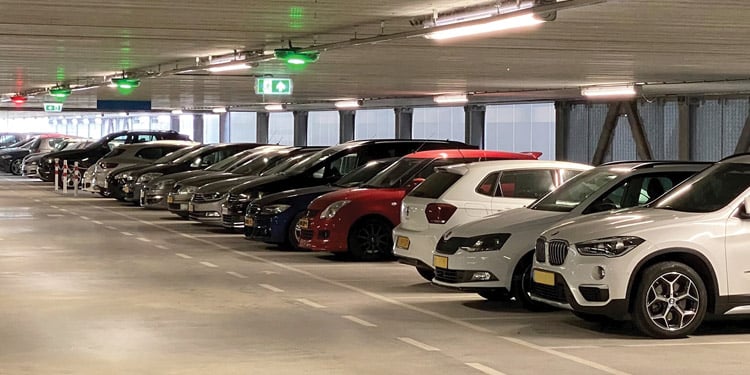
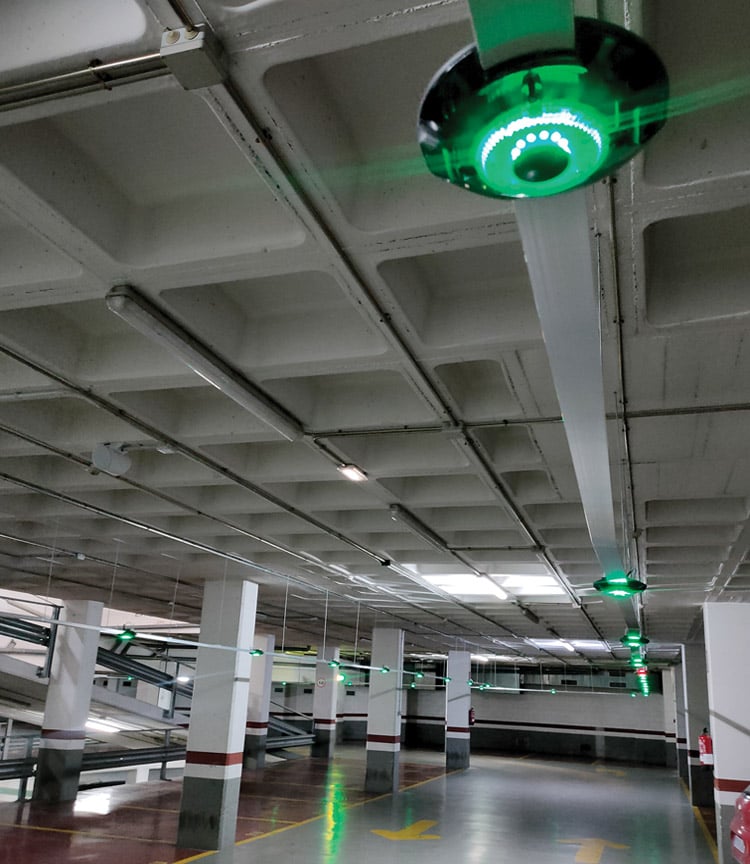
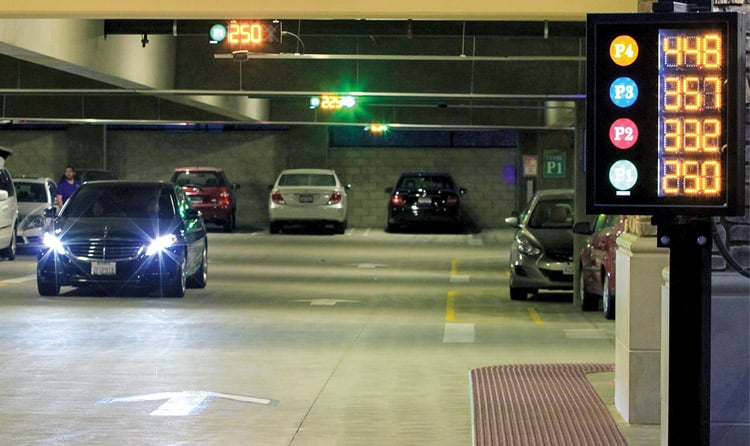
Cities seeking to truly fix their “parking problem” must embrace parking technology and invest in approaches that connect drivers with existing spaces. The most promising such solution involves parking guidance system (PGS) technology, which uses sensors, digital signage, and real-time data to direct drivers to available parking spaces on-street or off-street. These systems help people find spots quickly and efficiently, reducing both driver frustration and the congestion caused by circling vehicles.
Beyond their own parking supplies, municipalities should also encourage — or even require — private owners to adopt these technologies. Understandably, cities may balk at requiring private owners to install parking guidance equipment on their own dime. But strategies exist to encourage private owners to install the technology.
For instance, cities can include within their parking apps private garages and lots that have parking guidance technology, in return for a set fee — say 10% — on all transactions. When a driver books a space at a private parking facility through the city’s app, the city then automatically receives the pre-determined portion of the booking fee. This presents a winning solution for all three parties: The driver gains access to up-to-the-second availability information for both private and public parking facilities, the facilities owned by the participating private owner or operator are promoted through the app, and the city earns a fee for facilitating the transaction.
Some cities work closely with private parking owners and operators to promote parking guidance technology implementation. For instance, the City of San José, California, has sought to encourage the use of PGS in private parking environments by providing a centralized software platform that enables private owners to share occupancy data with the city. The central platform then aggregates the data from public and private parking facilities and sends it to digital wayfinding signs and online platforms that enable drivers to see real-time availability data for the facilities. Although private owners pay for the equipment, they benefit from being highlighted in the city’s central platform that drivers use to find a place to park.
Similarly, Detroit’s ParkDetroit app enables users to check parking availability across public and private garages, lots, and metered street parking. We are still in the early days of connected public and private parking guidance networks, but they will certainly continue expanding across the U.S. as more municipal governments and private owners team up to create single, seamless ecosystems of shared data that improve access for everyone.
Enhanced driver experience
When drivers have access to parking information before they begin their journey, their trip becomes much less stressful because they know parking will be available when they arrive and where to find it.
Many systems include mobile apps, digital signage, and automated payment systems, facilitating ticketless entry and exit. This reduces stress and saves time, often cutting the time needed to find parking by up to 30%.
Societal and economic advantages
These benefits translate to broader societal advantages. PGS use reduces congestion and makes streets safer. When drivers spend less time searching, vehicle miles traveled (VMT) drops. Fewer cars on the road means less pollution, fewer accidents, and safer streets for pedestrians and cyclists.
PGS also provides economic boosts for local businesses. Easier parking access means customers are more likely to follow through on plans to shop, dine, or attend events. It also prevents lost foot traffic that results when customers avoid business districts because of perceived parking difficulty.
Environmental and revenue benefits
By maximizing the efficiency of existing spaces, cities can promote sustainability, avoiding building new lots, preserving green space, and supporting transit-oriented development. Less parking construction also means lower embodied carbon emissions from concrete and steel.
Implementing PGS can help generate new revenue. Modern parking systems can be monetized through advertising on digital signage, dynamic pricing, and data-driven enforcement. By knowing where demand is highest, cities can implement variable pricing to manage congestion and generate consistent revenue streams without adding more infrastructure.
The path forward for smart parking management
The United States doesn’t need more parking spaces: It needs to unlock the full value of the parking it already has. This means smarter policies, better data, and more integrated systems.
As cities continue to evolve, parking guidance technology presents a unique opportunity to increase mobility without increasing asphalt, improve accessibility without burdening non-drivers, and support local businesses without crowding city streets.
Cities must stop treating parking like a numbers game. More spaces won’t fix parking challenges. Instead, cities should invest in systems that make parking visible, navigable, and fair, especially for underserved communities. They must work with private parking owners and developers to encourage, or even mandate, the use of these technologies in private parking facilities.
With the tools now available, from sensor-based PGS to real-time apps and signage, the so-called “parking shortage” can be resolved not by building more spaces, but by connecting drivers to the spaces that already exist.
COLIN KNELL is president of ParkHelp USA. He can be reached at [email protected].