



By Colleen Gallion
As a proud resident of Austin, Texas — also known as “The Silicon Hills” — I have a front row seat to companies on the bleeding edge of technological innovation. Among the college kids, the tourists, and the residents committed to “Keeping it Weird,” you will find all things self-driving, automated, and artificially intelligent being beta tested by early adopters.
I’ve also sat through enough speeches by tech founders that I could create bingo cards for them. If you find yourself sitting through one, and they describe their latest offering as “revolutionary” or “disruptive,” just yell BINGO and run out of the room. I’m doing you a favor, I promise!
As a leader, how do you decide if it’s worth it to embrace a new technology?
Does it solve a real problem?
Before the zipper, clothing and shoes were closed with laces and buttons. Both methods were time-consuming, and if your hands weren’t nimble, it was a literal pain. The zipper solved a real problem that makes life better for those who use it.
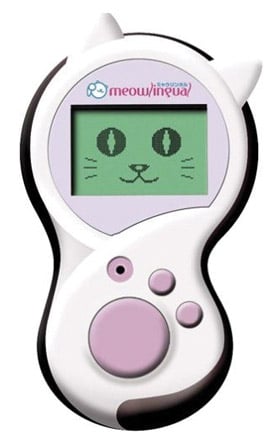
The same cannot be said for Meowlingual, the cat translation device. Back in 2003, a Japanese company marketed a technology that used voice recognition technology to “translate” a cat’s noises into phrases like “I’m hungry.” While fascinating, it doesn’t solve a real problem. We all know that part of the joy of pet ownership is telling others what your pet is saying. We also know that cats probably can talk, but they just don’t want to.
The starting point for adopting any innovation is identifying the problem that needs to be solved and getting clear about what would be possible for you and your business if it were.
Does it provide observable benefits AND fit with existing behaviors?
When the account executives come to pitch the latest innovation, they are full of examples of all of the benefits of this new solution. The question that we often forget to ask is, “Benefits for whom?” If it’s not solving a problem for your end users in a way that is tangible to them, it’s not really solving the problem.
In the pre-Internet days of my childhood, checking out at any store simply required you to answer the question “cash, check, or charge?” There was no need to enter your phone number or email address or confirm if you were a rewards member.
Why do we answer those questions on the screenpad at the checkout? Because it provides us with the immediate benefit of discounts or rewards. It’s also become so ubiquitous that we expect to answer those questions at checkout, so it’s an existing behavior.
If you’ve adopted an innovation that your customers or employees are resisting, ask yourself if it’s an issue of benefits or behavior.
For example, if you’ve added fields into your system to gather more information, but your team leaves them blank, then it’s a fair guess that the amount of extra time it takes to collect that information outweighs the benefit of gathering it. Unless they experience an observable benefit, they are unlikely to change their behavior.
Using the same example, if they have to open a different program to enter that information, it doesn’t fit into existing behavior. The chances of adoption are low.

What is the real ROI?
Along with describing all of the benefits of their new technology, the account executive will also talk about how quickly you will get a return on your investment (ROI). The ROI they are talking about is hypothetical and doesn’t include things like:
• The time spent training people on the new technology
• Time spent introducing the technology to customers
• Cost to reverse the implementation if it fails or to run it in parallel with the existing solution
All of these costs need to be included in your investment cost. Not just the sticker price.
One person’s zipper is another person’s Meowlingual
You know your business, your staff, and your customers. You know the pain points that have a real effect on your business. You may also know that the competition down the street has just installed the fancy new “Park-o-matic 3000,” which is “Destined to Revolutionize Parking,” according to their booth at the latest conference. There may be a little voice in your head that says you NEED the Park-o-matic 3000 to stay relevant. Resist that temptation! Take a hard look at the benefits in light of your real pain points to decide if you’d be investing in Zippers or a Meowlingual.
COLLEEN GALLION is an ICF-certified professional coach whose passion is supporting entrepreneurs and founders in building healthy and sustainable teams. For more information, visit www.gallioncoaching.com.