



Airports in Texas and Ohio replaced existing parking systems with automated payment technology, gaining real-time data, higher revenue, and improved customer satisfaction.
By Jay Landers
As U.S. airports look to improve their parking programs, a growing number are adopting automated payment systems to streamline their parking operations and expedite and simplify the parking process for travelers. Whether gated or gateless, such systems provide a new way for drivers to pay for parking at these airport facilities.
For this article, Parking Today spoke with three airports of varying sizes that have recently adopted automated approaches to parking payments provided by their private parking operator: the San Antonio International Airport (SAT), the Dayton International Airport (DAY), in Dayton, Ohio, and the Killeen Regional Airport (GRK), in Killeen, Texas. All said that they have benefited from the move, particularly when it comes to assessing parking performance and responding to changing conditions. Other perks include improved reservation management, reduced labor costs, and expedited customer experiences.
First in the U.S.
In November 2024, the San Antonio airport became the first airport in the United States to implement the system powered by artificial intelligence (AI) offered by Metropolis Technologies, Inc. The airport launched its new system just ahead of the impending holiday season and its associated high volumes of passengers.
The switch was precipitated in part by a real need for change. The airport’s existing revenue management and parking technology systems were “beyond end of life,” said Jennifer Pysher, the chief commercial and technology officer and assistant aviation director for SAT. “We were constantly battling these fires.”
Concerned that the systems would not hold up under the crush of the upcoming travel season, the airport opted to move forward with the system provided by their parking operator and have it operational before Thanksgiving 2024. However, this meant that the new technology had to be installed “very, very fast,” Pysher said.
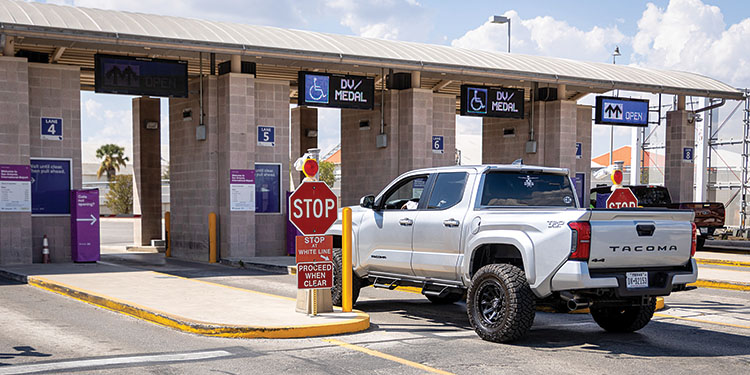
Within 37 days, Metropolis, the parking operator at SAT, had updated 26 entry and exit lanes at the airport, equipping them with AI-powered systems that create a “vehicle fingerprint” based on their unique characteristics, such as the car make and model and license plate number, before scanning and recording the vehicle data as they enter and exit the parking facilities, said Ping Lieu, a regional operations manager for Metropolis. An additional seven lanes have since been outfitted with the technology, Lieu said.
Shortly after launch, new gates were installed in all entry and exit lanes of the public parking lots at SAT. To further enhance the guest experience, the gates include LED lights that illuminate “green” to indicate access granted and “red” to indicate that vehicles not proceed.
More recently, 15 digital exit displays have been deployed at exits. Now, when the customer enters the lane, the cameras read the vehicle and tailor the on-screen messaging for that visitor. If they have registered, a summary of their stay and total charges is displayed on the screen. If the customer has not registered, a unique QR code will be displayed on the screen with instructions for in-lane checkout.
Positive public response
If a parker is not already a Metropolis member or has entered without a reservation, they scan a QR code that is posted in the parking facility and enter the required information, including their vehicle license plate number and credit card information. Upon leaving the parking facility, the vehicle is identified, the parking session is charged to the credit card on file, and the exit gate automatically raises to allow the vehicle to leave. Existing Metropolis members and travelers who have made prepaid parking reservations can enter and exit the parking facilities without having to scan a QR code.
For the first 30 days following the start of the new system, ambassadors from Metropolis were on hand to assist customers using it for the first time. “That was very useful,” Pysher said.
Despite initial complaints about the system, the overall public response to the switch to an automated payment approach has been “overwhelmingly positive,” Pysher said. “Our complaint rate is typically below 1% with the new system,” she said. Customers have contacted the airport to tell it to “never bring back the old system,” she noted. “They don’t want to deal with the tickets anymore. They love the fact that they’re driving in and driving out and that the receipts are in their account.”
Although introducing a brand-new system included some hiccups, the San Antonio airport is glad to have made the change, Pysher said. “It’s never easy when you’re the first in the world to do something with a new technology, but we worked through it,” she said. “Thank God we did it.”
Chief among the benefits of the new system is the ready access to new data sources. “We have so much data at our fingertips,” Pysher said. “It’s just so much better than what we had before.”
The data is also much timelier. In the past, airport officials typically had to wait two weeks or more following the end of the month for reports to be provided by their previous operator to determine such indicators as occupancy levels, reservation utilization, and revenue performance, Pysher said. Today, they now have access to such data instantly, vastly improving the airport’s ability to respond to changes in parking demand. “It has revolutionized how we manage our parking,” she said. “We’re so much smarter about it now.”
Dayton’s experience
Looking to replace its “antiquated” parking management system, the Dayton International Airport decided in late 2024 to implement an automated approach, said Beverly Mack, a senior manager for the airport. In February 2025, the airport executed an agreement with its private operator, Metropolis, to revamp the airport’s parking management system in less than a month. “The official live implementation took about 27 days from the time they dispatched their IT team on the field,” Mack said.
During this time, the company installed new gates and cameras in 22 payment lanes and repainted the ground striping in the lanes to ensure proper vehicle positioning for license plate capture and vehicle profile photos. Additionally, the company installed a mobile server and connected it to SpaceX’s satellite internet service, Starlink.
Starlink offers a key advantage in terms of operational resilience. “Because it doesn’t rely on wired infrastructure, Starlink remains online during power outages,” said Chris Matei, a regional operations manager for Metropolis. “This resilience is critical for ensuring customers can successfully exit the parking lots during a [power] failure.”
To pay for parking, travelers at the Dayton airport follow the same approach as that used in San Antonio. First-time parkers scan a QR code and input the necessary license plate and credit card details, so that upon exiting the vehicle is identified by the computer vision technology, the parking session is charged to the credit card on file, and the exit gate automatically raises to allow the vehicle to leave. Meanwhile, Metropolis members and travelers with prepaid parking reservations enter and exit the parking facilities without having to scan a QR code.
“Parking itself is a major revenue producer of the airport, and so we invest a lot of time in ensuring that this is a benefit not only for us, but for our passengers,” Mack said. Key benefits for customers from the automated system include the vastly shorter time required to exit the airport’s parking facilities. “They can exit in three seconds, whereas before it maybe would be two minutes,” she said. Meanwhile, travelers no longer have to keep track of parking tickets, and they do not have to lower their window to pay, she noted.
Digging into the Data
As for the airport itself, Dayton has enjoyed multiple benefits from switching to an automated approach. “Since automation was implemented, we have seen an increased capture rate and reduced revenue leakage by reducing cash collection, all while enabling faster vehicle throughput,” Matei said.
Dayton is now better able to accommodate demand for reserved parking, Mack said. Before the switch to the Metropolis system, the airport could only offer 10 spots available for reservation. “We were somewhat in another decade,” she acknowledged. “Now, any space can be reserved. We are finding that there’s a high demand for reservations. Travelers like to pay in advance, so once they get to the airport, it’s not something they have to deal with.”
Data analytics is now much simpler and less expensive than it used to be for the airport. Among the limitations associated with its previous system, Dayton had to pay for individual data reports from its parking technology provider, Mack said. “When I found out what the cost of a report was, I declined to purchase that report,” she said.
Today, the Dayton airport has ready access to a “host of data analytics” that are included, Mack said. Among the readily available performance indicators are revenue totals during certain time periods and in certain locations, including revenue per space. “I can see peaks and valleys,” she said. “What’s fascinating is if one of the lots seems to be trailing the previous year, it will show me analytics as to why.”
In fact, the airport’s parking revenue figures have been impressive. “I’ve seen an increase in revenue per space anywhere from $18 to $22 per space per lot,” Mack said. “That’s pretty huge.”
However, the “greatest benefit” is that the airport no longer needs to use Excel spreadsheets when analyzing its data, Mack said. “That’s the biggest deal for me. We don’t have to rely on manual input. The system generates it automatically.”
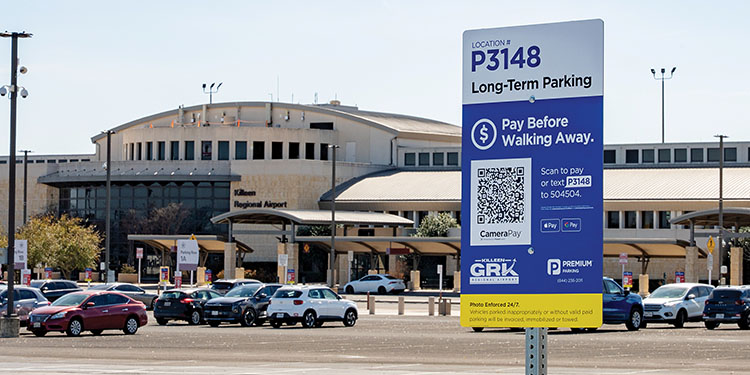
Photo credit: Premium Parking
Killeen goes gateless
Until recently, parking at the Killeen Regional Airport involved gates at entry and exit, physical tickets for travelers, and manual payments upon exit at a booth staffed by attendants. That all changed dramatically on February 1, 2026, when the airport’s new parking operator, Premium Parking, began operating its free-flowing gateless system that relies on license plate recognition (LPR) technology to facilitate an automated approach to parking payments.
Averaging more than 100,000 passengers annually, the Killeen Regional Airport has more than 1,000 spaces among its parking lots, one of which includes covered spaces for patrons looking to protect their vehicles from the hot and hail-prone Central Texas climate.
The airport opted for an automated parking management system because it offered advantages for the airport as well as its customers, said Jarrod Provost, the assistant director of aviation for the Killeen Regional Airport. “Our goal is to keep our costs as low as possible and make travel as easy and stress-free as possible for our customers,” Provost said.
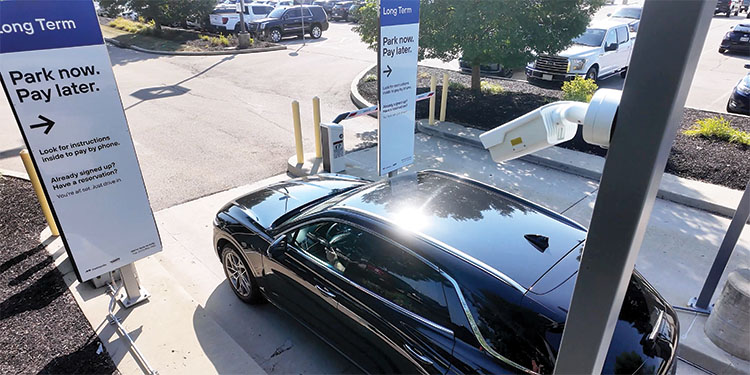
Converting to the automated system required installing LPR cameras at four entrance lanes — two for the short-term parking lot and two for the long-term lot — and two exit lanes, said Greg Shaw, the market president for Premium Parking. Because the gateless exits preclude vehicle backups, the airport was able to consolidate its original four exit lanes into two.
In addition to the fixed LPR cameras at the entrance and exit lanes, parking staff can use hand-held LPR devices while walking the parking lots to scan license plates to confirm that vehicles have been properly registered with the airport’s parking management system. This step offers an “added measure for compliance,” said Eric Rago, a vice president for Premium Parking.
Payment options
Travelers now have three ways to pay for parking, Provost said. They can use a smartphone to scan a posted QR code or text a posted number. These options then direct users to input license plate details, a phone number or email address, payment information, and the intended length of stay. If necessary, users can add more time later. This process does not require the use of an app or the creation of a customer account, though such features are available. Anyone not wanting to pay in this fashion has the option to pay on foot via kiosk. Customers who fail to pay before exiting receive an invoice in the mail.
The presence of the payment kiosks is an acknowledgement that not all travelers like to pay using their phone, Provost said. “Change is hard for a lot of people,” he said. “We recognize that. That’s one of the reasons why we put in the kiosk.”
The new system offers an improvement for disabled veterans who receive complimentary parking in the airport’s long-term parking lot. To take advantage of this benefit previously, disabled veterans had to present vehicle registration or photo identification upon exit. However, the new LPR system uses AI-powered image recognition to identify special license plates, including those of disabled veterans. “So far, we have not had any complaints from our veteran population,” Provost said.
With the automated payment system, the Killeen airport has been able to reduce its labor costs without having to lay off any employees, Provost said. Under its previous gated parking system, the airport faced a dilemma when incoming flights were delayed beyond the time parking attendants were scheduled to leave. In such cases, the airport either had to extend staffing hours to accommodate the delayed flight or open the exit gates and allow vehicles to leave without paying for parking. “Now if there is a [flight] delay, you don’t have to have someone there to take a ticket,” Provost said. “That’s very beneficial.”
The airport also stands to benefit from data that is more readily available, Rago said. All parking-related data is maintained within “one central management system,” he said. “We provide real-time dashboards as well that can show trends from transactions to revenue, feedback, compliance, as well as occupancy.”
“There’s a lot of data that is being collected and shared to help optimize operations,” Rago said.
‘Lean into the technology’
As shown by the examples of San Antonio, Dayton, and Killeen, airports that adopt an automated approach to parking payments can benefit in various ways. This is particularly the case for airports faced with aging parking equipment and management systems.
Of course, any major change in parking operations offers the possibility of risk as well as rewards. But the risk is worth taking, said San Antonio’s Pysher, who advised other airports to consider an automated approach to parking payments. “Lean into the technology,” she said. “Learn it. You’ll be able to solve all sorts of fun things.”
JAY LANDERS is the editor-in-chief of Parking Today. He can be reached at [email protected].