


By Steve Gorski
After attending the annual conferences of the International Parking & Mobility Institute (IPMI) for many years, I’ve learned that the real story isn’t always found in the keynote presentations. It’s on the exhibit floor, in conversations between sessions, and in the questions operators ask vendors.
This year’s conference in Milwaukee reinforced that point.
As I walked the expo floor and spoke with operators, consultants, and technology providers, two trends stood out. First, there were noticeably fewer electric vehicle (EV) charging exhibitors than we’ve seen during the past several years. Second, interest in parking guidance and occupancy technology seemed stronger than I’ve seen in quite some time.
At first glance, those trends may seem unrelated. I don’t think they are. Both reflect an industry that is becoming more focused on operational performance and less interested in technology for technology’s sake.
A more measured conversation around EV charging
Just a few years ago, EV charging dominated industry conversations. New charging companies seemed to appear at every conference, and many parking owners were trying to determine how quickly they needed to install chargers throughout their facilities.
This year felt different.
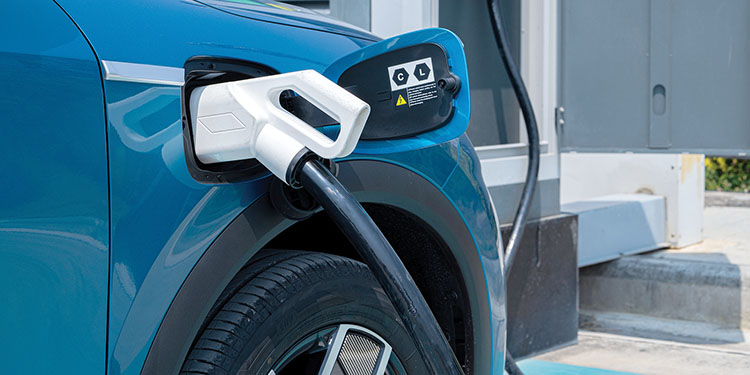
EV charging certainly wasn’t absent, but it was far less prominent. More importantly, the conversations themselves have changed. Instead of asking how many chargers to install, operators are asking practical questions about utilization, maintenance, pricing, and long-term return on investment.
That’s a natural evolution.
Federal funding has shifted, EV adoption continues to grow, although not always at the pace many forecasts predicted, and many facilities have now operated chargers long enough to understand the day-to-day realities. Owners are evaluating actual usage patterns rather than planning around expectations.
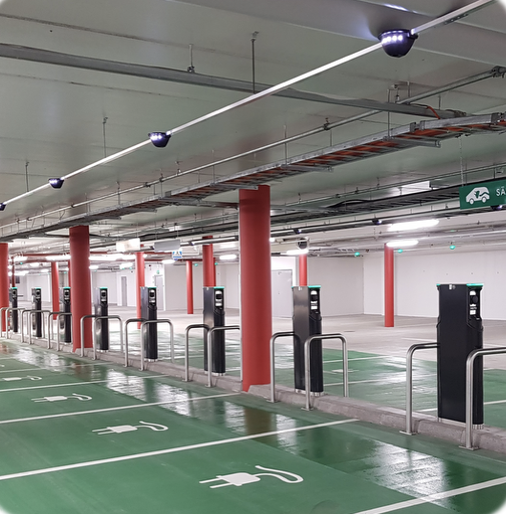
In many garages, the challenge isn’t simply installing chargers. It’s managing them effectively. How do you keep charging spaces available? How do you direct drivers to open chargers? How do you maximize the investment you’ve already made?
Those are operational questions, and they reflect a market that’s maturing.
Parking guidance has moved into the mainstream
While EV charging generated fewer conversations, parking guidance generated many more.
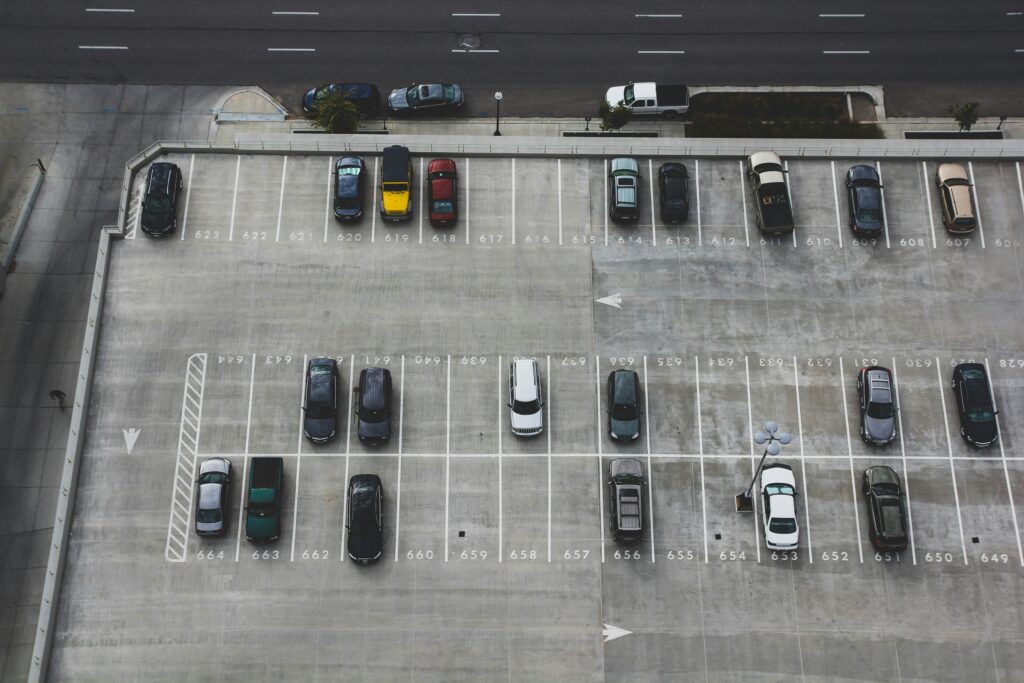
Whether talking with airport operators, universities, municipalities, healthcare systems, or private owners, I heard repeated interest in real-time occupancy information and guidance systems. In many cases, organizations that may have viewed guidance as a “nice-to-have” a few years ago are now evaluating it as core operating infrastructure.
Several factors appear to be driving that change.
Driver expectations continue to evolve. Consumers have become accustomed to real-time information in nearly every aspect of their lives, from ride-sharing to retail and airline travel. Increasingly, they expect parking facilities to provide the same level of visibility. Simply telling drivers how to find the garage entrance no longer suffices. They want to know where available parking exists before they begin circling for a space.
Equally important is the value of the data itself.
Many operators are now looking beyond wayfinding and asking how occupancy information can improve operations. Universities want to understand how faculty, student, and visitor parking is actually being used throughout the day. Airports are looking for better visibility into utilization. Municipal operators want better information to support planning and investment decisions.
In many discussions, the focus wasn’t on sensors or digital signs. It was on the operational intelligence that those systems can provide.
Another theme I heard repeatedly was simplicity.
Operators are looking for solutions that are easier to deploy, easier to maintain, and easier to justify financially. After years of implementing new technologies across payments, enforcement, reservations, and access control, operators increasingly appreciate systems that solve real problems without creating new operational burdens.
What it says about the industry
Taken together, these observations suggest that the parking industry is entering a more disciplined phase of technology adoption.
Operators aren’t chasing the newest innovation simply because it’s new. They’re asking tougher questions. Will this improve the customer experience? Will it make my operation more efficient? Can my staff support it? Will it deliver measurable value over the life of the investment?
Those are healthy questions.
EV charging appears to be moving from an expansion phase to an optimization phase. Parking guidance, meanwhile, is reaching a point where many operators see it less as an optional amenity and more as a practical operational tool.
Technology will continue to evolve, as it always does. But one takeaway from IPMI 2026 seems clear: The industry’s attention is increasingly focused on solutions that improve day-to-day operations, help facilities perform more efficiently, and deliver measurable value for operators as well as the people who park in their facilities.
Although that may not be the flashiest trend coming out of this year’s conference, it may prove to be the most significant.
Steve Gorski is vice president of Portier USA. He can be reached at [email protected].