
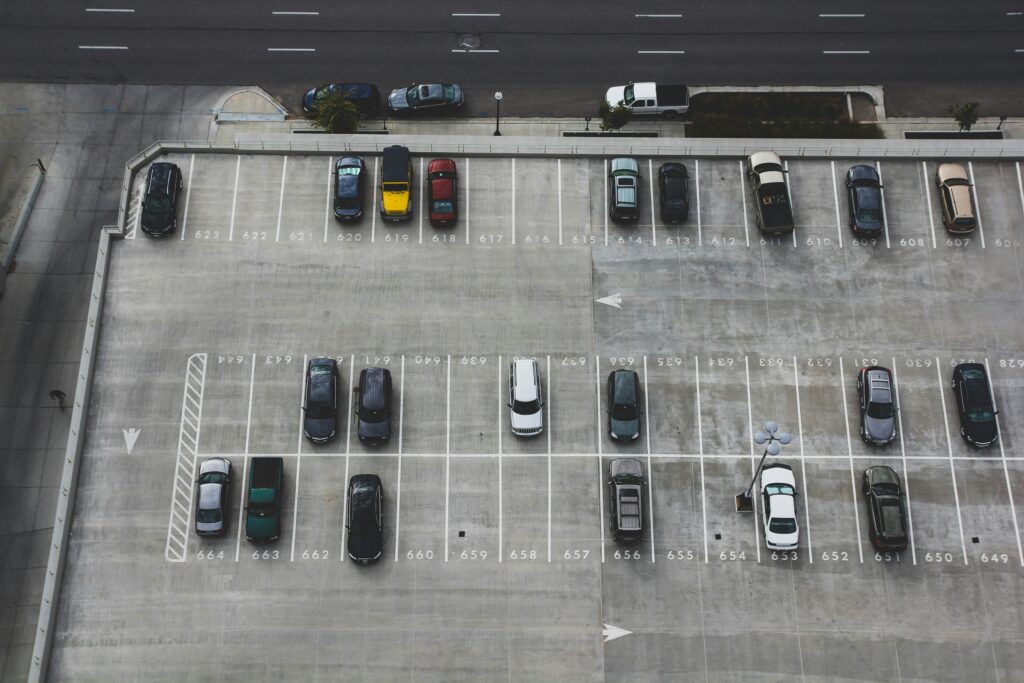



Digital payments and dynamic pricing are revolutionizing parking operations, the user experience, and facility design across the industry.
By Benjamin Sands
Technology has been an essential and evolving element of the parking industry during the past 25 years, so it’s no longer “breaking news” to talk about its effect on the parking experience and parking operations. Still, new transformative tools are introduced every day, and it can be challenging to keep up with all of the innovation occurring in parking.
Some of the most exciting new innovations revolve around digital payment technologies and automated data collection. From license plate recognition (LPR) to mobile apps and contactless payment systems, new innovations are reshaping how drivers interact with parking facilities while offering compelling advantages in convenience, efficiency, safety, and sustainability. Along with revolutionizing the user experience, these trends are also changing the physical design and economics of parking infrastructure and operations.
The shift to digital payments in parking
The days of fumbling for coins or waiting in line at pay stations are quickly fading. Most parking operators have adopted digital payment systems that make paying for parking seamless, fast, and flexible. Although the percentage of cash payments varies by location and user type, it’s estimated that fewer than 10% of parking transactions involve cash. Realistically, the number is well below even that 10% level in most markets.
These numbers are in line with consumer preferences across the board. According to the Forbes Technology Council, a large majority of consumers — nearly nine out of ten in the U.S. — use digital payments. Furthermore, for reasons of speed and convenience, 74% of Americans prefer payments made without physically touching a payment terminal or giving payment to a cashier according to U.S. Bank. These preferences have resonated with parking owners and operators, many of whom have already installed digital payment and automated data-collection parking technologies in their parking facilities.
Contactless systems also benefit owners and operators because they eliminate the wear-and-tear associated with traditional pay stations and support faster turnover at high-demand locations. This flexibility has been the key to increasingly widespread adoption. Drivers can pay from their car or on the go, without touching shared equipment, an added bonus in a post-pandemic world where many consumers prefer contact-free interactions.
Finally, the integration of LPR technologies with digital payment technologies takes convenience a step further by enabling fully automated entry and egress. Cameras at facility entrances and exits scan license plates, associating them with a customer’s pre-registered payment account. The system charges the correct amount based on the length of the parking stay, eliminating the need for tickets, paper receipts, or human intervention.
LPR-based payment systems reduce wait times, streamline traffic flow, and eliminate friction points that frustrate users, like lost tickets or broken machines. For owners and operators, they cut operational costs and create a seamless, technologically advanced parking experience.
Dynamic pricing at work
In addition to enabling better payment experiences, digital technologies are also unlocking the potential for dynamic pricing — a strategy through which parking rates are adjusted based on demand, time of day, location, or for special events.
Dynamic pricing is relatively new to the parking industry, though consumers are accustomed to paying market-based rates in other types of transactions. Gas prices are an obvious example. As demand increases, for instance during the summer peak travel months, gas prices typically go up as well. However, other examples abound of products and services that adjust prices with demand, such as airlines, hotels, and ride-sharing services.
In general, parking owners and operators haven’t pursued market-based pricing, with the notable exception of parking facilities near stadiums and concert arenas charging higher prices on game days and during shows. Owners and operators of these facilities can charge higher rates because they know demand will be higher. They haven’t needed fancy technology to tell them that.
However, owners and operators don’t need to rely on intuition to anticipate demand anymore. A number of recently introduced technologies can provide data and algorithms to help them understand how their parking facilities are being used and when demand is likely to be highest.
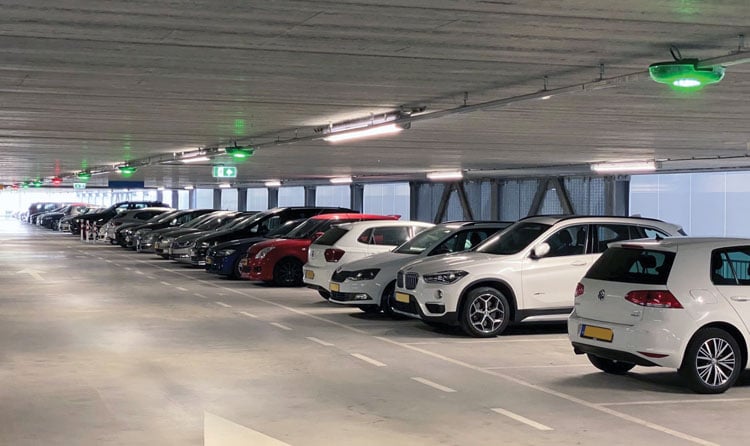
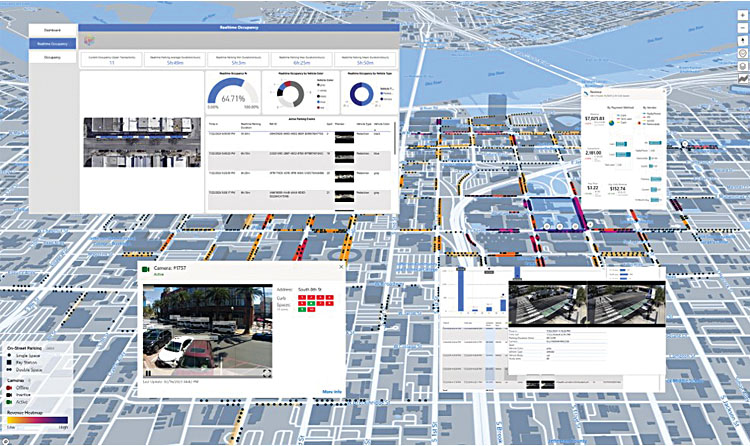
For instance, parking access and revenue control system technology records when each vehicle enters and exits parking facilities and can provide real-time data about how many vehicles are being served at the moment, as well as trend data indicating peak utilization times. Parking guidance technology that monitors individual spaces can provide even more precise data about when a garage or parking lot is busiest and which parking areas tend to be full at any given time. This data can be used to set more market-appropriate rates, with higher rates charged during peak parking hours or for events and lower prices during off-peak times or in underused areas.
Using demand to shape behavior
This approach encourages more efficient use of parking resources, encouraging drivers to park during times or at locations experiencing less demand and, presumably, less traffic congestion. That’s really the most important reason for pursuing a dynamic pricing strategy — as a parking and transportation demand management and planning tool.
Dynamic pricing helps manage demand in powerful ways. By discouraging parking in the busiest areas and/or at the busiest times, it can reduce the need for excessive inventory, increase turnover of prime spots, and encourage alternative modes of transportation. Such outcomes particularly benefit cities, which rely on parking as more than a revenue generator, though parking revenue is obviously important.
Equally important is parking’s role in urban and transportation planning. By encouraging drivers to move away from busy downtown areas and locations with a heavy pedestrian presence, city planners can reduce downtown road congestion and make those streets safer for drivers and pedestrians alike. Curb and parking management technologies have advanced to the point where cities can apply dynamic pricing to both on- and off-street parking spaces to promote these and other urban planning goals. Cities like San Francisco and Los Angeles have implemented dynamic pricing pilot programs that showed measurable reductions in congestion and improved overall utilization.
It’s safe to assume that dynamic pricing will become even more common in the coming years as digital parking management and payment technologies continue to be introduced, tracked, analyzed, and refined. For instance, cities that implement digital parking permitting strategies can better control who uses valuable parking spaces in central business districts and how those spaces are utilized. For example, digital permitting can be used to keep employees of local businesses from using spaces that are intended for use by customers or patrons of area stores and restaurants. When combined with curb management or on-street parking guidance technology, digital permitting can also be used to regulate how long spaces are used.
Effects on parking facility design
These technological and pricing innovations aren’t just changing operations: They’re also influencing the very design and layout of parking facilities. For instance, the use of gateless parking operations with automated data collection and digital payments removes the need for traditional pay-on-foot kiosks, payment booths, and entry/exit lane controls.
This change opens up the parking layout in several ways:
Improved vehicle flow at entry and exit: Without entry/exit controls, vehicle access to and from a facility is uninhibited, eliminating redundant entry/exit lanes and associated vehicle queues and congestion.
Improved pedestrian safety: After payment kiosks have been removed, pedestrians can proceed directly to their cars and exit without having to stop. Patrons do not need to walk to payment kiosks inside parking garages where they may face the risk of collisions with vehicles. Nor do they have to worry about encountering criminals when they stop at a kiosk and pull out their wallets to pay.
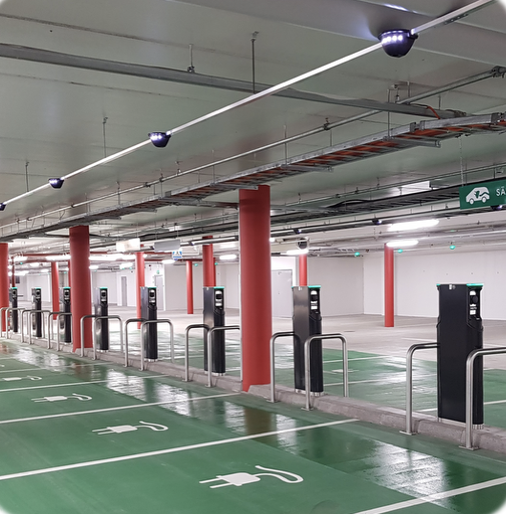
More flexible design: Space once dedicated to payment infrastructure can be reallocated to provide additional parking spaces, better parking geometry, wider drive aisles, and/or added electric vehicle charging stations.
Reduced construction costs: Developers can save money by means of more efficient use of equipment and space.
It’s difficult to say with certainty how much owners and operators can save through reduced construction costs, because each parking garage and lot is unique. However, it is safe to say that the owners of a typical garage having 600 to 1,000 spaces can save hundreds of thousands of dollars in up-front costs by not having to install and maintain redundant entry/exit lanes with gates and control equipment. These savings are in addition to the benefit of minimizing entering and exiting queues. Meanwhile, that same facility will save thousands in additional operational costs by not having equipment to maintain or replace over time.
Dynamic pricing can also lead to more balanced use of existing parking inventory, reducing the need to build new lots or garages. As demand becomes more evenly distributed throughout the day and week, cities, private parking owners, and developers may find that they can meet parking needs with fewer spaces overall. This outcome is especially significant in urban areas where land is scarce and expensive. Instead of overbuilding to accommodate rare peak-hour demand, facility owners can use dynamic pricing to help ensure more efficient use of the existing supply.
Future outlook
The parking industry is quickly moving toward a digital-first, data-driven, resource management model. As technology continues to evolve, we can expect even more integration among digital payments, LPR systems, real-time analytics, and user-focused platforms.
Looking ahead, we will likely see:
Widespread vertical ecosystem integration where drivers can plan, reserve, navigate, and pay for parking through a single app
Artificial-intelligence-powered pricing models that continuously learn and optimize pricing strategies based on historical data and predictive analytics
Greater coordination by cities, institutions, and organizations offering mobility services, such as rideshare, bike-share, and transit, to optimize curb space and reduce private vehicle use
Digital payment systems and dynamic pricing are reshaping the future of parking. These trends offer vast benefits, including greater convenience for users, increased efficiency for operators, and more sustainable, flexible urban infrastructure. For cities, developers, and private owners and operators, embracing these innovations means not only improving service but also reducing costs, enhancing mobility, and aligning with the broader goals of smart city development.
As the parking industry continues to evolve, those who adapt early will be best positioned to deliver value in the form of user satisfaction, operational efficiency, and future-ready infrastructure.
Benjamin Sands is the manager of parking planning and operations for WGI Inc. He can be reached at [email protected].