

By Larson McDonagh
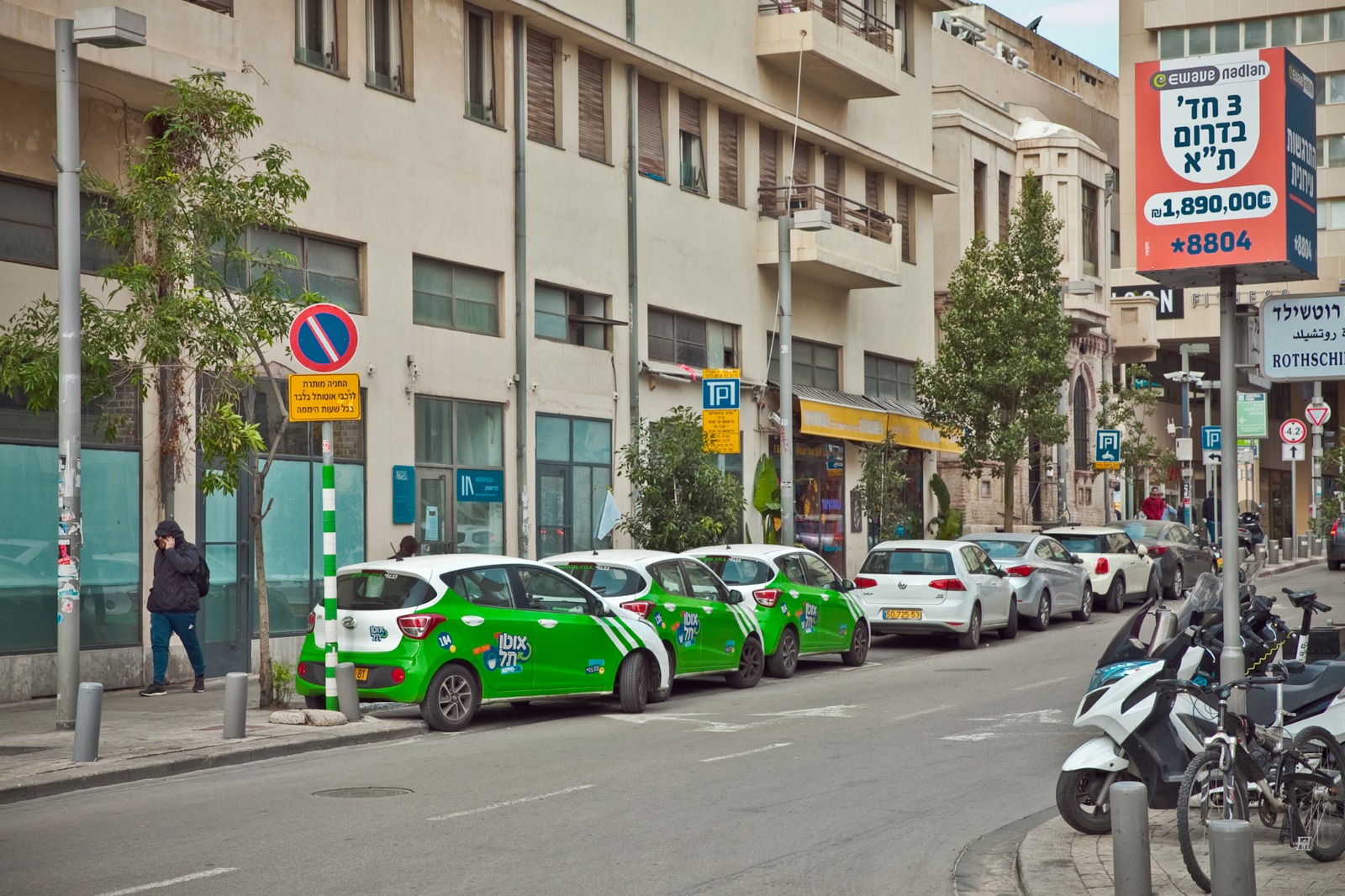
The center of Tel Aviv, Israel, is a bustling area of entertainment and innovation. As in many large cities, vehicle owners in central Tel Aviv must contend with limited parking options. As a means of addressing this problem, residents have agreed to allow a local parking technology company to install sensors on their property to monitor adjacent parking spaces. By using an app that displays the sensor data in real time, Tel Aviv drivers have an easier time finding available parking, thereby reducing congestion and decreasing vehicular carbon emissions.
The key to success
In 2021, Pumba — a parking technology company based in Tel Aviv — began working with residents in the city’s urban center to install camera-based parking sensors on their balconies for free, said Roy Yotvat, the company’s cofounder and CEO. The sensors provide Pumba with real-time data regarding the availability of street parking adjacent to the sensors.
Known as sensor hosts, the participating residents receive a free subscription to Pumba’s app, which displays visual data regarding the availability of parking near their homes. By avoiding high-end camera lenses and using an artificial-intelligence-based model that can decipher low-resolution images, Pumba was able to keep the cost of its sensors low enough to provide them for free, Yotvat said.
Participants have enjoyed tangible benefits because of the program, according to a report, titled “The State of Parking in Central Tel Aviv 2024-2025,” released by Pumba this past October. Drivers using the app spend an average of 13 minutes searching for parking in the central core of Tel Aviv, the report states. By contrast, drivers not using the app spend an average of 38 minutes searching for parking, according to the report.
Pumba sensors also have helped travelers reduce their drive time by 16% and decreased carbon dioxide emissions from vehicles by 81 tons within the city center, according to the report.
Motivated by the promise of improved parking, Tel Aviv residents were eager to participate in the program, Yotvat said. As a result, Pumba was able to cover most of Central Tel Aviv with approximately 1,000 sensors.
“The key for success [is] covering most of the street parking spots in a given area,” Yotvat said. “The main value that we actually create is not catching a parking spot, but actually creating certainty when drivers know exactly if there is or there isn’t any parking available.”
Working with the city
Pumba is working with the City of Tel Aviv in an effort to improve mobility in the city’s urban core. “We showed these numbers to the municipality, and additionally, we showed them that we can actually reduce time on the road for drivers by helping them to find parking faster,” Yotvat said.
Tel Aviv currently lacks sufficient public transportation to support its growing population, said Meital Lehavi, the city’s deputy mayor for transportation. Although looking to add more public transportation infrastructure and bike lanes, the city is aware that doing so would likely reduce the already limited available parking spaces, Lehavi said.
Against this backdrop, it’s important to give drivers certainty as the city continues to grow, Lehavi said. “Data is power,” she said. The application provides the city with “very important data” about parking demand and time spent by drivers searching for parking.”
Lehavi is currently working to convince the municipal authority to adopt the program in an effort to expand the benefits of parking sensors beyond the center of Tel Aviv.
Larson McDonagh is a Western Washington University journalism student interning with Parking Today Media. They can be reached at [email protected].