

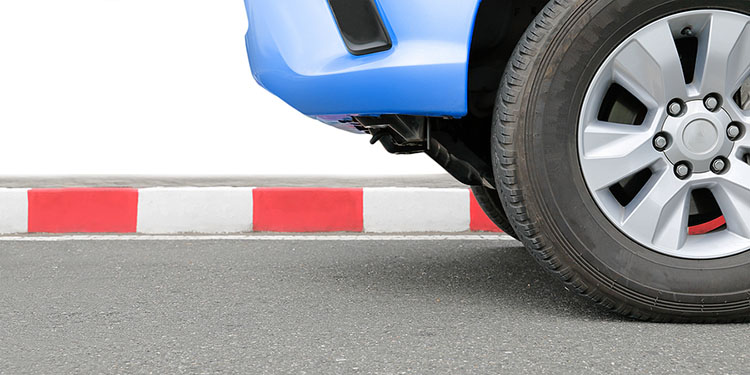

As autonomous vehicles become increasingly commonplace, their future depends on the parking authority.
By Jim Gibbs
The autonomous vehicle (AV) revolution is no longer a futuristic montage of sci-fi renderings and test tracks in the Arizona desert. It is happening, right now, on the messy, congested, and contested streets of San Francisco, Los Angeles, Phoenix, and Austin, Texas.
While the media fixates on the technology inside the car — the LiDAR arrays, the neural networks, and the “driverless” experience — a much more tangible crisis is brewing outside the vehicle. It is a crisis of infrastructure, specifically the narrow ribbon of concrete where the city meets the street — the curb.
For decades, the parking industry has operated in relative obscurity, managing static assets with static tools: painted lines, metal signs, and manual enforcement. But as AV deployments accelerate, the parking authority is about to be thrust from the back office to the front line.
The reality is stark. The bottleneck for the autonomous future is not the car. It is the curb. And for the municipal leaders, parking authorities, and curb managers reading this: If you are not preparing for this shift today, you are not just behind.
Alex Roy, the automotive culture critic and a founder of the AV and mobility technology consulting firm Johnson & Roy, stated it with characteristic bluntness. “Cities are acting like AVs are a sci-fi problem for their grandchildren,” Roy said. “Meanwhile, they’re about to get inundated by a fleet of robotaxis they can’t tax, track, or ticket because their digital infrastructure is held together by duct tape and nostalgia.”
This is not hyperbole. It is an operational certainty. The era of the “dumb curb” is over. The era of the intelligent, digitized, and managed curb has arrived. The only question remaining is whether parking authorities will step up to lead this transition or be overrun by it.
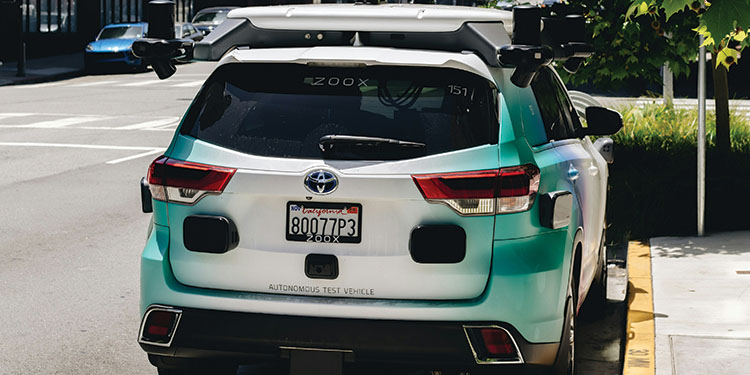
The ‘laundry problem’: why skepticism is a trap
It is easy to forgive a parking director for being skeptical. We have heard the cry of “wolf” before.
In 2016, after the artificial intelligence (AI) program AlphaGo defeated the world champion Go player Lee Sedol, the industry predicted that steering wheels would vanish by 2020. That did not happen. Today, we see robotics that can perform complex logic yet struggle to fold a simple t-shirt. If robots can barely fold laundry, are they really ready to navigate a chaotic downtown loading zone?
This skepticism is rational, but it is also dangerous.
Although fully automated vehicles are not yet commonplace, the scale of deployment is ramping up. The ridesharing company Uber, in partnership with the technology company NVIDIA, has signaled its intent to deploy up to 100,000 AVs by 2027. Even if they miss that target by half, the impact on the curb will be seismic.
The “laundry problem” — the difficulty robots have with physical nuance — is exactly why parking authorities must act. A human driver can figure out a faded sign or a complicated loading zone. A robot cannot. If the curb remains analog and messy, these fleets will fail at the “last 30 seconds” of the journey, causing gridlock and safety hazards.
We don’t need to believe in a sci-fi future to see the problem. We just need to look at the immediate operational reality of the next 36 months.
The San Francisco warning: when algorithms herd
If you doubt the urgency, look to San Francisco. In recent months, residents have documented a phenomenon of AVs known as “clustering.”
Because AV fleets often share the same routing optimization software, they tend to converge on the same “optimal” drop-off points simultaneously. In the San Francisco neighborhoods of Richmond District and North Beach, this has led to scenarios where multiple robotaxis attempt to enter a single legal loading zone at the same time.
When the zone is full, the AVs — programmed for extreme caution — do not double-park or circle the block like a human. They simply stop. Often, this means “spilling over” into the adjacent lane, which in San Francisco is frequently a protected bike lane.
The result is a legal paradox: The vehicles are following their programming perfectly, yet they are creating chaos. This is what happens when you have smart cars on dumb pavement. Without a digital reservation system to tell the third car “the zone is full, divert to Spot B,” the algorithm simply herds them into gridlock.
High stakes: safety and the operational gap
Michael Wagner, co-founder of Edge Case Research — a company that provides safety assessment and risk management services for autonomous systems across multiple industries — highlighted the terrifying operational gap between a well-functioning AV and a chaotic curb environment.
“The AV industry has made real progress in defining how to drive safely but motoring down the street is only part of a driver’s job,” Wagner explained. “Curb operations are far trickier, because the vulnerable road users — you and I — are approaching the AV, not the other way around. How does a human know it’s safe to approach? What if someone is elderly and needs more time? The AV industry and municipalities need to work together to define expectations for curb behavior and write them into industry standards.”
Wagner’s point underscores a critical shift: The parking authority’s mandate is expanding from managing storage — that is, parking — to managing interactions, meaning curb flow.
The financial reality: equity, revenue, and ‘zombie cars’
If the operational chaos isn’t enough to force action, the financial and social stakes should be.
For decades, cities have relied on parking revenue — from meters, garages, and citations — to fund essential services. In cities like Pittsburgh, the parking tax alone contributes roughly 8.5% of the city’s entire operating budget, between $50 million and $60 million annually. This isn’t just “extra money”; it pays for firefighters, paving, and parks.
The rise of the robotaxi threatens to obliterate this model, noted Kersten Heineke, a partner at the consulting firm McKinsey & Company and co-leader of its Center for Future Mobility. “With robotaxis and roboshuttles scaling, we can expect a significant shift in curb use from traditional on-street parking to pick-up/drop-off points,” Heineke said. “In parallel, technologies such as remote driving and autonomous valet parking will enable private vehicles to park themselves, further reducing the need for on-street parking in high-demand areas.”
This shift brings us to the “zero occupancy” debate. If cities do not price the curb correctly, algorithms may determine that “cruising” — that is, circling the block continuously — is cheaper than paying for a spot. This outcome risks flooding streets with empty “zombie cars,” creating massive congestion while generating zero revenue for the city.
The equity trap and the geometry of the city
Beyond the balance sheet lies the issue of equity. Selika Josiah Talbott, the founder and CEO of Autonomous Vehicle Consulting, warned that a laissez-faire approach to AV curb management will hurt the most vulnerable residents first.
“The biggest risk is deepening urban inequities,” Talbott said. “If cities let AV and robotaxi companies dictate where vehicles stop, they will naturally prioritize profitable routes and affluent areas…You also [will] see increased congestion in high-demand areas, displacement of transit, bikes, and pedestrians, and fewer accessible curb options for people who rely on them.”
However, managing AVs is not just about ensuring they serve all neighborhoods; it is about recognizing the physical limitations of our streets.
Cordell Schachter, a former chief information officer at the U.S. Department of Transportation (DOT) and a former chief technology officer and chief information officer of the New York City DOT, drew on his experience managing New York City’s massive curb network to warn that the laws of physics still apply.
“Cities need to use intelligent transportation tools for traffic management and prioritize mass transit as they plan for the use of automated vehicles,” Schachter advised. “Busses and vans operate much more efficiently than personal and shared AVs. Congestion will be unmanageable if everyone tries to use cars.”
This is the parking authority’s new reality: You are not just parking cars; you are acting as the gatekeeper to the grid.
The playbook: seven steps to an AV-ready city
The late, great urban economist Donald Shoup taught us that underpriced curb space creates chaos. Today, we must apply Shoupian principles to a robotic age.
1. Digitize the rules, or create the “API” of the curb.
You cannot manage high-tech fleets with low-tech tools. A PDF of parking regulations is useless to a Waymo. Qasar Younis, the CEO of the technology company Applied Intuition, noted that this infrastructure gap is the primary friction point for the industry’s next phase, “Physical AI.”
“Autonomous ride-share services, smart sensors on roads, and AV-to-AV communication that streamlines traffic are already operating in a handful of states and countries,” Younis said. “Full global adoption will be faster than we expect, and Applied Intuition is already starting the next phase of this industry in what we know as Physical AI. It’s inevitable that the tech will be ready before the policy is. The real question is whether cities will build the digital curb infrastructure these vehicles need or deal with the consequences when they don’t.”
2. Implement dynamic, utilization-based pricing.
Fixed meter rates are obsolete. To manage congestion and ensure turnover, pricing must fluctuate based on demand, Talbott advised. “One core principle cities should bake into AV curb policy from day one is dynamic, data-driven curb pricing,” Talbott said. “Charging AV companies based on time, location, and demand prevents monopolization, pushes service into underserved areas, and generates revenue that can be reinvested equitably.”
3. Shift from “storage” to “flow” management.
Parking authorities must stop viewing the curb solely as a place to store cars for hours and start viewing it as a transfer zone. This requires repurposing on-street parking for loading zones during peak hours.
4. Implement outcome-based enforcement.
The current model of enforcement — waiting for a violation to happen and then issuing a ticket — does not work with AVs. Kirk Strassman, director of business development and market engagement at parking services provider Trellint, argued for a hierarchy of values. “Safety violations must take precedence over nuisance violations,” Strassman said. “An AV stopping in a bike lane to drop off a passenger is a serious safety threat, while an AV stopping in a commercial loading zone is more of a nuisance.”
5. Measure what matters.
You cannot manage what you do not measure. Intelligent infrastructure requires cameras and sensors that provide real-time occupancy data, closing the feedback loop for decision-makers.
6. Engage stakeholders early.
This transition will be jarring. Varun Jain, an attorney at the law firm K&L Gates, emphasized collaboration. “Parking authorities should engage stakeholders well in advance of establishing new curb-management policies,” Jain said. “Taking a forward-thinking, collaborative approach helps ensure that communities actually see the benefits of emerging technologies rather than feeling blindsided by them.”
7. Prioritize public value over technology.
Finally, we must remember the goal. We are not building digital curbs just to accommodate robots. We are doing it to make our cities livable.
Maj. Gen. John F. Wharton (Ret.) knows a thing or two about future-proofing at scale. As the former Commanding General responsible for 75% of the U.S. Army’s annual R&D budget and a global team of 13,800 scientists and engineers, he views the curb not as a parking problem,
but as critical infrastructure resilience.
“The purpose of moving to intelligent, digital infrastructure isn’t technology for its own sake — it’s to serve people better,” Wharton said. “Cities that modernize their curb and parking systems now will save time, manpower, and money that can be redirected to community needs. Those that stay on legacy systems won’t just fall behind technologically; they’ll lose resources that could have improved services for their residents.”
The technology of trust: mobile payments for robots
To understand how to implement the playbook outlined above, we must demystify the technology. Many city leaders fear that “AV-ready” means ripping up concrete to install sensors or covering every inch of the city in expensive hardware.
The reality is much simpler. Jordan Justus, CEO of automated curb management solutions provider Automotus, argued that the central challenge is not inventing new physics, but enabling a transaction.
“Today, AVs largely have no way to pay for the curb, and cities have no way to manage them,” Justus explained. “Automating payment and enforcement is key for changing behavior for these companies, very similar to how it is key for managing other commercial operators (Amazon, UPS, Uber, etc.). Cities will also need to significantly reallocate curb space over the next decade.”
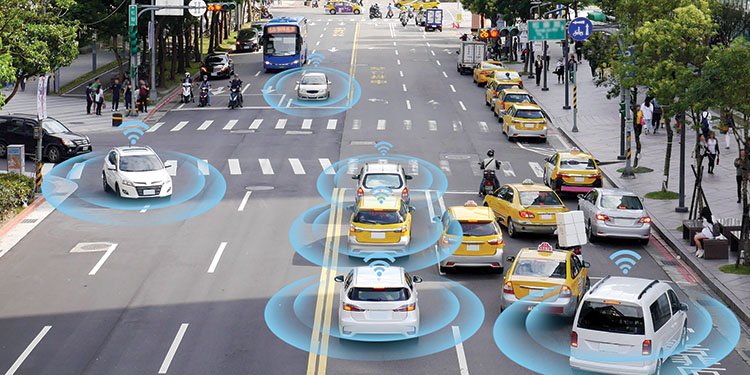
Think of the AV as a “smartphone on wheels.” If your city uses mobile payment apps, you are already closer than you think you are. When a human parks, they open an app and their GPS identifies the zone. An AV does the exact same thing via API, initiating a session directly with the city’s backend.
Cameras as “referee”
Does this mean cameras are obsolete? No. In fact, they become more critical, but their role shifts from “parking enforcement officer” to “referee.”
While the API manages the compliant AVs, the camera manages the chaos of the real world. What happens when a 1998 Ford F-150 blocks the loading zone that a Waymo has reserved? The Waymo’s API can’t “see” the truck; it will simply arrive, find the spot blocked, and stop in the travel lane (the “San Francisco Warning”).
Smart cameras provide the “ground truth.” They detect the unauthorized vehicle, issue a ticket to the human driver, and — crucially — signal the AV to reroute to an alternative spot before it gets stuck. Cameras don’t just watch the robots; they clear the path for them.
Rewiring the workforce for automated compliance
One of the most persistent fears around AI and automation is workforce displacement. In curb management, the reality looks different. As AVs and connected fleets enter city streets, parking and curbside teams are being asked to operate more complex systems, not fewer of them.
Khristian Gutierrez, CEO of the parking and curb management solutions provider Passport, argued that the outcome cities should be designing for is predictable behavior.
“Parking enforcement officers already interpret complex curb rules every day, whether on foot or using LPR-enabled vehicles,” Gutierrez said. “Autonomous fleets require those same rules to be explicit and machine-readable. When cities digitize curb regulations using open standards like the Open Mobility Foundation’s Curb Data Specification and expose them through clear APIs and routing protocols, vehicles can determine where they are allowed to stop, for how long, and under what conditions. Compliance then becomes automatic by default.”
From Gutierrez’s perspective, this shifts how the workforce is deployed. “Automation handles routine transactions and violations, while people move into roles that require judgment, safety awareness, and equity oversight, including human-in-the-loop review in the back office,” Gutierrez said. “Cities gain higher compliance and safer curbs, and enforcement teams focus on the interactions where human presence actually matters.”
Learning from the leaders: the strategic shift
We are not operating in a vacuum. Leaders who have managed some of the nation’s most complex transportation grids are already pointing the way forward.
Gabe Klein, the founder of the consulting firm Adapt/Impact LLC, argued that cities are often fixated on the wrong metric.
“Cities focus too much on enforcement versus pricing the curb appropriately,” Klein said. “Obviously, you need both, carrot and stick. But I would argue that with the right policies, associated pricing, and technology to do the work — let’s use AI to charge for AVs, for example — we can move to dramatic revenue increases and happier citizens and businesses concurrently.”
Klein’s perspective reinforces the article’s central thesis: Friction is the enemy, but pricing is the solution. By using technology to charge AVs appropriately for the space they use, cities can move from a punitive model (tickets) to a productive model (revenue and flow).
The final verdict: A call to courage
The transition to an AV-ready world will not be smooth. But the alternative — doing nothing — is a dereliction
of duty.
Parking authorities have a unique opportunity to shed their reputation as the “department of ‘no’” and become the architects of the future city. By embracing the principles of dynamic pricing, digital rules, and equity-centered design, they can ensure that the autonomous future serves the many, not just the few.
As Wharton reminded us, resilience begins with prevention. We prevent the chaos of tomorrow by building the infrastructure of today.
The curb has always been public infrastructure. Autonomy simply forces us to finally manage it like one.
JIM GIBBS is the co-founder and CEO of Meter Feeder, Inc. He can be reached at [email protected].