


In congested cities with mature parking programs, measuring vehicles served instead of occupancy offers clearer insights into turnover and curb effectiveness.
By Cole Jaillet
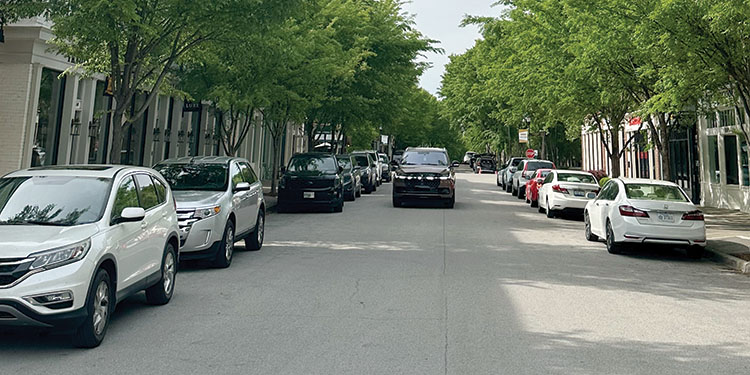
For decades, cities have approached on-street parking as a straightforward economic problem. The curb has been treated as a fixed supply with demand fluctuating throughout the day, and price is the primary lever used to bring the two into balance. If demand is high and spaces are hard to find, rates go up. If spaces sit empty, rates come down. The goal is equilibrium, typically defined as keeping occupancy somewhere around 85%, so there is always an open space on each block.
This framework has shaped parking policy for generations, influencing everything from rate-setting and time limits to the rise of demand-based pricing programs. And with the advent of sensors, license plate recognition, and real-time occupancy data, many cities have doubled down on this model. If occupancy trends can be measured, the logic goes, then prices can be adjusted dynamically to keep utilization within a narrow target range.
On paper, this makes sense. The supply of curb space is limited and largely immutable. Pricing should, in theory, influence behavior. But when cities look closely at how on-street parking actually functions in practice, cracks in the model begin to appear.
When Econ 101 meets the street
In the classic economic model, higher prices reduce demand. Yet on the street, parking demand often fails to respond to price in the way planners expect. Rates change, sometimes significantly, and occupancy remains stubbornly high. In some cases, it even increases. When prices rise and occupancy doesn’t fall, cities question whether rates are high enough. The conclusion is often that the pricing program is underpowered, politically constrained, or poorly communicated.
Rarely do cities stop to question whether occupancy itself is the right outcome to optimize. To understand why the model struggles, it helps to look at parking through the eyes of the driver. When someone arrives at their destination, they are not typically shopping for the best-priced curb space. They are looking for the fastest, easiest way to park the car and get on with their day. Time, convenience, and certainty matter far more than marginal differences in price.
In that moment, parking behaves less like a discretionary purchase and more like a utility. Drivers aren’t comparing alternatives block by block in real time. They commit to a space first and worry about the cost later. By the time a rate is visible, the decision to park has already been made. Very few drivers will get back into their car and circle in search of a cheaper space, especially in densely populated or unfamiliar areas.
This behavior undermines one of the key assumptions of classic economic models: that consumers are price-aware and price-responsive at the point of decision. In on-street parking, price awareness is often limited, delayed, or secondary to other concerns. That alone weakens the relationship between price and occupancy.
There is also the question of scale. Parking may be price-sensitive, but only at levels that most cities are unwilling or unable to charge. Within the relatively narrow band of rates that are politically acceptable, price changes may simply be too small to meaningfully suppress demand. If elasticity exists only beyond those bounds, it is functionally irrelevant for most municipal programs.
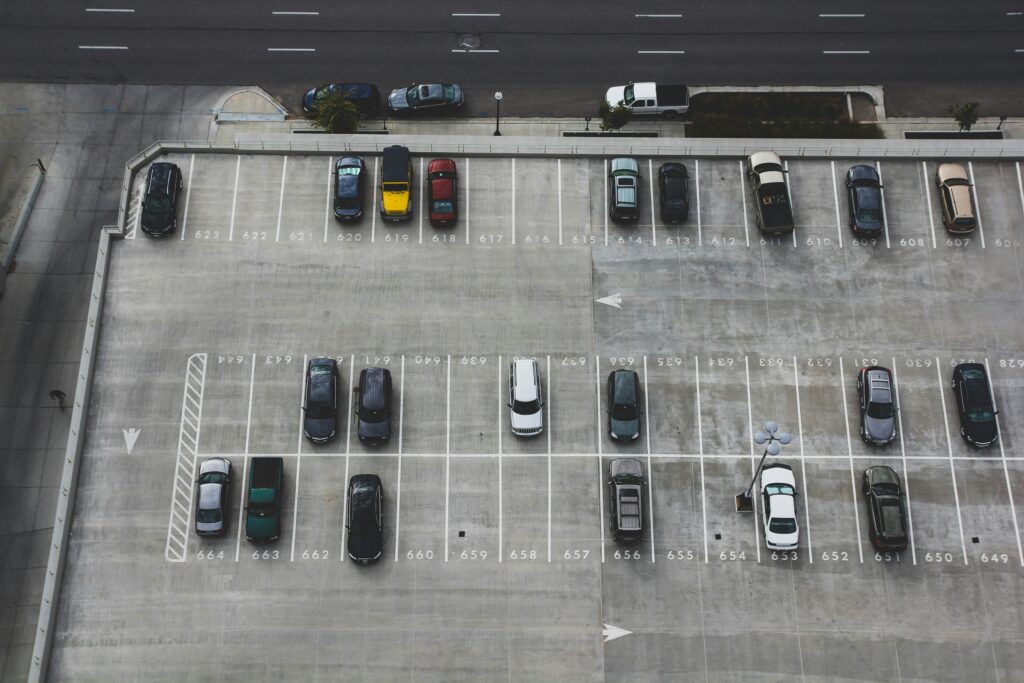
The result is a system where occupancy trends present a misleading metric. Occupancy is not a behavior. It is a snapshot. It tells us how many spaces are full at a given moment, but it tells us very little about how the system is actually being used over time.
This is where cities should consider rethinking what success looks like.
A new way to evaluate parking performance
If the objective of on-street parking is to support access, reduce circling, and serve as many visitors, residents, and customers as possible, then maximizing occupancy at all times may actually be counterproductive. For example, a block that sits at 85% occupancy all day might look well-managed. However, if the same vehicles occupy those spaces for long periods, access is limited, and turnover is low. New arrivals circle, overstay, or give up entirely.
What matters more than how full the curb is at any given moment is how productive that curb is over the course of a day. Productivity, in this context, is best measured not by occupancy, but by how many different vehicles are served.
When cities examine parking data through this lens, a different pattern often emerges. Although occupancy may remain flat or even rise after rate changes, the duration of stay tends to shift. Higher prices are associated with shorter stays. Lower prices are associated with longer ones. People still park, but they adjust how much time they purchase.
This makes intuitive sense. Once a driver has parked, there is no easy way to undo that decision. The only control they retain is how long they plan to stay. If the rate is higher than expected, the natural response is not to leave immediately, but to trim the visit. Lunch becomes quicker or errands get combined.
Duration, unlike occupancy, reflects an active decision by the parker. It is a behavioral metric, not just a static condition. And duration has a direct relationship to turnover. Shorter stays mean that the same space can serve more vehicles throughout the day.
This is where the traditional 85% occupancy target starts to break down. That rule of thumb was designed to ensure availability, but it assumes that each space is serving roughly the same number of vehicles regardless of price or policy. In reality, two blocks with identical average occupancy can perform very differently. One may serve a small number of vehicles with long stays. The other may serve many more vehicles with shorter stays. Occupancy alone cannot distinguish between the two.
If the goal is to maximize access, then cities should aim for occupancy that is close to full while still allowing turnover. A curb that is consistently near capacity but turning over frequently is far more productive than one that is comfortably under the threshold but stagnant. The key is not how many spaces are occupied, but how often they change hands.
This shift in thinking has important implications for how rate changes and duration rules are evaluated. Instead of asking whether a price increase lowered occupancy to a target percentage, cities should be asking whether it increased or decreased the number of vehicles served. Did more drivers gain access to parking over the course of the day? Did turnover improve in a way that supports local activity?
Credit: Jheric1983 | Dreamstime.com
Data is key
Focusing on vehicles served also brings clarity to debates about time limits and enforcement. Shorter maximum stays and higher rates both tend to push duration down. That can be a feature, not a flaw, if the intent is to increase access. But if duration shrinks without a corresponding increase in vehicles served, that may indicate other issues, such as noncompliance or confusing rules.
This is why duration and transaction data are so valuable. They reveal how people actually respond to pricing and policy, rather than how we assume they should respond. They also help identify unintended consequences, such as increased overstays or shifts in behavior that undermine revenue or compliance.
More broadly, this reframing aligns parking management with how other parts of the transportation system are evaluated. Transit agencies long ago moved beyond counting vehicles and began focusing on people moved. Throughput, not static capacity, became the measure of success. Parking has lagged behind, clinging to occupancy as a proxy for performance.
Parking is not just about storing cars. It is about enabling movement and access. Curb space is a scarce public asset, and its value lies in how effectively it connects people to destinations. Measuring vehicles served captures that value far better than occupancy percentages ever could.
This perspective also forces a more user-centered view of parking. From the driver’s standpoint, the question is not whether a block is 82% or 88% full. It is whether they can find a space, complete their visit, and leave without frustration. A system that looks balanced on a dashboard but feels unpredictable on the street is not succeeding.
When cities adopt as a primary metric the number of vehicles served, they gain a clearer picture of how pricing, duration limits, and enforcement interact. They can see whether policy changes actually expand access or simply reshuffle the same demand. They can design programs that prioritize turnover where it matters most, without fixating on arbitrary occupancy targets.
None of this means that occupancy is irrelevant. It still provides useful context. But it should be treated as a secondary indicator, not the central objective. This is particularly true for cities with high levels of road congestion or cities with established curb management programs. For those cities, vehicles served is a much more useful metric. For cities with less congestion or newer curb management programs, it may make sense to continue to focus on occupancy initially. A good way to contextualize this is that occupancy data tells you how full the curb is; vehicles-served data tells you how well the curb is working.
For too long, parking has been managed as if it were a market seeking equilibrium. In reality, it functions more like a utility designed to move people efficiently through limited space. Rate-based programs are not failing. They are simply being judged by the wrong metric.
The next evolution of parking management is not about chasing perfect occupancy. It is about maximizing access. When cities stop asking how full their spaces are and start asking how many people they serve, they move beyond Econ 101 and toward a model that reflects real behavior on real streets.
COLE JAILLET is the CEO of Turnstone. He can be reached at [email protected].