


By Jade Neville
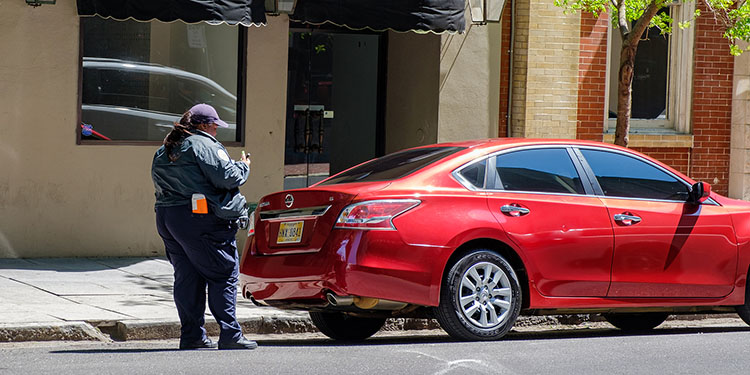
Ask a resident what they think of their city’s parking department, and I can almost guarantee they won’t mention the appeals rate. They’ll tell you about the officer they spoke to last Tuesday. Whether that interaction felt calm and professional, or tense and dismissive, will shape everything they believe about the department, and possibly about local government as a whole. If you’re a municipal parking department, that’s your brand, on every street corner, every single day.
I spent eight years as a civil enforcement officer before I ended up on this side of the industry. I know what that role asks of people. I know the weight of being visible on difficult days, in difficult weather, in communities that are sometimes grateful and sometimes really, really not. The officers who do it well, who bring patience, judgment, and genuine care for the space they’re managing, are doing something that goes far beyond issuing citations. They are the human face of public service, and that deserves more recognition than we typically give it.
Parking enforcement officers are often the most frequent point of contact between a municipal authority and the people it serves. Not the mayor’s office. Not city hall. The officer on the street, early on a weekday morning, managing competing demands for a very finite amount of space. How they carry themselves, how they communicate, and whether residents feel seen or simply processed, all of it matters. And this impression lasts far longer than the citation.

Beyond citation volume
The most progressive municipal parking operations are moving beyond citation volume and layering in something richer: complaint rates, appeal outcomes, and community feedback. Metrics that tell you not just how much enforcement happened, but whether it was fair and well-received. That shift, from output to outcome, is where the real gains are.
The departments leading the way are also rethinking how officers are deployed. Area-based assignment, anchoring teams to specific neighbourhoods rather than rotating them city-wide, builds local knowledge that no training manual can replicate. Officers learn which intersections become flashpoints on game nights, which residents need a little more time and patience, and which recurring issues need a longer-term solution rather than another ticket.
When an officer knows their community, residents don’t have to explain their situation from scratch every time. And honestly, having had to explain the same problem to different people at different agencies, I can tell you that’s more significant than it sounds. That continuity builds trust, and trust changes everything.
Compelling evidence
The evidence is compelling. The London Borough of Hackney, consistently ranked in the top three for enforcement quality at the national tribunal, recorded approximately a tenfold year-on-year reduction in physical and verbal attacks on officers after transitioning to a district-based model. Familiarity with a community is a safety asset, not just a service one.
Body-worn cameras reinforce this further. Hackney’s data shows officers are more consistently professional when they know an interaction is on record, and the public moderate their behavior too. ParkIndy, the City of Indianapolis’s parking authority, saw a 40% reduction in negative public interactions following their body-worn camera rollout, showing the effect is just as measurable on this side of the Atlantic.
But structure and technology only go so far if the people delivering the service aren’t genuinely supported. Frontline staff morale isn’t a human resources footnote. It’s an operational variable with direct consequences for service quality. Proper equipment. Weather-appropriate gear. Predictable shift patterns. Actually being listened to. I cannot stress that last one enough. Departments that engage their frontline teams honestly, acting on what’s within their control and being transparent about what isn’t, consistently see improvements in culture, retention, and public-facing performance.
Invest in people, transparency
The good news is that none of this requires a transformation program or a significant budget increase. It requires consistent attention and the recognition that the people closest to the public are also closest to the problem. Their insight is one of the most underused assets in any parking operation. When we invest in them properly, the service improves. Every time.
Complaint rates and appeal outcomes are worth far more attention than they typically receive. Fewer complaints usually mean proactive resolution is working. A strong appeals record confirms enforcement is lawful and consistent. Departments that review outcomes systematically and feed learning back to officers on the street build something genuinely valuable: a culture of continuous improvement.
Where departments have also opened up their enforcement data, publishing activity by area and violation type, transparency becomes a trust-building tool in itself. It repositions the department not as a body to be avoided, but as a service managing shared civic infrastructure on behalf of everyone.
Community stewardship along with enforcement
That reframing matters for residents, but it matters just as much for the officers themselves. When a parking enforcement officer’s professional identity is rooted in community stewardship rather than enforcement activity alone, everything shifts. Recruitment changes. Retention improves. People who feel their work means something tend to show up differently.
This industry has made impressive strides on technology, from cameras and sensors to digital back offices and smarter processing tools. That investment is necessary. But if the person delivering the service doesn’t feel supported or confident enough to exercise judgment, the technology just makes a poor experience faster.
We talk a lot about improving the customer experience in parking. The most direct route to that outcome isn’t through an app or a portal. It’s through the officer on the street, who is, whether we say it enough or not, the most powerful customer service touchpoint a municipal parking department has. They deserve to be invested in. They deserve to be recognized. And when they are, I promise you, the results speak for themselves.
JADE NEVILLE is a director for the Alliance for Parking Data Standards (APDS), technology representative on the Council of Representatives at the British Parking Association, and the sales operations and marketing manager for Trellint. She can be reached at [email protected].