



By Subhash Challa
We have spent years analyzing enforcement programs as they modernize across continents, and one clear pattern has emerged. In case after case, cities buy new automation technology but remain constrained by legacy approaches to enforcement that leave hundreds of thousands of dollars in value untapped and programs only partly automated.
Despite the promise of automation, officers in many jurisdictions continue to step out of vehicles into live traffic to write tickets. Why isn’t the automation flowing through to where it will be most effective? We’ve concluded that automation itself frequently can be the bottleneck to its own implementation, and there are steps that can be taken to fix this bottleneck. Here’s how.
The seven-level maturity model for parking enforcement
Mobile license plate recognition (LPR) has become shorthand for modern enforcement, where a camera-equipped vehicle sweeps a district, flags violations, and the program is declared transformed.
But how many times per shift do officers exit a vehicle to issue a citation, when this technology is bought on the promise that they won’t have to do that anymore? If the answer is more than zero for routine offenses, your operation only sits at level four of the seven-level maturity model we have developed to better understand the automation bottleneck phenomenon and shape a path forward.
The model runs from handwritten tickets at level one through digital handhelds, handheld LPR, two-officer mobile LPR, sensor-triggered patrols, and dispatched issuance at level six. The tools differ enormously across those six levels, but the constraint never moves, and every citation requires a human being standing beside the vehicle to complete it.
That single requirement sets an irreducible cost per ticket, caps throughput at the pace of human movement, and keeps officers in harm’s way. Upgrading within levels one through six relocates the bottleneck. Digital ticketing saves time on paperwork but none on patrol. Handheld LPR speeds data entry but shortens no walk between vehicles. Mobile LPR detects more violations, then queues them behind a stop-and-issue routine that interrupts the route it was meant to accelerate.
It’s only when the city reaches level seven that the solutions it has bought into stop creating challenges and bottlenecks of their own.
What level seven changes
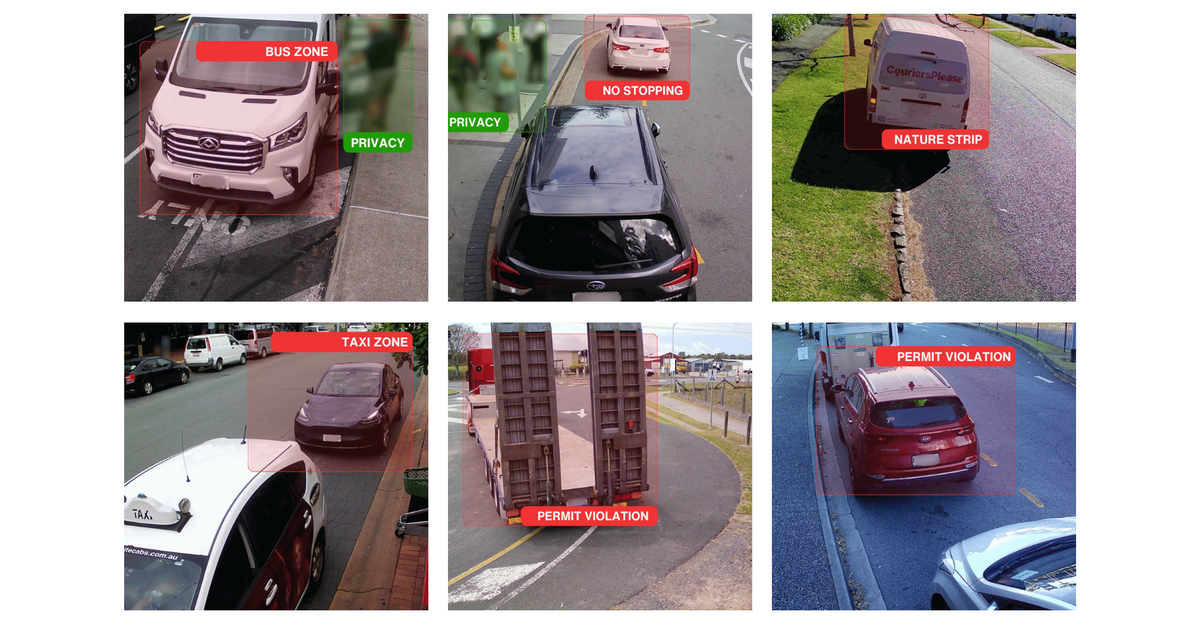
Level seven removes the field-issuance requirement entirely. Detection vehicles and fixed cameras capture comprehensive evidence packages continuously, while a centralized back office reviews the evidence, confirms compliance determinations, and processes citations for mail-out. The officer’s job becomes safe driving and route completion.
The predictable objection is that automation strips human judgment from a process that demands it. However, in practice cities experience the opposite. Legal frameworks still require human review and authorization before a citation is issued. Level seven simply concentrates that judgment where it earns its keep: complex cases, appeals, quality assurance, and governance. What gets automated is the repetitive, dangerous portion of the work, the part no officer joined the profession to do.
Once such a system is in place, cost per ticket gives way to cost per coverage hour. Expansion becomes a configuration exercise, adding routes and cameras rather than headcount. Ultimately, we’ve seen that cities that achieve level 7 can achieve as much as four times the geographic coverage with the same team.
Why this is genuinely hard
Skeptics are right about one thing: Reading a plate and checking it against a payment list is trivial, and it covers only a fraction of what cities need to enforce.
Consider what determines whether a vehicle is legally stopped in a no-stopping zone, a bus zone, or a time-limited space. Legality depends on the specific signage nearby, the vehicle’s precise position relative to the restriction, vehicle class, day and time, any permit that overrides the general rule, and the evidence standard an independent appeals process will demand. In dense downtowns, the applicable rule can change every few yards.
Genuine automation requires high-accuracy positioning, policy-aware compliance logic, and evidence built for end-to-end review. Bolting cameras onto a vehicle does not get you there, and this is why so many programs stall at level four and mistake the plateau for arrival.
The question that matters now
The question facing cities is no longer whether to adopt mobile LPR, as most already have, in some form. The question is whether to remain at the levels where mobile LPR typically operates or to remove the constraint it was never designed to touch.
Enforcement leaders should assess their level honestly, define success in outcomes rather than equipment, design the back-office review process to handle volume and false alerts before scaling detection, and pilot in the zones where illegal stopping does the most damage: transit corridors, taxi stands, and no-stopping zones.
If your officers are still exiting vehicles to write tickets for routine offenses, modern enforcement has not yet arrived in your city, regardless of what you have purchased.
Subhash Challa is the founder and CEO of SenSen.AI. He can be reached at [email protected].