



Through greater adoption of digital technologies, parking operators can significantly enhance operational efficiency and customer experience while unlocking new revenue streams.
By Dr. Mark Friesen
The parking industry is undergoing a profound shift as digitalization redefines how space, data, and customer needs intersect. Across the U.S., operators are witnessing the emergence of new tools and models that increase operational efficiency and unlock additional revenue streams. Although global pioneers have already demonstrated what’s possible, the U.S. market is primed to leap forward by localizing and scaling these innovations.
Key to this transformation is the adoption of smart technologies. From camera-based license plate recognition systems that eliminate the need for barriers and paper tickets to cloud-based parking access and revenue control systems (PARCS) that operate seamlessly with free-flow entry and exit, technology is redefining the fundamentals of access and control. These advancements reduce congestion, eliminate friction, and free staff to focus on value-added services. The result is a smoother, more predictable customer experience that increases loyalty and throughput.
Data, payments, and pricing innovation
Data plays a pivotal role in this evolution. With the help of business intelligence platforms, operators can track occupancy in real time, analyze customer behaviors, and anticipate peak periods. These insights enable better resource allocation, predictive maintenance, and more precise pricing strategies. In addition, mobile and cashless payment systems are becoming the norm, driven by user expectations and the need for cost-efficient, scalable processes. Many customers now expect to reserve a spot in advance, access a garage, and pay without even rolling down a window.
The move toward ticketless and mobile-first user experiences extends to dynamic pricing and reservation models. Similar to revenue management in the travel and tourism sector, parking fees are increasingly set in real time based on supply and demand. This ensures that space is used efficiently and that pricing reflects its true value at any given moment. Advanced reservation systems not only increase predictability for customers but also help cities reduce search traffic, thereby easing congestion and cutting emissions.
Automation, EVs, and infrastructure integration
Automation is accelerating these shifts. Robotic valet services and automated parking systems are being piloted in major cities, particularly in high-demand zones such as airports and dense downtown districts. These systems increase parking density, reduce vehicle damage, and provide unmatched convenience.
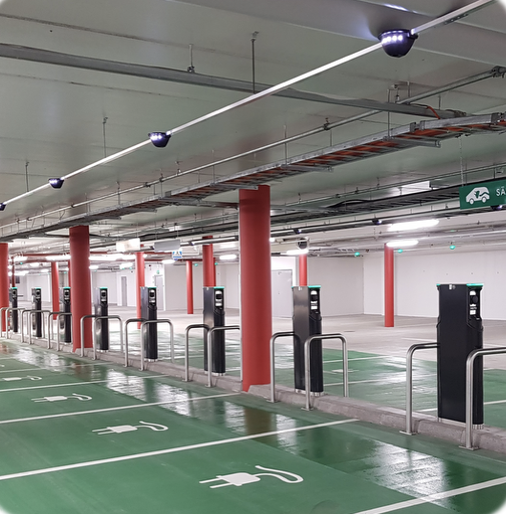
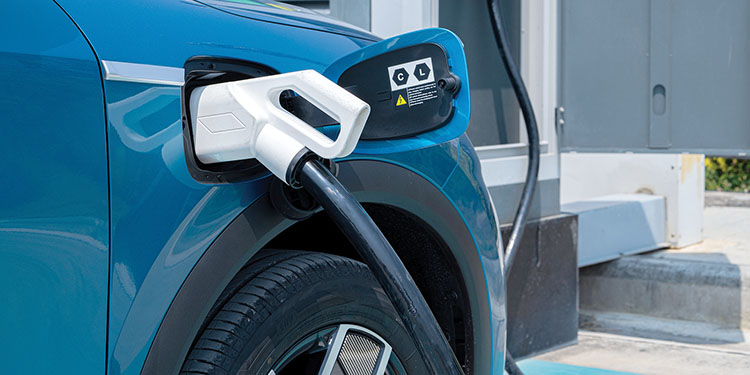
At the same time, the growing adoption of electric vehicle (EV) technology is forcing a rethink of the parking product. Smart EV charging, especially when integrated into PARCS platforms, can add substantial new revenue streams and deliver an enhanced customer experience without additional staffing.
For EV-ready parking infrastructure to become a true differentiator, interoperability and scalability are key. Operators must think beyond today’s EV models and prepare for fleet electrification and autonomous vehicles that will eventually self-park and self-charge. The convergence of these technologies demands tight coordination among hardware, software, and user interfaces.
Parking as a hub in smart cities
Urban development trends are also reshaping the role of parking in U.S. cities. Parking facilities are no longer single-purpose assets. Increasingly, they function as hubs that connect users to car-share platforms, micromobility options, and mass transit. Smart signage, integrated mobile apps, and real-time data enable users to plan entire multimodal journeys with ease. In “car-light” neighborhoods and new urban developments, parking infrastructure may even be designed to serve multiple transport modes from day one.
Mobility-as-a-Service (MaaS) platforms offer further opportunities. By integrating parking as part of bundled mobility packages, operators can appeal to new demographics and meet growing demand for flexibility. Similarly, the rise of ride-hailing has altered curb space dynamics, pushing operators to invest in tools for curb management, designated drop-off areas, and monetization strategies that align with shifting urban needs.
Sustainability, ESG, and the path forward
These innovations are also being driven by broader societal expectations around sustainability and environmental, social, and governance (ESG) performance. Investors are increasingly rewarding companies that demonstrate climate resilience and efficient land use. By implementing solar panels, energy-efficient lighting, and permeable surfaces, parking operators can improve their environmental footprint and their long-term asset valuation.
Smart design plays a crucial role in these efforts. Vertical parking, adaptive reuse of structures, and data-informed planning help reduce soil sealing, manage stormwater runoff, and mitigate urban heat. Combined with digitized operations that reduce operating expenses, these strategies result in higher returns and future-proof infrastructure.
Globally, cities from Singapore to Stockholm are piloting next-generation parking ecosystems that blend automation, sustainability, and user-centric design. U.S. operators have an opportunity to learn from these leaders while applying their lessons to a uniquely American context, one that is characterized by suburban sprawl, varied regulation, and diverse consumer behaviors. The strategic path is clear: Invest in flexible, cloud-native platforms; build partnerships across the mobility value chain; and embrace data as the foundation for decision-making.
Ultimately, smart parking is about much more than convenience. It’s about positioning parking operators as enablers of urban transformation. By embracing digitalization, the U.S. parking industry can increase revenue per space, improve customer satisfaction, and play a pivotal role in shaping the sustainable cities
of tomorrow.
DR. MARK FRIESEN is the founder and managing partner of QUINTA Consulting. He can be reached at [email protected].