



By Larson McDonagh
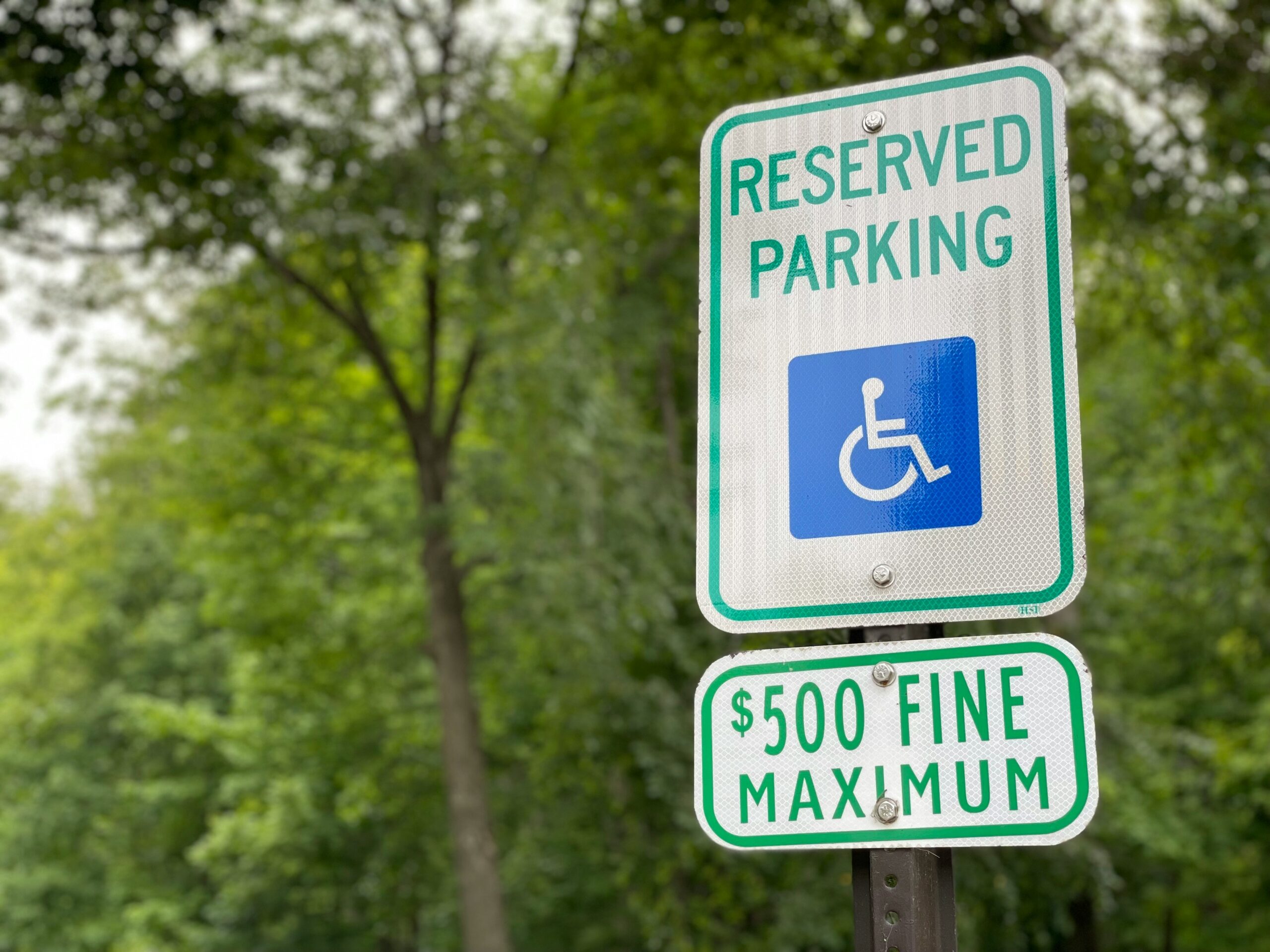
Disabled parking violations are a well-documented phenomenon adversely affecting people with disabilities and their access to accomplishing everyday tasks. In their quest to improve compliance with disabled parking regulations, some local governments have turned to volunteers for help in deterring what in some cases remains a stubbornly persistent problem.
Travis County, Texas
“I think most people think that accessible parking is more of a convenience versus access,” said Tanya Winters, the accessible parking enforcement volunteer coordinator of Travis County, Texas, home to the state capital of Austin. “They think they’re going to swing in and swing out before anybody needs it.”
As a wheelchair user herself, Winters has dealt with this inaccessibility firsthand. “If I park here, I need the entire access aisle,” she said. “In fact, I need even more space, because I got to get down and around my vehicle to get out.”
Winters is part of Travis County’s Citizen Disabled Parking Enforcement Program, which the county established 30 years ago after the state of Texas passed Transportation Code 681 in 1995. The law allows city governments to authorize civilians to enforce disabled parking laws.
Established by Constable Bruce Elfant, the Citizen Disabled Parking Enforcement Program was needed because disabled parking violations were too many for law enforcement officers to maintain alone, said Carlos Lopez, the constable for Travis County’s Precinct 5. As part of the program, volunteers carry ticket books with them and use their phones to document violations through photos, Lopez said.
But after three decades, disabled parking violations continue to persist. “We thought we’d be out of the business, but we’re not,” Lopez said. “The violations keep occurring.”
In the past year, Travis County’s volunteer program has issued 1,565 tickets, Winters said.
Similar programs in Jacksonville and Portland, Oregon
Travis County is not alone when it comes to volunteer enforcement of disabled parking requirements. Since 1990, the City of Jacksonville, Florida, has relied on volunteers for its Disabled Parking Enforcement team, according to the city’s website. Program participants are trained to enforce statute 316.1955 to improve accessibility and strengthen equal opportunity for qualified people with disabilities.
Portland, Oregon, also has a Disabled Parking Enforcement Unit that relies on volunteers to conduct enforcement. Created in 2003, the unit seeks to educate the public about the law regarding disabled parking and their responsibilities as citizens. Volunteers focus on “parking lots throughout the City of Portland with properly designated disabled parking,” according to the Disabled Parking Enforcement Unit webpage.
Volunteers with the Portland program can enforce violations involving cars parked without a permit; cars parked with permits not belonging to the driver; invalid, stolen, or disfigured permits; non-wheelchair-permitted placards parking in wheelchair-use-only spots; and vehicles parked in the access aisle next to disabled parking spots.
The importance of education
Education is an important component of volunteer enforcement programs. For example, Travis County allows first-time violators to request to take a deferral class. Established in 2022, the class requires that participants attend a PowerPoint lecture and take a quiz regarding the material, according to Winters, who teaches the class.
Although disabled parking violations remain a problem in Travis County, progress does occur. Stu Molina, a volunteer with the Citizen Disabled Parking Enforcement Program, said he writes 40 to 50 citations a year and has seen the benefits of the program in action.
“I enjoy it because I’ve noticed [improvement],” Molina said. “I go to the same places all the time” when writing citations, he said. It’s not unusual, he said, to “see the exact same vehicle parked legally after I write them a citation.”
Larson McDonagh is a Western Washington University journalism student interning with Parking Today Media. They can be reached at [email protected].