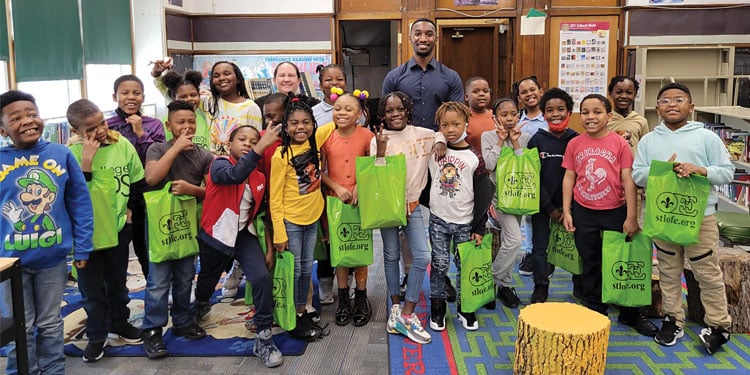





St. Louis uses a portion of its parking revenue to fund College Kids, a program that provides savings accounts and financial education to thousands of students.
By Jay Landers
When Adam Layne became treasurer for the City of St. Louis in April 2021, he inherited oversight of an innovative program that transforms parking revenue into educational opportunity. The College Kids Children’s Savings Account Program, now in its tenth year, automatically enrolls every kindergartner in St. Louis public schools in a savings account seeded with $50, money that comes directly from the city’s parking division.
As cities across the nation grapple with educational inequality and limited opportunities for low-income families, St. Louis has created a scalable model that combines direct financial support with comprehensive financial education. The program’s approach — automatic enrollment, long-term engagement, and integration with existing city operations — offers lessons for parking administrators and municipal leaders seeking to maximize the community impact of their revenue systems. What began as one treasurer’s vision has evolved into a decade-long commitment that demonstrates how strategic allocation of parking revenues can extend far beyond infrastructure maintenance and enforcement.
A vision rooted in personal experience
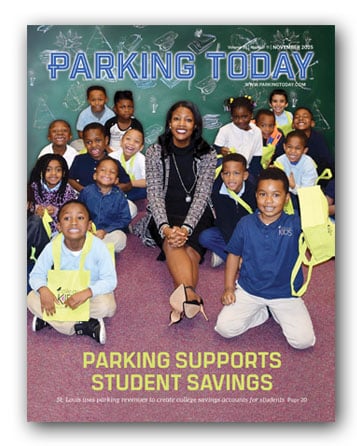
The College Kids program was founded by Tishaura O. Jones, who was the treasurer of St. Louis before serving as the city’s mayor from 2021-2025. “I founded the College Kids savings program with a clear purpose, rooted in my personal and professional experience,” Jones said. “As a single mother with a background in finance, I was creating a savings plan for my own son. This process made me think about children who don’t have access to savings accounts to support their post-secondary aspirations.”
Jones didn’t start from scratch. Her research led her to Jose Cisneros, the treasurer for the City and County of San Francisco, who pioneered educational savings accounts for schoolchildren. But the most compelling evidence came from academic research by the Washington University Center for Social Development. “Their findings show that ‘children with less than $500 saved are 3 times more likely to go to college and 4 times more likely to complete college,'” Jones said, citing research from the center.
The program launched in 2015 as a near replica of San Francisco’s Kids to College program, adapted to St. Louis’s needs and resources.
Parking’s contribution
For a parking division with an annual budget of approximately $20 million, the contribution to the College Kids program represents a modest investment with potentially transformative returns. The city contributes roughly $120,000 annually in seed deposits, plus additional administrative costs that bring the total program budget to slightly more than $300,000 per year, Layne said, representing about 1.5% of parking revenues.
This connection between parking enforcement and financial empowerment is no accident. In St. Louis, the parking division falls under the Treasurer’s Office, making Layne both the city’s treasurer and its chief parking administrator. Meanwhile, the College Kids program operates under another unit within the Treasurer’s Office, the Office of Financial Empowerment, which also serves adults with banking access, credit counseling, and first-time homebuyer programs.
As an enterprise fund, the city’s parking division is “not funded by tax dollars,” Layne noted. “It is funded by its own revenue.” This structure enabled the program’s founders to dedicate resources to youth development without burdening taxpayers or requiring a ballot initiative.
How the program works
College Kids uses an opt-out enrollment model. Every student entering kindergarten in a St. Louis public or charter school is automatically enrolled through a memorandum of understanding with school districts. With approximately 2,000 kindergartners entering the system annually, the program now serves more than 20,000 students.
Each child receives a real bank account in their name at Alltru Credit Union, the program’s banking partner. Layne serves as custodian on these accounts, ensuring they remain designated for educational purposes. Families can make deposits directly at the credit union or during special “family savings nights” organized by the program.
The opt-out rate remains minimal. “Most of the opt-outs that we’ve had over the last few years are families that have moved out of state,” Layne says. Families who leave can withdraw their contributions and roll them into other college savings programs.
Students can increase their savings through multiple channels beyond family contributions. They earn incentives, ranging from $5 to $20, by attending financial literacy activities. The program also incentivizes parents to access other community resources, enabling them to earn deposits for their children by participating in adult financial education classes or community workshops.
Bank partners occasionally sponsor events, contributing $50 to each attending student’s account. Angel donors and organizations sometimes sponsor entire classrooms or activities. Students also benefit from awareness of external opportunities.
While parking revenues fund the program’s operations and initial deposits, additional account growth relies heavily on philanthropy. The city has raised substantial private support, including a $250,000 commitment from Wells Fargo three years ago. The program participates in Give STL Day and Giving Tuesday annually, typically raising about $20,000 on each occasion.
A comprehensive curriculum
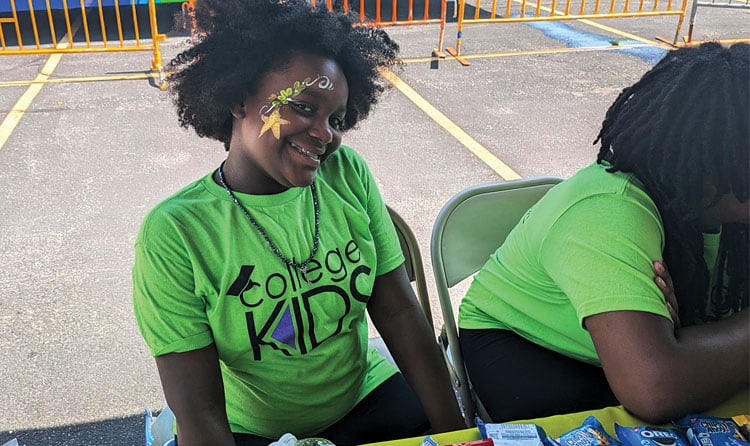
The program’s financial literacy education extends far beyond the savings accounts. Students receive age-appropriate instruction every year from kindergarten through high school, covering three main categories: budgeting, savings, and credit and money management.
The curriculum draws from multiple sources, including Federal Reserve Education, an education platform dedicated to economics and personal finance created by the U.S. Federal Reserve. “We do believe in not reinventing the wheel,” Layne said.
For elementary students, the program uses “push-in” classroom visits featuring financial literacy books. Books for young readers prompt discussions about earning, budgeting, and spending.
Middle schoolers participate in interactive budgeting activities. Students receive a set amount of money, create a budget, then draw event cards that might increase their rent, boost grocery costs, or provide a windfall gift. “When an event happens, they have to work that into their budget and then talk through what that budgetary change looks like,” Layne said.
High schoolers engage with more sophisticated concepts. Bank education teams present on wants versus needs, using examples like $200 sneakers to discuss how necessities can be met at different price points. The program also runs a “College Kids Game Show,” a Jeopardy-style competition featuring questions about interest rates, checking versus savings accounts, and loans versus mortgages.
Goals and philosophy
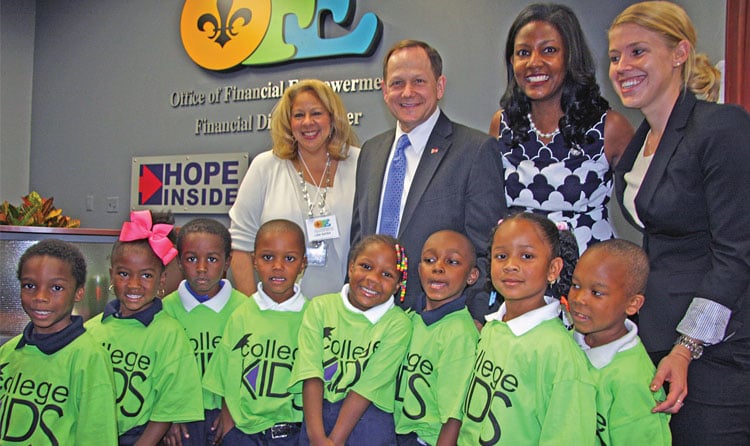
The program pursues multiple interconnected goals. The immediate target is helping students accumulate at least $500 in savings. Although insufficient to cover college costs entirely, this threshold matters because of its psychological and behavioral impacts.
“Studies do suggest that the earlier that students and families start saving for college, the more aware they are of the ongoing cost of college” and “more aware of early scholarships they can apply to and will apply to more consistently,” Layne said. Students with college savings accounts are more likely to join college prep programs, attend summer STEM sessions, or enroll in mini medical schools, he noted.
The program provides a 13-year planning horizon, enabling families to develop consistent saving habits and comprehensive college knowledge. But College Kids acknowledges that four-year universities aren’t the only path to success. Students can use their savings for two-year colleges, trade schools, or even equipment and tools for immediate entrepreneurship or skilled trades.
Beyond the money, the program aims to develop financially responsible adults. The 13-year curriculum ensures students “can make more informed financial decisions as they grow,” Layne said.
Jones articulated the program’s deeper purpose: “Investing in our children’s future is the most important thing we can do, and the returns are immeasurable,” she said. “By establishing these accounts for kindergartners and working with families throughout their primary education, we send a powerful message. It shows children and their parents that someone in local government cares about their future and believes in their potential. This program sends the ultimate message to families that we want them to stay here, and we want to help their children succeed.”
Looking ahead
To celebrate the program’s tenth anniversary, the city is planning a November gala that will honor community partners, including Alltru Credit Union and major donors. But Layne emphasized that the event will focus primarily on students and families. “The whole goal of this is to make sure our families feel special, make sure they understand we are still committed to them and their ultimate success,” Layne said.
As the program matures and approaches its first graduating class, it offers a model for other cities seeking creative funding solutions for youth development. By leveraging parking revenues, St. Louis has demonstrated how municipal infrastructure can support long-term educational goals. For parking industry professionals, College Kids illustrates how revenue streams typically viewed as purely operational can be redirected toward community investment, creating measurable social impact while maintaining the core functions of parking management.
JAY LANDERS is the editor-in-chief of Parking Today. He can be reached at [email protected].