

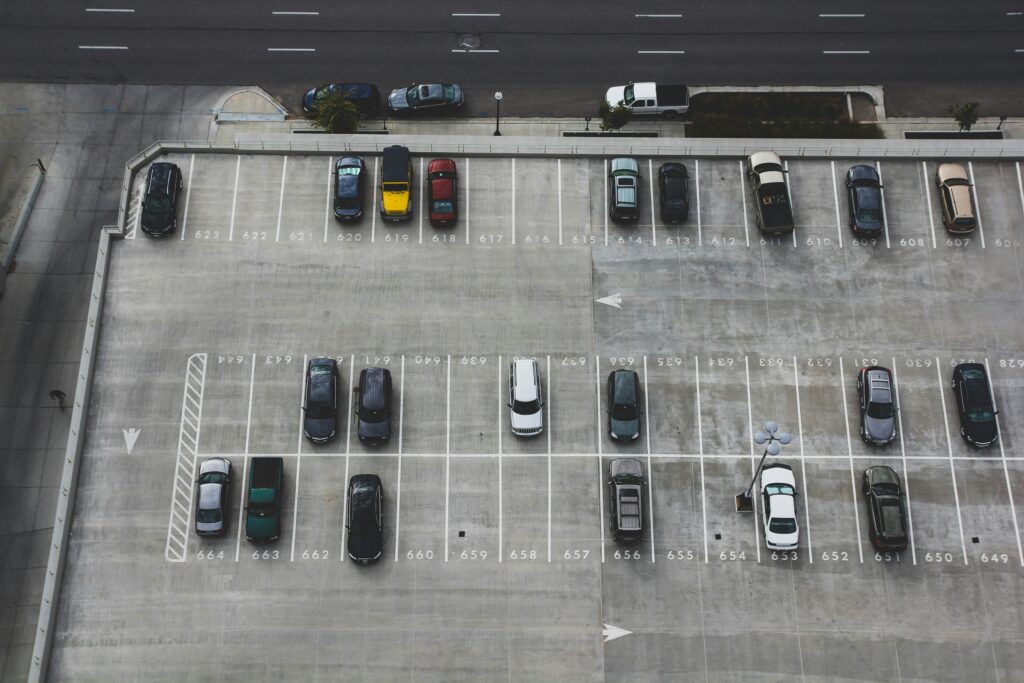



Parking operators are leveraging business intelligence tools to analyze transaction data, occupancy patterns, and customer behavior, enabling them to optimize pricing strategies, improve enforcement efficiency, and boost revenue while enhancing the customer experience.
By Jay Landers
The parking industry is experiencing a data revolution. From smart meters collecting millions of transactions to sensors and cameras tracking real-time occupancy rates, parking operators are now generating unprecedented volumes of information about how, when, and where people park. By deploying sophisticated business intelligence (BI) tools to harness this wealth of data, parking providers are discovering powerful opportunities to boost revenue, reduce congestion, and transform the customer experience, turning what was once guesswork into precise, profitable decision-making.
Industry still learning to leverage data
Even as parking data proliferates, the industry has been somewhat slow to recognize its importance and use data to its fullest potential, said Babu Krishnamoorthy, the chief information and technology officer for the parking technology company Orikan. “Parking, in the main, I think is still in its infancy around how it uses data,” Krishnamoorthy said. “But I’m starting to see that shift. Providers are more inquisitive.”
However, the process of interpreting and converting data into actionable insights can be challenging. “In the main, the data itself for most operators is hard to understand and interpret, especially when you’ve got different vendors in the mix, disparate services, and systems that don’t necessarily aggregate that data,” Krishnamoorthy said. “The ability to be able to stitch it all together still remains somewhat of a challenge, especially when you’re not working within an integrated ecosystem.”
Understanding usage, occupancy, and turnover
Although parking data can be used to glean insights about a wide range of attributes, the main ones of interest concern usage, occupancy, and turnover, Krishnamoorthy noted. “No matter whether you are a private or public operator, it’s important to understand how well your space is being utilized,” he said. “Space is an expensive commodity, and so you want to be able to make sure that your targets are met.”
Occupancy is particularly important for private operators looking to maximize their revenues. “Every spot that’s not occupied is revenue lost,” Krishnamoorthy said. “Then it’s about how can you maximize the available spots based on that data?”
At Parking Concepts Inc. (PCI), a parking management company that operates more than 180 parking facilities nationwide, BI plays a key role in its efforts to better understand occupancy, said Rafael Abanilla, a senior vice president for PCI. “Data lets us drill down to the minute on occupancy patterns, revealing peak and off-peak times, dwell durations, and turnover rates,” Abanilla said. “This allows us to make confident operational adjustments, such as adjusting staffing, changing pricing windows, or directing traffic flows for better efficiency.”
The company uses a platform known as FieldCXN — short for “Field Connection” — that was developed by IBM specifically for PCI’s needs. “Field managers post daily transactions directly into FieldCXN, which has a direct [application programming interface (API)] to our central accounting system,” Abanilla said. “It can also ingest live data streams directly from the [parking access and revenue control system] equipment. This creates a real-time, verified dataset that supports both our operational oversight and financial accountability.”
When it comes to measuring the success of its data-driven parking programs, PCI evaluates “both the quantitative and the qualitative” aspects, Abanilla said. “On the numbers side, net operating income improvement is a key measure once a program stabilizes. But we also measure success by the customer experience — through surveys, feedback loops, and on-the-ground observations. If we aren’t enhancing the user experience, the program needs to be revisited.”
Data-driven pricing creates competitive advantage
Using BI to gain a better understanding of when and where people are parking and how much they are willing to pay has helped Joe’s Auto Parks gain an advantage relative to competing parking operators that don’t use BI, said Ruben Del Cid, the operations manager for the privately owned parking operations and management company, which has approximately 100 locations in downtown Los Angeles.
Analysis of payment data has enabled Joe’s Auto Parks to set rates with confidence, Del Cid said. The company uses Orikan’s EziComm360 BI tool to evaluate data associated with payments made via QR code and its 105 pay-on-foot stations. Data associated with app payments or digital payments for monthly permits is provided by Passport Labs, which handles those forms of payment for Joe’s Auto Parks. “We’re able to see [at what price] people are more apt to pay,” he said. “We can see that live most times. So, we can adjust our pricing depending on what the appetite is out there.”
“It’s not fully dynamic pricing yet,” Del Cid acknowledged. However, the analytical insights into consumer payment behavior enables Joe’s Auto Parks to refine its pricing strategy to optimize revenue at different times of the day and week. For example, the company has determined that it can raise prices at certain times and locations and not lose customers. “We still fill the parking lot,” Del Cid noted.
Although nearby competitors might see their facilities fill up at the same pace or faster, they’re charging a lower rate, and thus earning less revenue overall. “We understand we can play the game and stay open a little later,” Del Cid said. “But we’ll fill, based on our data, and we are getting it at a higher rate.” Previously, Joe’s Auto Parks would have been more likely to keep its prices low for fear of driving away business. “We don’t have that mentality as much anymore,” he said.
Beyond pricing optimization, Joe’s Auto Parks leverages its data analytics to revolutionize its marketing approach, moving far beyond traditional advertising methods. “It helps with advertising,” Del Cid said. “If you’re going to call Google and say, ‘I want to advertise,’ you need to know who you’re advertising to, and this data will help you.”
For example, customer data indicates where customers are coming from. This geographic analysis enables Joe’s Auto Parks to identify underserved markets and deploy targeted digital advertising campaigns to attract customers from specific areas, transforming data into strategic marketing intelligence.
Data enhances enforcement strategies
Enforcement is another area that can be improved by use of improved data analysis. “It’s really important for public sector governments to know how to use the data to enforce correctly,” Krishnamoorthy said. “Historically, it’s been ticket wardens walking around the street, typically in a known predictable pattern, because they’ve walked around those same streets in the past.”
Although such efforts typically rely on historical knowledge, they are “not using data,” Krishnamoorthy noted. By contrast, “using data and understanding exactly where people parked, when a vehicle has overstayed, exactly the time of days and the locations to pick out, you can use that to then be very deterministic in your enforcement regime,” he said.
BI also can provide critical insights into enforcement rates in a particular area. “One of the big insights that people typically have is, ‘I can’t believe how low our enforcement rates really are,’” Krishnamoorthy said. Enforcement data then can be used to estimate the increased revenue collection that likely would result from greater levels of enforcement. “How much money are you leaving on the table?” he said.
On the other hand, analysis of payment data also can reveal the extent to which customers attempt to pay but fail to do so properly because of user errors, such as typing in a wrong number or letter during the payment process. “The impact of that is actually quite significant,” Krishnamoorthy said, often resulting in angry customers, customer service calls, and possible refunds.
Philadelphia’s integrated approach to parking data
The Philadelphia Parking Authority (PPA) exemplifies how comprehensive data integration can transform parking operations across an entire city. Rather than relying on isolated systems, the PPA has built a sophisticated backend infrastructure that seamlessly connects data from multiple vendors to support real-time decision-making and enforcement.
“All parking transaction payments are ingested by our vendors: Parkmobile for pay by phone, Flowbird for pay-by-plate kiosks, and Automotus for smart loading zones,” said Corrine O’Connor, the PPA’s deputy director. “That information is sent to the authority’s Revenue Department to be reviewed and audited on a daily basis.”
This multi-vendor approach ensures comprehensive coverage across different user preferences and parking scenarios, demonstrating Philadelphia’s commitment to accommodating diverse payment methods while maintaining rigorous oversight of all transactions.
The PPA employs a systematic approach to vendor integration. “All vendors are expected to have an open API, which is shared in the backend to support multiple services,” O’Connor explained. This integration creates powerful real-time enforcement capabilities. For example, parking enforcement officers scan every license plate they encounter in a two-hour parking zone. “The backend system, which is one vendor, is then looking for payment in our pay by phone app — another vendor — or at the kiosk, which is another vendor,” O’Connor said. “The system is also checking to see if they are boot eligible. If it comes back a positive hit, the booting department will be notified where that vehicle is parked, and a booting crew is dispatched.”
Philadelphia leverages its integrated data to make informed infrastructure and policy decisions. “Data analytics have allowed the authority to make decisions on the locations of the installation of smart loading zones, the effectiveness of the automated bus camera system and the tracking of where vehicles are parking — for how long and where we see the most congestion and what regulation best suits a location,” O’Connor noted.
The PPA ensures all its technology investments support comprehensive analysis. “All systems that we use are required to have reporting and ad hoc reporting, which allow us to create dashboards and more detailed reports for our review,” O’Connor said.
Philadelphia takes a holistic approach to evaluating its data-driven programs. “Success is measured by the utilization of the curb, is it priced at a fair tariff, who is using this space, are we seeing a high rate of violations in a particular location, and the like,” O’Connor explained. This comprehensive evaluation framework enables Philadelphia to balance revenue optimization with public service, ensuring that data insights translate into meaningful improvements for both the city and its residents.
The human element remains essential
Despite all the promise of BI, parking providers cannot rely solely on data to guide their decisions. Human input remains a crucial ingredient, Abanilla said.
“Analytics alone aren’t enough,” Abanilla said. “AI can process the ‘what,’ but humans interpret the ‘why’ and decide the ‘what’s next.’ If the input data is inaccurate, the output will be flawed, no matter how sophisticated the system. That’s why our culture invests equally in technology and in training skilled operators who understand the context behind the numbers. In short: technology is our tool, but people are our edge.”
JAY LANDERS is the editor-in-chief of Parking Today. He can be reached at [email protected].
Correction: This article has been updated to correct several instances in which the Philadelphia Parking Authority was incorrectly referred to as the Pittsburgh Parking Authority. The article also misidentified Corrine O’Connor as the deputy director of the Pittsburgh Parking Authority, rather than the Philadelphia Parking Authority. We regret the errors.