


By Kelvin Reynolds
Editor’s Note: With this issue, Parking Today is pleased to introduce From the Kerbside, a new monthly column written by Kelvin Reynolds, MBE, a longtime U.K. parking industry veteran and recent inductee into the Parking Hall of Fame. Kerbside will focus primarily on parking-related matters specific to the U.K. and, to a lesser extent, Europe.
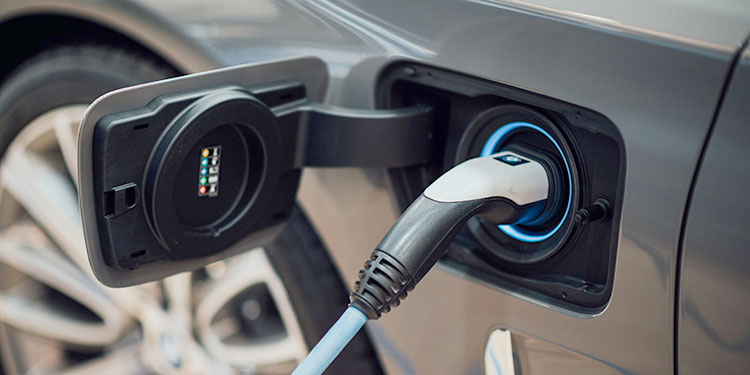
In the United Kingdom, the electric vehicle (EV) transition is no longer theoretical. It’s happening steadily, sometimes awkwardly, and increasingly in places parking professionals understand better than most: at the curb.
On paper, the policy framework is both clear and ambitious.
Since 2024, the U.K. zero emission vehicle mandate has required manufacturers to meet rising EV sales targets: 22% initially, climbing to 80% by 2030 and 100% by 2035. Miss the target, and carmakers are looking at meaningful financial penalties or creative accounting through credit trading. At the same time, the U.K.’s long-signposted phase-out of gasoline and diesel cars continues to loom, with hybrids buying a little extra time, but not much.

Add in generous company car tax incentives, which have made EVs the default choice for fleet operators, and the direction of travel is unmistakable. The U.K. now has well more than 2 million fully electric vehicles on the road, with EVs taking a growing share of new car sales.
So far, so strategic. But, as ever, strategy eventually meets asphalt. Because EVs don’t just plug into the grid; they plug into parking. And that’s where things become open to interpretation.
Still a learning experience
Most charging in the U.K. still happens off-street: driveways, depots, and fleet yards, all relatively controlled environments. But for the millions of drivers without off-street parking, the transition depends on public infrastructure. Cue a rapid expansion of curbside charging, supported by government funding programs aimed squarely at local authorities.
The number of public charge points is rising fast. That’s good news.
The usability of those spaces? That’s more nuanced.
For example, consider a simple question: What is an EV charging space actually for? If you’re expecting a single, national answer, you’ll be disappointed.
Across the U.K., you’ll find:
• Spaces reserved exclusively for EVs, 24/7
• Spaces usable only while actively charging
• Spaces that revert to general parking once charging is complete
• Locations where overstaying triggers a charging fee, a parking penalty, or both, if you’re particularly lucky
The result is a system that works perfectly, provided you already know how it works. For everyone else, it’s a learning experience.
The risk of subjective enforcement
That brings us neatly to enforcement, where theory and reality continue their long-standing disagreement.
In the U.K., a civil enforcement officer is someone specifically appointed by a local authority to manage parking using administrative and civil law regulations. Civil enforcement officers are now being asked to assess not just whether a vehicle is permitted to park, but whether it is behaving correctly in an energy sense. Is it charging? Was it charging? Should it still be there? These are not questions traditionally found in parking manuals.
Add to the mix hybrid vehicles, which are still policy-compliant but often operationally inconvenient, and things become even more entertaining.
Without clear, consistent rules, enforcement risks becoming subjective. And subjective enforcement, as we all know, is rarely popular with the receiving audience.
Standardized signage needed
Which is why signage matters more than ever.
At present, the U.K. offers something of a “greatest hits” compilation of EV station markings and signage. Different symbols, different wording, different conditions, all conveying roughly the same idea, but rarely in the same way.
The British Parking Association’s EV Connect Group is actively working on developing greater standardization in this area. Because if drivers need to pause and decode the rules every time they park, something has already gone wrong.
Clarity drives compliance. Confusion drives complaints.
Other tensions
Meanwhile, other tensions bubble away beneath the surface.
Public charging is typically taxed at a higher rate than domestic electricity, creating a subtle but real inequity for those without driveways. Infrastructure rollout remains uneven, with some regions significantly better served than others.
In 2022, the British Standards Institute published specification PAS 1899, “Electric vehicles – Accessible EV charging points,” to support the design and construction of inclusive EV charging infrastructure in the U.K. Since then, however, deployment of accessible EV charging points has been limited. Some observers are calling for the voluntary specification to be made mandatory, while others argue that it’s not being adopted because it’s not fit for purpose.
And all of this is happening while the types of vehicles on the road remain mixed.
The average car stays on the road for close to a decade, meaning internal combustion engines and EVs will coexist for many years to come, quite literally competing for the same spaces.
Which brings us back to parking.
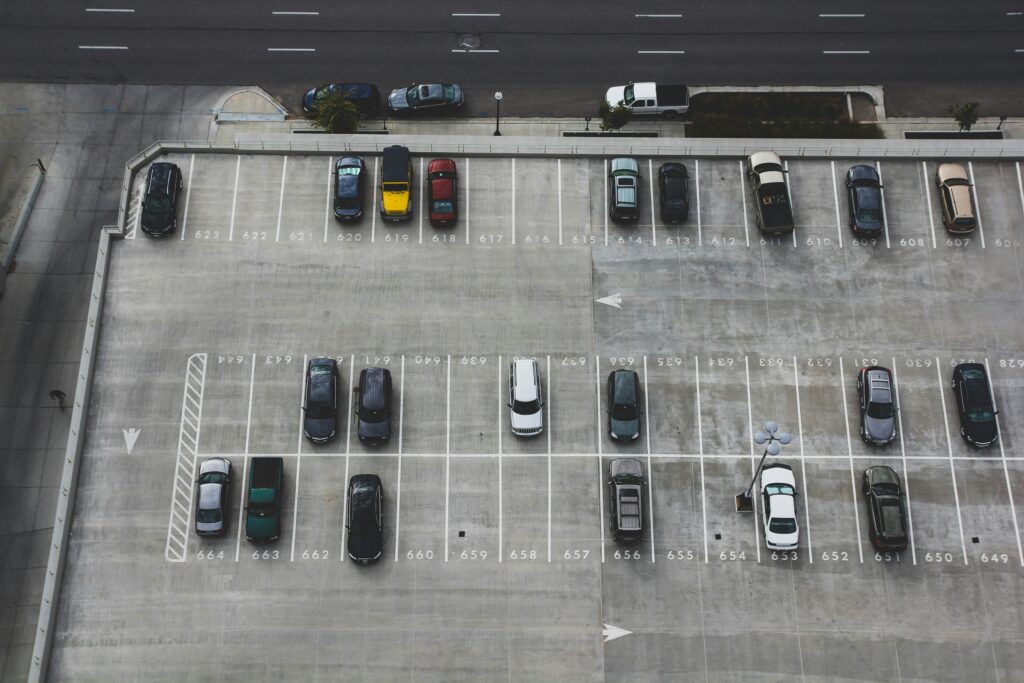
Because for all the policy ambition, funding commitments, and technological progress, the success of the EV transition will ultimately be judged in very ordinary places: on streets, in parking facilities, and at charging stations that either work…or don’t.
The takeaway
For U.S. readers, there’s a clear takeaway.
The U.K. has moved quickly to stimulate demand and accelerate infrastructure rollout. But experience suggests that installing chargers is the easy part.
The harder, and arguably more important, task is deciding:
• Who can use those spaces
• When they can use them
• What happens when they don’t follow the rules
Get that right, and the system largely looks after itself. Get it wrong, and you create a new category of parking friction, one that’s electrified, yes, but familiar all the same.
Because in the end, this isn’t just about vehicles or even infrastructure. It’s about managing space.
And space, as ever, is where the real challenges begin.
KELVIN REYNOLDS, MBE, I.Eng, FIHE, FBPA, Dip THE (Middx), is the executive consultant and company secretary for the British Parking Association. He can be reached at [email protected].