




In parking and beyond, City Enablers orchestrate complex systems and ensure sustainable progress by blending strategic thinking, efficiency optimization, and ethical public service.
By Jerry Green
Editor’s note: Appearing in our February 2026 issue, the first installment of this two-part series described the author’s conception of three Professional Personality Types — Explorers, Town Builders, and City Enablers — and examined the first two in detail, while giving examples of how they have affected the parking industry. In this second installment, Jerry Green elaborates on the third type.
In the first part of this series, we explored the concept of the Professional Personality Type (PPT), focusing primarily on the types known as Explorers and Town Builders, meaning those who dream and those who build. However, every thriving system eventually needs something more: stability, ethics, and the ability to adapt without losing direction. That’s where the third PPT, the City Enabler, steps in.
If Explorers spark innovation and Town Builders give it structure, City Enablers keep the engines running, ensuring that progress doesn’t just happen once but continues sustainably over time. They are the professionals who fine-tune systems, manage complexity, and preserve balance between ambition and practicality.
Much like life in general, progress in the parking industry requires a balance of efforts by Explorers, Town Builders, and City Enablers.
The essence of a City Enabler
City Enablers are the orchestrators of complex systems, the ones who see the entire city, not just a single street.
How to tell if you might be a City Enabler:
• Strategic thinking. Like a city planner shaping the future of a growing metropolis, you naturally think long-term. You develop strategies that balance today’s demands with tomorrow’s possibilities, ensuring your projects, teams, or organizations stay relevant and resilient.
• Systems vision. You see the big picture. City Enablers understand how every part of a system connects, and how one small change can ripple across the whole. You’re often the person who can navigate complexity with calm precision, spotting patterns others overlook.
• Focus on efficiency and scalability. You’re not satisfied with “good enough.” Whether you’re managing operations or refining workflows, you look for ways to make systems more efficient, scalable, and ready for the next challenge.
•Innovation with purpose. You embrace new technologies and methods, but only when they make things better. For you, innovation isn’t about chasing the newest trend; it’s about solving real problems, improving performance, and serving people more effectively.
• Leadership and influence.You don’t need a title to lead. City Enablers inspire collaboration, build consensus, and guide diverse stakeholders toward shared goals. You understand that influence often works best through trust and example, not authority.
• Commitment to sustainability and ethics: Like great city planners who design with future generations in mind, you weigh the long-term impact of every decision. You value fairness, integrity, and community benefit, ensuring that progress is not only fast but also responsible.
Identifying as a City Enabler in your career suggests that you’re not just involved in the creation or development of projects or strategies, but also deeply engaged in ensuring their ongoing success, relevance, and positive impact. This realization can help guide your career path, encouraging you to seek roles that enable you to utilize your strategic thinking, systemic vision, and leadership abilities to make a lasting, meaningful impact in your field.
Although City Enablers rarely bask in the spotlight, they are instrumental in operating, managing, and innovating established systems. For example, many of us would be hard pressed to identify any of the persons listed below, yet they were vital City Enablers when it came to ensuring the progress and sustainability of cities in the early United States.
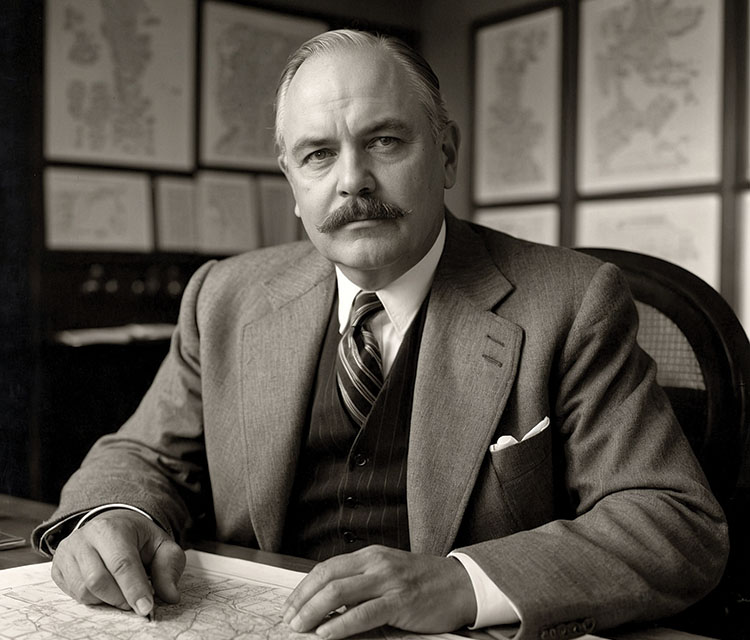
Credit: Image created by the author using Leonardo.AI
Unsung heroes of progress
History is full of City Enablers who kept their cities and societies functioning long after the headlines faded. They weren’t always inventors or financiers, but their steady leadership made innovation usable and sustainable.
An American architect and urban planner, Daniel Burnham reshaped Chicago and, in many ways, modern urban America. As chief of construction for the 1893 World’s Columbian Exposition, which was held in Chicago, he demonstrated how design and order could elevate an entire city. Later, his 1909 book “Plan of Chicago,” co-authored with Edward Bennett, set the model for integrated city planning, blending transportation, green space, and zoning into a cohesive system.
Known for his adage “make no little plans,” Burnham exemplified the City Enabler’s mindset: Think long-term, plan comprehensively, and coordinate across systems.
An environmental chemist in the late 19th and early 20th centuries, Ellen Swallow Richards was one of the first to apply scientific principles to public health and urban living. She pioneered water quality standards and municipal sanitation systems, fundamentally improving how cities managed resources. Her work reminds us that City Enablers are not just administrators; they’re advocates for public well-being who embed ethics into efficiency.
Frederick Law Olmsted was an American landscape architect known for his contribution to the design of many notable urban parks, including Central Park in New York City. Olmsted believed in the power of green spaces to promote public health, social interaction, and quality of life in urban areas. His focus on naturalistic designs that seamlessly integrated recreational areas, promenades, and conservatories showcased his determination to create organized and accessible urban environments that benefited all residents.
Each of these figures represents the City Enabler’s ethos: innovation not for its own sake, but in service of stability, access, and public trust.
The modern integrator — technology meets public service
In today’s parking world, City Enablers operate at the crossroads of technology, policy, and public service.
One modern example of a City Enabler I’ve had the privilege to work with is Ryan Sharp, P.P, AICP, RSP1, the director of transportation and parking for the City of Hoboken, New Jersey. Sharp was instrumental in championing Vision Zero, Hoboken’s initiative to eliminate all traffic-related deaths and serious injuries by 2030. Under this program Hoboken went eight consecutive years without a traffic death. His leadership exemplifies the City Enabler mindset: strategic, data-informed, and deeply human-centered.
Since 2013, Hoboken’s smart mobility evolution has included three key innovations.
In 2016, Hoboken launched mobile payments via ParkMobile, giving drivers the freedom to pay, extend, and manage sessions without meters or kiosks. The program not only improved user experience but also streamlined back-end revenue collection and analytics. This involved designating most areas of the city as zones where only mobile payments are accepted.
Hoboken implemented self-release booting technology through PayLock, enabling motorists to resolve outstanding fines and remove immobilization devices independently. This reduced response times, minimized staffing needs, and improved customer satisfaction, a win for efficiency and empathy alike.
The city adopted an automated parking enforcement system that uses license plate recognition technology from Caryl Technologies, LLC, to facilitate real-time violation detection, permit validation, and tow management. This data-driven approach addressed key enforcement challenges, from abandoned vehicles to dynamic curb management, and enabled Hoboken to replace its scratch-off hangtag program with a virtual parking permit program.
City Enablers like Ryan Sharp blend innovation with governance. They don’t just adopt new tech; they integrate it into living systems, balancing accountability, efficiency, and safety.
Are we locked into a PPT?
The short answer is no.
Professional growth, like urban evolution, is fluid. Many Explorers and Town Builders evolve naturally into City Enablers as their experience deepens and their perspective widens, and some don’t.
To illustrate this potential transformation, let’s visit three fictional professionals — Emma, Alex, and Taylor — each representing a PPT transitioning into the City Enabler world.
Emma began her career as a classic Town Builder, known for turning abstract ideas into tangible frameworks. When she transitioned from a startup to a large corporation, her skills didn’t fade, they matured. She used her Town Builder’s mindset to streamline interdepartmental projects, finding ways to connect teams and align goals. In time, Emma became a natural City Enabler, bridging gaps, improving efficiency, and ensuring the company’s systems worked harmoniously.
Alex, the Explorer, thrived on curiosity and invention in the startup world. The move to a corporate environment initially felt stifling, with too many layers and not enough freedom. However, over time, Alex discovered that even within bureaucracy there were frontiers to explore. By introducing innovative tools, championing pilot programs, and reframing old challenges, Alex became a catalyst for internal transformation, an Explorer turned City Enabler, igniting creativity within structure.
Taylor’s passion was structure. Moving from startups to a vast corporate environment, Taylor applied the Town Builder’s approach to overlooked projects, the “small towns” within the corporate city. By reorganizing departments and optimizing neglected processes, Taylor built efficiency from the ground up. What began as small wins evolved into large-scale improvement. Taylor became a quiet City Enabler, proof that substantial change often begins in small corners.
Thriving as an unconventional City Enabler
Emma, Alex, and Taylor show that you don’t have to be a department head or public director to enable progress. You can be a City Enabler in any role that sustains systems, optimizes outcomes, or mentors others toward growth.
City Enablers thrive not by building faster, but by ensuring what’s built lasts longer. They create trust among citizens and city hall, employees and leadership, or technology and human need. Their legacy is continuity.
In the parking industry, this approach might mean maintaining balanced enforcement programs, ensuring equitable mobility access, or integrating technologies without losing sight of fairness and public value.
The best City Enablers lead with empathy, consistency, and systems thinking, ensuring that innovation serves people, not the other way around.
Unleashing the Explorer and Town Builder within a City Enabler framework
• Leverage your inherent strengths. Like Emma, use your organizational skills (Town Builder) or your innovative thinking (Explorer) to bring new perspectives to traditional corporate roles.
• Find the synergy. Look for opportunities where your natural tendencies can complement the needs of a City Enabler role. Think about how your skills can contribute to optimizing and enhancing larger systems.
• Embrace adaptability. Remember, professional growth often involves stepping out of your comfort zone. Be open to learning how your inherent traits can align with new roles.
• Be a bridge. Use your unique blend of skills to connect various aspects of the organization. Be the person who brings together diverse teams and ideas.
• Celebrate the blend of personalities. Recognize that having an ‘inner’ Explorer or Town Builder within a City Enabler role can be a powerful combination. This blend can lead to innovative solutions and improved efficiency.
•Identify unexplored areas. Like Alex, look for opportunities within your large organization where innovation is needed. Every company has uncharted territory.
• Start small, think big. Follow Taylor’s example. Begin with smaller projects or departments where you can make a significant impact. Use these as a springboard for larger initiatives.
• Advocate for change. Both Explorer and Town Builder personalities can bring fresh perspectives to a corporate setting. Don’t be afraid to advocate for innovative ideas or processes.
• Build relationships. Large organizations thrive on networks. Build relationships across departments; this will help you understand the intricacies of the company and where you can best apply your skills.
• Be resilient. Transitioning from a startup to a corporate environment can be challenging. Be patient and resilient as you adapt to the new setting.
• Leverage Your unique skills.Remember, your entrepreneurial spirit and ability to navigate uncertainty are valuable assets in any setting.
Finding your spot (again)
Whether you’re developing a new parking app, managing policy reform, or fine-tuning daily operations, remember you’re part of a lineage that connects Thomas Edison’s lab, J.P. Morgan’s boardroom, Professor Donald Shoup’s classroom, David Onorato’s evolving innovations, and Ryan Sharp’s advocacy for progressive programs.
Progress in parking, and in any industry, depends on all three facilitators of change:
• Those who explore the unknown
• Those who build the infrastructure
• Those who enable its long-term success
Each role matters, and over time, you’ll likely play all three. The key is knowing when to pivot, when to explore, when to build, and when to enable others to thrive.
JERRY GREEN is the president and chief information officer of Caryl Technologies LLC. He can be reached at [email protected].