

By Kelvin Reynolds, MBE
Each year, the British Parking Authority holds Parkex, its annual parking exhibition and conference. Held May 19-20 in Coventry, Parkex 2026 showed that parking has finally moved beyond its stubborn analog image. Across both sides of the Atlantic, the shift is no longer incremental but a clear move toward intelligent, user-centric systems. The biggest takeaway was not one breakthrough, but the convergence of technologies that can make parking simpler, clearer, and more service-led for the people using it.
Reshaping payment expectations
Payment technology is rapidly reshaping expectations. Cash already feels out of step with user behavior, and at Parkex the debate was not whether to go cashless, but how quickly. Mobile apps still lead, but the real change is integration: Payment is no longer a standalone act, but part of a wider mobility journey, with reminders, session extensions, digital receipts, and clearer choices that reduce stress for drivers.

Unified platforms now bring together parking, transit, micromobility, and electric vehicle (EV) charging in one journey. The direction is clear: Motorists want seamless travel, not a maze of zones, tariffs, and operators. When these systems work well, users can plan and choose their preference to subscribe, prebook, pay on site or online, and adapt in one place, making parking feel less like an isolated task and more like part of a joined-up mobility service.
Enhancing enforcement
Enforcement, long a lightning rod for public opinion, is also changing. The era of the lone officer with a chalk stick is fading. At Parkex, the more interesting point was that the same technology can improve service as much as compliance. If we expect people to pay for parking and charging, we must make it easy to do so through clearer signage, simpler payment steps, better information, and systems that recognize the difference between confusion and deliberate non-payment.
Artificial-intelligence-enabled cameras, vehicle recognition, and dynamic permit databases are turning fixed rules into adaptable systems. Used well, they help operators spot problems early, guide people to the right place, support permit holders, and resolve issues faster. Staff on the ground can spend less time on confrontation and more time helping customers, while data can identify recurring pain points such as confusing bays, overloaded zones, or poorly timed restrictions.
License plate recognition (LPR) remains a cornerstone technology, but its use is evolving fast. Fixed cameras, mobile units, and handheld devices now form a connected data network that can support frictionless entry and exit, quicker problem resolution, and more accurate occupancy information. For the customer, that can mean less queueing, fewer tickets on dashboards, and fewer avoidable disputes.
The curb as dynamic resource
The curb, one of the most contested spaces in any city, is shifting from a static asset to a dynamic resource. Parkex showed how cities can reallocate curb space flexibly, between loading, parking, rideshare, and micromobility, sometimes within the same day. For customers, the real benefit is clarity and reliability: better information about where they can stop, load, charge, or park, and fewer frustrations caused by one-size-fits-all rules in places where demand changes by the hour.
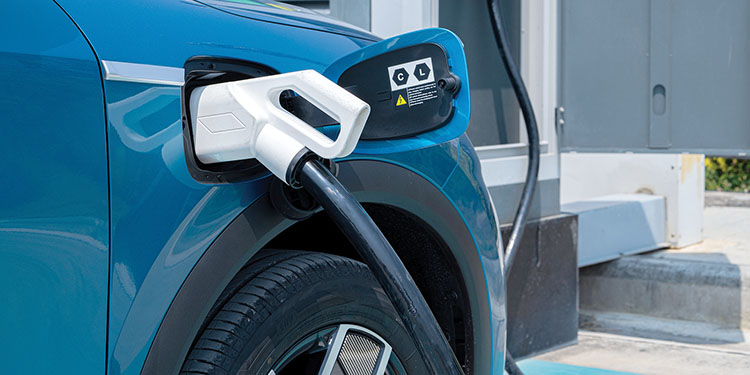
Electric vehicle infrastructure was prominent, but the key point was its integration into parking strategy. Charging is no longer an add-on but a core function of the parking environment. That raises familiar questions about dwell time, bay blocking, and fair access, yet smart systems can now guide drivers to available chargers, manage digital queues, show live availability, and support turnover in ways that feel more helpful than punitive.
Data as infrastructure, not byproduct
What connects all these trends is data: reliable, real-time, and increasingly actionable. Parkex made clear that successful operators will treat data as infrastructure, not a byproduct. Analytics are moving from retrospective reporting to predictive insight, helping operators understand demand, identify recurring complaints, improve signage and pricing, and design services around what users need rather than what systems have traditionally required.
Of course, innovation brings challenges. Privacy, interoperability, accessibility, and the risk of overcomplication all need careful management. Technology should serve users, not overwhelm them, and the best schemes remain intuitive, inclusive, and transparent even when the systems behind them are highly sophisticated.
The lesson from Parkex 2026 is both reassuring and demanding. The tools to solve long-standing problems are now mature and accessible but using them well requires more than investment; it requires a clear shift in mindset. Parking is no longer just about spaces and tickets. It is about managing access intelligently, reducing friction, building customer confidence, and supporting the wider mobility systems on which modern towns and cities depend.
In short, the industry is not simply modernizing; it is redefining its purpose. If we get this right, parking will stop being seen as a source of irritation and start being valued for what it truly is: an essential public service that makes journeys easier, places more accessible, and cities more liveable for everyone.
KELVIN REYNOLDS, MBE, I.Eng, FIHE, FBPA, Dip THE (Middx), is the executive consultant and company secretary for the British Parking Association. He can be reached at [email protected].