


By Brian Wolff
Innovation in the automotive industry is occurring rapidly, and for parking operators, it will be challenging to ignore the ripple effects. Electric vehicle (EV) technology, autonomous features, advanced driver assistance, mobile-first connectivity and sensors enabled by artificial intelligence (AI) are transforming not only how people drive, but how they reserve, enter, exit and pay for parking. With these changes comes one inevitable question: What does it mean for exceptions?
For nearly a decade, I’ve lived in the world of exception handling. When motorists call for help, they are, by definition, causing or creating an exception: Something in the automated process didn’t work as expected. We know that most of the time it’s user error. However, sometimes it’s a malfunction or just plain confusion. How innovation in vehicles affects the volume and nature of those exceptions is unknown. It could go in one of two directions, and likely both, depending on the circumstances.
More moving parts, more potential problems
On the one hand, exceptions could increase. Cars have become rolling computers, with ever-increasing sophistication. Drivers are managing in-dash screens, mobile apps, subscription services and semi-autonomous features. Add the complexity of interacting with third-party parking systems — for example, QR codes, license plate reader (LPR) systems, Bluetooth beacons, and EV chargers — and suddenly, there are more potential points of failure. The more systems talking to each other, the greater the odds of miscommunication.
The rise of EV charging makes this even more pronounced. Electric vehicles don’t just park; they need to charge. That introduces a new layer of potential exceptions. Is the charger compatible with the car? Did the payment go through for both charging and parking? Is a driver occupying a charging space, but not actually charging? Parking operators may soon find that EV-related exceptions rival traditional ticket or credit card problems.
There’s also the matter of customer expectations. As vehicles become smarter, consumers expect the infrastructure to keep pace. A driver used to seamless over-the-air updates may be less forgiving when a decades-old gate arm malfunctions. That frustration often leads to more calls for help. Even if systems aren’t failing more often, the perception of failure can increase exception volume.
Then there’s interoperability. With more digital wallets and in-car payment systems entering the picture, from Apple Pay and Google Pay to manufacturer apps and direct vehicle billing, the transaction pathways multiply. Each new option increases convenience but also introduces another chance for something to go wrong. When those systems don’t talk to each other perfectly, exceptions spike.
Technology smoothing the rough edges
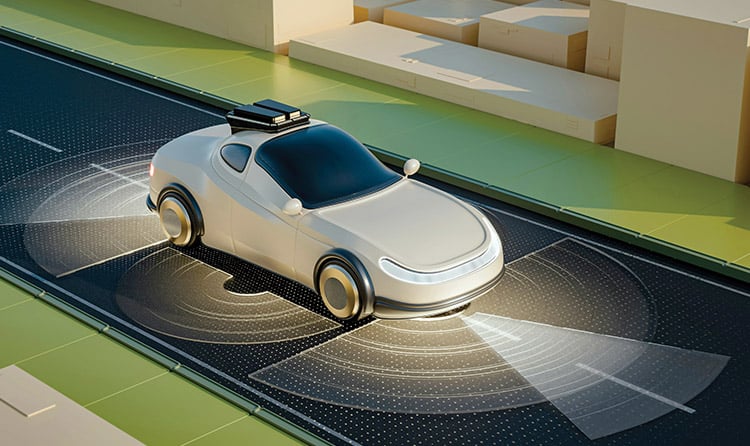
On the other hand, innovations in vehicles have the potential to drastically reduce exceptions. Connected cars and LPR, for instance, create opportunities for seamless entry and exit. As integrations mature, the car itself could automatically communicate payment and access without the driver reaching for a ticket or credit card. When the friction disappears, so do many of the exceptions.
Automation also works in our favor. App-based reservations, in-dash autopay, and vehicle-integrated charging can make processes that once tripped people up effectively invisible.
Machine learning adds another layer of support. Parking equipment is increasingly capable of monitoring itself, detecting anomalies like a jammed ticket, misread plate, or malfunctioning charger before the customer ever experiences the problem. By correcting issues proactively, the system prevents exceptions.
Let’s not forget the human factor. The next generation of drivers are digital natives. They’ve grown up with apps, QR codes, and self-service models. Familiarity and confidence reduce error, which in turn reduces the number of help calls.
When every exception matters more
Whether exceptions go up or down, the implications for operators are significant. If exception volume rises, operators must plan for higher service demand. That means scaling exception-handling capabilities, whether through internal staff, outsourced providers, or AI-enabled support. Training, empathy, and technical expertise will all be critical. More exceptions also mean more customer touchpoints; if handled well, those interactions can become a competitive advantage.
If exceptions decrease, operators may be tempted to scale back support. But when exceptions are rare, each one matters more. Customers have less patience for failure in a system that “should just work.” In this scenario, exception handling becomes less about volume and more about precision, escalation, and protecting the brand. The team may be smaller, but it must be highly trained and empowered to resolve issues effectively.
Either way, exception handling will remain a core competency. Even the smartest systems fail. Even the most intuitive technology confuses someone. Operators who treat exception handling as an afterthought risk losing customer trust. Those who see it as an opportunity to deliver authentic concern and solve problems in real time will strengthen their reputations and customer retention.
So, will vehicle innovations make our lives as parking operators easier or harder? The honest answer is both. In the near term, more complexity may mean more exceptions. Over time, technology promises to smooth out those rough edges. Our job is not to predict a perfect future, but to prepare for both possibilities. Build
capacity for today’s complexity, invest in technology for tomorrow’s simplicity, and never lose sight of the human element. Because no matter how smart the cars get, there will always be moments when someone needs help. And how we handle those moments will define our success.
BRIAN WOLFF is the president & CEO of Parker Technology. He can be reached at [email protected] or visit www.parkertechnology.com.