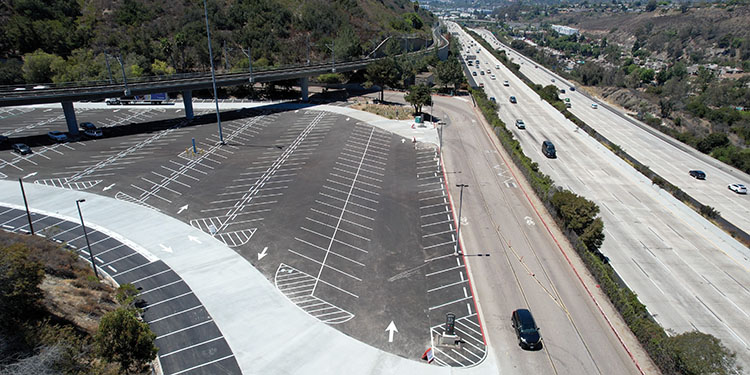



San Diego State University transformed a neglected parking lot into a sustainable campus gateway featuring recycled materials, stormwater management, and electric vehicle charging infrastructure.
By JD Weidman, PTMP, TDM-CP
I’ve heard it said that all roads lead to parking. It’s funny because it’s true, both literally and figuratively. Parking is not just about where cars end up. It is central to the transportation ecosystem, a critical service that quietly shapes how people choose to travel. In most cities, it’s also the most powerful lever for transportation demand management (TDM).
I entered the parking world with intention. After working in transit, biking, and TDM consulting, I realized that no matter how much we invest in sustainable modes, progress is limited without getting the parking “recipe” right. That formula is front and center at San Diego State University (SDSU), where we are working to develop innovative ways to maximize and maintain parking solutions for a campus community experiencing record-breaking growth.
As an example of this innovation, SDSU recently revamped an aging parking lot, redesigning it from the ground up. This gave us a rare opportunity to think beyond asphalt and use what most view as just a place to store cars to advance sustainability goals and support the next generation.
Shared governance as a foundation
One of SDSU’s guiding values is Shared Governance, enshrined in our Principles of Community. Shared Governance shapes our approach, and we are committed to engaging our community with transparency, honesty, and a willingness to be vulnerable about our challenges.
Our division, Business and Financial Affairs, hosts a monthly Parking and Transportation Steering Committee meeting where rate changes, project ideas, and new initiatives are vetted. In addition, our Transportation Advisory Committee (TAC) brings together students, staff, faculty, and alumni. These meetings are not just box-checking exercises: They are essential venues for building trust, surfacing concerns, and agreeing on shared goals.
Shared Governance doesn’t work without relationships, so we frequently brought an “engagement tour” to student organizations, faculty meetings, resource centers, and student government sessions. We shared our recommendations, starting with the basics: how parking is funded, what it costs to maintain, and the different methodologies for setting rates.
We heard and acknowledged frustrations with transportation — traffic, safety, cost, and infrequent transit — before showing how parking fits into the bigger mobility picture. The conversations reinforced the idea that transportation is personal, and that understanding laid the groundwork for what came next.
Turning plans into projects
SDSU Transportation Services is a self-sustaining operation, which means it doesn’t receive any funding from tuition or mandatory fees. This dynamic brings us closer to our customer base — the students, employees, and guests for whom parking is a major part of their campus experience and often their first and last impression of SDSU. It’s paramount that we demonstrate and communicate that investments in parking infrastructure are investments in them.
In the past two years, Transportation Services has invested more than $6 million to complete 12 maintenance projects. Because we are a self-sustaining entity, these investments were funded by parking revenues. The projects have ranged from lighting retrofits to paving to structural repairs, and more are advancing through design toward the construction phase.
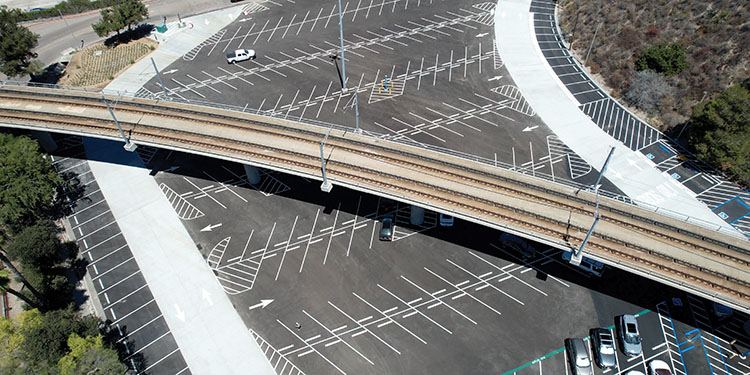
One of our most transformative efforts was the complete reconstruction of Parking Lot 15 (P15). For decades, P15 was an out-of-sight remote lot tucked at the bottom of a hill, accessible only by six flights of stairs, and home to Logistical Services and overflow storage. It had not been fully repaired in more than 50 years, and routine patchwork was no longer an option.
Project priorities
We focused on three priorities while designing the new P15:
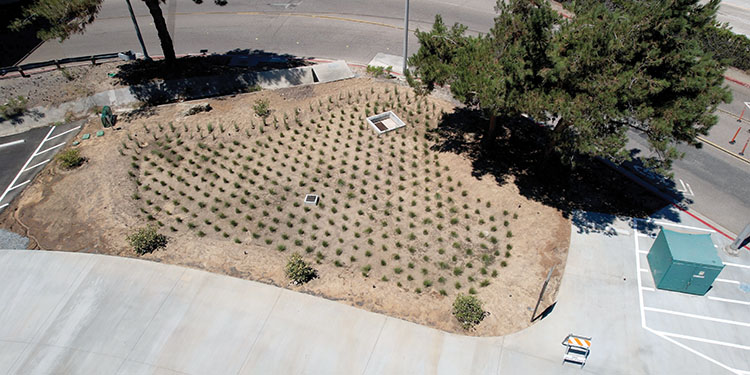
Sustainability: Our design used an asphalt mix with 15% recycled content and introduced a new bioswale capable of holding more than 21,000 gallons of water. This “nature-based” solution for stormwater helps protect nearby Alvarado Creek and, by extension, the San Diego River. It also mirrors larger flood-mitigation strategies SDSU has invested in at SDSU Mission Valley, where the new river park helps manage stormwater on-site.
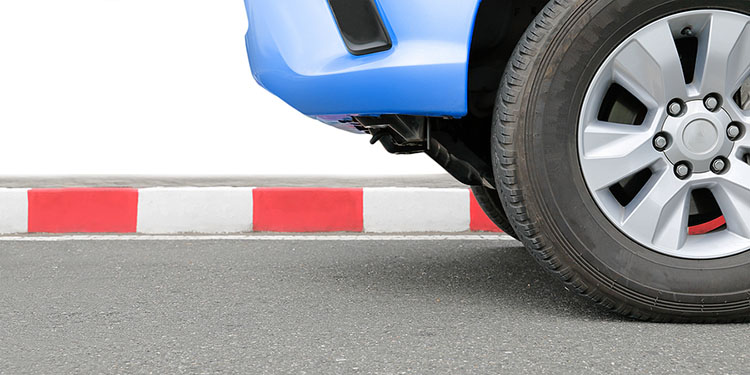
Capacity, efficiency, and longevity: Working with SDSU alum Matt Kurtz and his team at Snipes-Dye Associates, we were able to add 87 new spaces without expanding the lot’s footprint. This was possible by converting an area that previously had been un-striped and held open for staging large vehicles. We intentionally did not include wheel stops in this section so that it can be closed for vehicle staging when needed and used as parking at all other times.
In this way, smart design unlocked hidden efficiency. We also installed a concrete drive aisle so that heavy truck deliveries don’t prematurely age the surface.
Electric vehicle (EV) readiness: With guidance from Glen Brandenburg, SDSU’s senior energy advisor, and a partnership with the decarbonization consultants Carbon Solutions Group, we integrated conduit, junction boxes, and signage for future EV charging. We secured grant funding from our local utility, San Diego Gas & Electric, to install 12 charging stations at no cost to the university.
P15 was reintroduced in September 2025, just as SDSU began construction on the Evolve Student Housing project, a major development that will add a net increase of more than 4,000 beds once completed. Adjacent private development is also adding approximately 1,200 additional beds. What was once the “forgotten lot” is now an attractive gateway to the campus.
After seeing the completed project, one longtime staff member told us, “For years, P15 felt like the place everyone avoided. Now it feels like part of the campus again.”
Maintenance work rarely makes headlines, but with the right approach, it can lead to innovation, trust building, and tangible impact. When students and employees return to a newly paved lot, better lighting, or new gate equipment, they see their dollars at work and they know SDSU is investing in their experience and safety. This project reinforces the university’s values of sustainability, community, and resilience.
Takeaways for other parking operators
What SDSU has learned through this process may be useful for other universities, municipalities, or operators:
• Engage early and often. Rate increases are tough, but they are easier to accept when paired with transparency and community involvement.
• Pair maintenance with modernization.Every repair project is a chance to advance sustainability, accessibility, and technology goals.
• Leverage partnerships. From engineering firms to utility companies, external partners can help stretch resources further.
• Think long-term. Fixing problems piecemeal can be tempting, but taking the time to fully redesign or rebuild can save money and frustration down the line.
Parking may not always get glory, but it gets noticed. At SDSU, we’ve found that even the unglamorous work of maintenance can spark pride when done with vision and intentionality.
Project Credits
Civil design/engineering: Snipes-Dye Associates
Construction: Align Builders
Construction management: The Barrie Company
Electric vehicle infrastructure design: Turpin & Rattan Engineering, Inc.
Project management and logistical support: San Diego State University
JD Weidman, PTMP, TDM-CP, is the director of transportation services at San Diego State University. He can be reached at [email protected].