



By Tammy Baker
Every interaction has direction. Either you are influencing it, or it is influencing you. The environment doesn’t matter. It could be a workplace conversation, a leadership discussion, a family moment, or a quick exchange with a stranger. The pace can be fast, the pressure real, and interactions can stack quickly, leaving little room to reset.
In those moments, something automatic tends to take over. We begin to match tone instead of setting it. We react instead of consciously responding. We let emotion drive communication instead of calmly steering a clear path.
These tendencies are human. But they are not always effective. If we want different outcomes, we must interrupt that pattern. That interruption does not happen automatically; it requires focus, awareness, and effort.
Your energy as an investment
Think of your energy as an investment. What if you treated your energy like money or something you actively invest in? Before engaging in any interaction, you have an opportunity to ask, “Is this worth the investment and what kind of return am I expecting?” Every interaction produces a return. The question is what kind and is it worth it?

A positive return on energy results in stable interactions that progress toward solutions, creating stronger relationships and reducing stress over time.
A negative return involves escalation, miscommunication, lingering frustration, and energy depletion.
The critical insight is that the situation alone does not determine the return. Rather, the return is heavily influenced by how we choose to invest our energy during an interaction. Sometimes, the best investment decision is not to engage at all, to let go of the rope when the return will not justify the cost.
Bringing the best version of yourself
If you have decided the investment is worth the time and energy, then you need to ensure you bring the best version of yourself to the exchange. To do this, you need to define your standard response traits, establish your core communication values, and then create filters based on your standards and values.
To invest energy well, you need a clear standard. Start with a simple question: How do you want to show up? Although nuances may exist depending on your role as leader, colleague, partner, or mentor, you need to define a consistent set of core traits regarding the following considerations:
• How you communicate
• How you handle pressure
• How you respond when challenged
These are your core communication values. They become your baseline, the version of yourself you are trying to return to when situations pull you away from it.
Without that baseline, it’s easy to drift back to old tendencies that misrepresent who you want to be and undermine the outcome you desire from an interaction.
Filtering your response
Once you define your baseline, you need to create your filters, or the internal tools that enable you to process experiences and information with intention instead of reacting automatically. Built from your core communication values, filters help you assess what you’re hearing, limit personal bias, reduce assumptions, and separate emotion from fact. Instead of letting the moment control you, filters help you remain aligned with the best version of yourself, ensuring your energy is invested where it creates the greatest return.
Before responding in any interaction, run a quick internal check. Does your response align with the outcome you want? Are you leading this interaction, or is it leading you? Are you choosing your response, or reacting to your feelings? Are you representing your core communication values?
Your answers indicate how your feelings are affecting your response. Although feelings matter, they are signals, not instructions. They tell you something is happening. They should not dictate what happens next. When we use feelings as fuel instead of data, we often invest energy in ways that don’t serve us or the situation. Using filters creates just enough space to move from automatic reaction to intentional response.
Evaluating your interactions
Your filters evolve over time; they are not static. They require refinement. What worked for you at age 20 may not work at 40. What worked as a supervisor may not work as a director or executive. Because growth requires using data from your own interactions, ask yourself these questions:
• How did you respond?
• What was the outcome?
• What would you adjust next time?
In operational environments, we track performance, trends, and outcomes constantly. But many of us do not engage in this type of tracking to evaluate the quality of energy we deliver in our interactions. Especially immediately after tense or crucial conversations, take 15 minutes to evaluate the interaction. Take down all armor, release all ego, and evaluate your effort and effectiveness.
This is where real differentiation happens. By taking the time to assess the quality of your interactions, you reach the hidden layer of communication. It is the difference between:
• Leading a conversation versus reacting to it
• Creating clarity versus adding noise
• Building momentum versus draining it
Taking the time to evaluate your energy input against your results enables you to evolve. It creates consistency. It sharpens your filters. It strengthens your ability to show up intentionally.
Being regimented with this approach requires a mindset shift. Instead of letting situations dictate your response, viewing reactions as unavoidable, or operating on default behaviors, you do the following:
• Choose how you show up
• Recognize energy as a controllable resource
• Align actions with desired outcomes
This is not about ignoring emotion. It is about managing it. It is about recognizing when your natural tendencies are pulling you in one direction and consciously choosing another direction when it matters. That shift is situational. It requires awareness, discipline, and a continuously refined set of filters.
Invest your energy consciously
If you want to have a positive effect on your environment, you must be intentional about your delivery. How you show up shapes the experience not just for you, but for everyone around you.
We constantly spend energy. The only question is whether we invest energy consciously. When you begin to treat your energy as a resource to allocate, direct,
and evaluate, you start to see patterns of where it is wasted, where it creates value, and where it needs
more discipline.
Over time, those small, moment-to-moment decisions and tweaks compound. When they do, they create better interactions and stronger outcomes, granting you greater influence in every environment you operate in.
In the end, the most effective communicators and leaders are not the ones who avoid difficult situations. They are the ones who consistently choose the highest and best use of their energy within them.
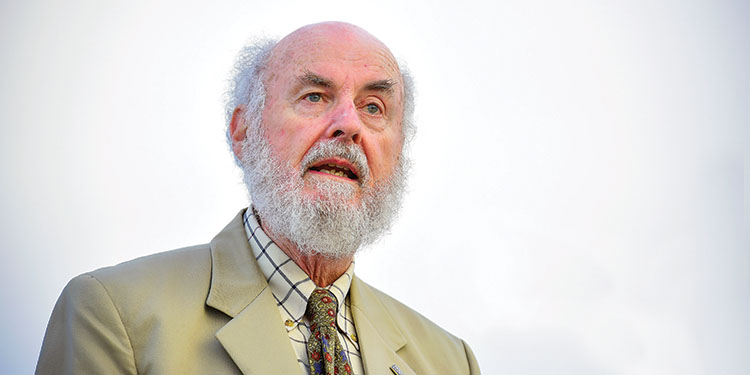
TAMMY BAKER is the chief operations officer for Parker Technology. She can be reached at [email protected].