


By Jade Neville
I started my career in parking before I could drive. As a civil enforcement officer on the south coast of England in 2007, I came to the curb without preconceptions. No frustration, no sense that parking was a thankless task or a political headache. I just saw it for what it was: a finite, valuable piece of public infrastructure that shaped how a city moved, felt, and funded itself.
That turned out to be a gift I didn’t know I had at the time. Spending years working across both the U.K. and U.S. parking landscape since, I’ve noticed something consistent on both sides of the Atlantic. The curb is almost always underestimated and almost always under-governed. Not for lack of talent or technology. But for lack of the right kind of thinking at the top of the system.
The curb as critical asset
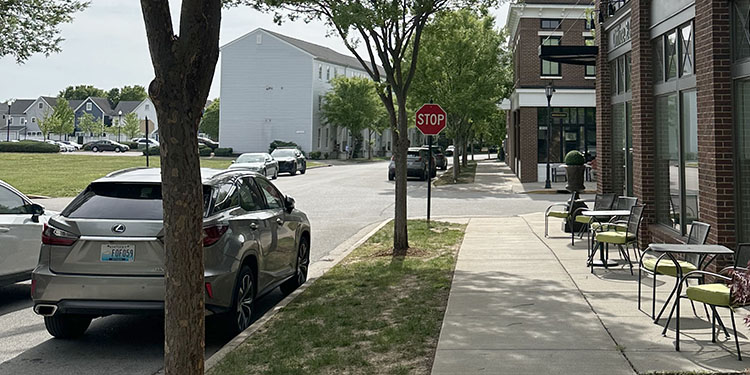
The curb is one of the most emotionally and politically charged assets a city manages, and one of the least understood. Raise rates, tighten restrictions, expand an enforcement zone, and the reaction is almost always negative. What rarely gets told is the other half of the story: the better-lit streets, the reinvestment in transportation infrastructure, the main street that stayed viable because turnover was managed and access was maintained.
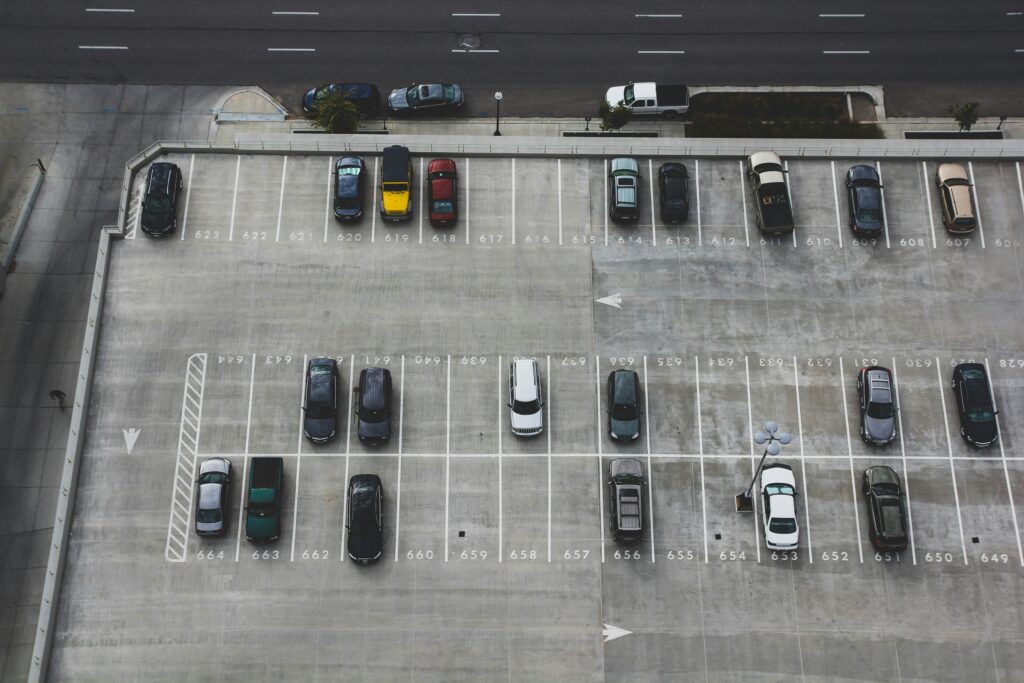
I saw this clearly from the street up. The curb isn’t static. It absorbs the pressure of e-commerce deliveries, ride-hail pickups, resident parking, accessibility needs, and the daily rhythm of people trying to get somewhere. It generates revenue, creates friction, enables access, and reflects, sometimes uncomfortably, the priorities of the people who govern it. When it works, you barely notice it. When it doesn’t, everyone does.
Specialists versus generalists
So, who governs the curb well? Not just manages it, but truly understands it as a system, coordinates the specialists who serve it, and holds the whole thing accountable to outcomes?
I’d argue what’s needed is what I’d call a deep generalist. Not a jack of all trades; that’s a different thing entirely. A deep generalist has real expertise across multiple disciplines and, crucially, understands how those disciplines connect in the real world. They can zoom out to see the whole system, zoom in enough to have credible, informed conversations with specialists, and translate between them so that work actually moves forward.
The analogy I keep coming back to is medicine. A specialist is a world-class surgeon for one specific procedure, and is brilliant, essential, and irreplaceable in their lane. But a deep generalist is the senior doctor who understands surgery, diagnostics, patient flow, risk, and outcomes. A deep generalist decides whether surgery is even the right option, coordinates the surgeons, the nurses, the finance team, and the patient, and owns the result.
The curb benefits from both specialization and generalization, but the senior doctor role is one our industry is only beginning to recognize.
Shifting the conversation
I didn’t fully understand the value of thinking this way until I became the youngest ever president of the British Parking Association, the world’s largest parking trade association, representing everyone from local authorities and technology providers to operators, training organizations, and built-environment specialists.
I remember a particular moment in a room where the conversation had stalled. Policy people were talking regulation. Industry people were talking technology. Operators were talking enforcement. Elected representatives were asking why any of it mattered to voters. Everyone was right. Nobody was connecting it.
What I contributed in that moment wasn’t a new technical insight. It was a reframe, linking curbside strategy to local economic vitality, main street recovery, fairness, accessibility, workforce capability, and long-term revenue resilience for cash-strapped authorities. I could move between operations, technology, policy, and public impact and translate between them in real time. That shifted the conversation from “this is a parking issue” to “this is an infrastructure-and-governance issue that deserves serious attention.”
A specialist in the room could have gone deeper on any single one of those threads, and they should have. But no single specialist could have joined all the dots, adjusted the language for a political audience, and landed a message that worked commercially, operationally, and politically at the same time. That’s not a criticism of specialists. It’s simply a different job.
Fragmented versus consolidated models
I’ve seen what happens when the curb isn’t governed this way. Not in any single city or program, but as a pattern that emerges across markets on both sides of the Atlantic, often through no fault of the people managing it.
In a fragmented model, multiple vendors can end up working in parallel with limited awareness of each other’s outputs. The city carries the coordination burden, managing several relationships, often in silos, making it difficult to consolidate data into a coherent picture of how the program is actually performing. Small misalignments can quietly become larger ones before anyone has the full view needed to spot them.
In a fully consolidated model, the coordination burden eases, but different challenges can emerge over time. Flexibility can narrow. Adapting the program as the curb evolves and as city needs change becomes harder to do without significant disruption.
Neither reflects a lack of intent or effort. They reflect the complexity of governing an asset that touches so many moving parts simultaneously, and the difficulty of doing that well without someone whose role is specifically to hold the whole picture.
What the curb needs
A healthy curb is vibrant and resourceful. It generates income without disadvantaging those who rely on it, adapts to changing pressures, and signals when something needs attention before it becomes a problem. That kind of curb doesn’t happen by accident. It happens when it enjoys the right governance.
I began my career at the curb, long before I understood what the curb truly was. The years since, across operations, technology, policy, advocacy, and working across both the U.K. and U.S. markets, have given me a perspective I couldn’t have planned for and wouldn’t trade.
What I know now is that the curb is too important, too complex, and too dynamic to be viewed through a single lens. It needs specialists who go deep. It needs technology that serves the program rather than defines it. And it needs someone who can hold the whole picture, who understands enough of each discipline to connect them, translate among them, and keep the system oriented toward outcomes that matter to the city and the people who move through it every day.
The senior doctor doesn’t replace the surgeon. They make the whole system work better. As urban mobility evolves and the pressure on our curbs intensifies, that role feels more important, and more worth naming, than ever.
JADE NEVILLE is a director for the Alliance for Parking Data Standards (APDS), technology representative on the Council of Representatives at the British Parking Association, and the sales operations and marketing manager for Trellint. She can be reached at [email protected].