




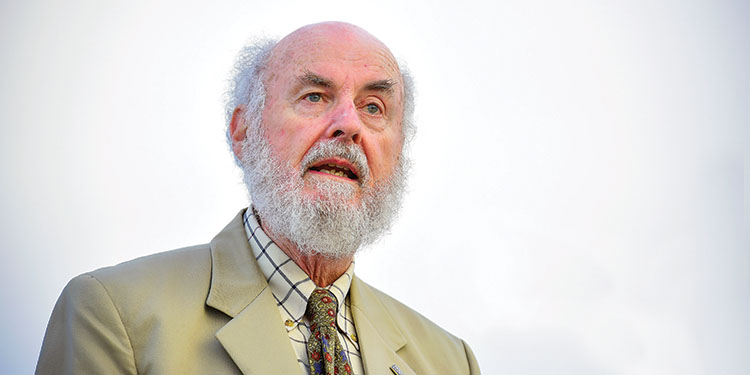
By Colleen Gallion
What were you doing 30 years ago? Stop and notice how that question makes you feel. Did you squint a little as you tried to remember what you were up to in 1996? The question alone can bring up wistful nostalgia, the weight of regret, or sheepish embarrassment, followed by gratitude that social media didn’t exist back then.
Thirty years is a significant milestone for any institution. For Parking Today, reaching this anniversary isn’t just about looking back at three decades of gate arms, garage designs, and technological shifts. It’s about the unique psychological weight that “round numbers” carry. In our professional and personal lives, milestones act as forced checkpoints. But as we celebrate this magazine’s 30th year, we face a choice: Do we treat a milestone as a museum of past achievements, or as a launchpad for the next era?
The psychology of the ‘round number’
Humans are naturally wired to find meaning in temporal landmarks. Research suggests that “9-enders” — people aged 29, 39, or 49 — are more likely to make big life changes, for better or worse. Milestones strip away the day-to-day grind and force us to look at the big picture.

The danger, however, is the “nostalgia trap.” It’s easy to look back at the “good old days” and feel a sense of loss for simpler times. Nostalgia is often accompanied by counterfactual thinking — the “should-have, could-have” ruminations that lead to regret. To make the most of an anniversary, we must shift our gaze from the rearview mirror to the windshield.
Audit your skills, not just your memories
When we hit a major milestone, the first instinct is to create a timeline of events. Instead, try creating a timeline of capabilities.
Don’t just ask, “What did I do in 1996?” Ask, “What skills did I develop in 1996 that still serve me today?” You can apply the same question to your team or your company. Although I’ve always been a creative problem solver, 1996 was the year I started to learn the power of effective delegation. That is a skill that still serves me well. I also learned how to send a fax to multiple destinations simultaneously. That is a skill that didn’t stand the test of time!
The ‘future-perfect’ exercise
To avoid getting bogged down in the past, use the milestone to conduct a “future-perfect” brainstorming session. Imagine the 40th or 50th anniversary of your career or company. Write the headline for that future date today.
• What problems did you solve in that intervening decade?
• How did you adapt to the “disruptions” that people are currently afraid of?
By visualizing the next milestone as an accomplished fact, you transform the current anniversary from a finish line into a waypoint. Regret is almost always rooted in a perceived lack of time; by looking forward, you remind yourself that the clock is still ticking in your favor.
Replace ‘What if?’ with ‘What’s next?’
Regret is the byproduct of comparing our reality to an idealized version of the past. This can look like mourning a lost contract or a failed partnership from five years ago.
To break this cycle, practice strategic reframing. Every “failure” in the last 30 years was actually a data point. What lessons did you learn from losing that contract? What did you learn about your personal values as you recovered from the failed partnership? Failure is a value judgment and one that never serves us well. This one can be tricky, so a game I like to play is pretending that something I see as a failure was, in fact, on purpose. For example, “Of course, I had a massive panic attack after my senior recital! If I hadn’t, I wouldn’t have started down the road of self-improvement that ultimately led me to become a coach!”
Cultivate ‘generative’ celebration
If you remember the first edition of Parking Today, the most valuable thing you can do is mentor the “Year 1” professionals. Psychologically, generativity — the concern for establishing and guiding the next generation — is the ultimate antidote to the mid-life or mid-career slump.
When you use a milestone to give back, you aren’t just celebrating your own longevity; you are investing in the industry’s future. This creates a legacy that is active rather than static. Whether it’s sharing technical expertise or leadership philosophy, teaching others ensures that your 30 years of experience become a foundation for someone else’s growth.
Driving forward
As you flip through this anniversary issue, enjoy the stroll down memory lane, but keep your walking shoes on. Milestones aren’t meant to be destinations. They are rest stops — places to refuel, check the map, and ensure you are still heading in the right direction. Nostalgia is a wonderful place to visit, but it’s a terrible place to park.
Here’s to the next 30 years of innovation, adaptation, and looking ahead.
COLLEEN GALLION is an ICF-certified professional coach whose passion is supporting entrepreneurs and founders in building healthy and sustainable teams. For more information, visit www.gallioncoaching.com.