


Understanding three professional archetypes — innovative Explorers, systematic Town Builders, and sustaining City Enablers — can help parking professionals recognize their roles and appreciate diverse talents driving industry progress.
By Jerry Green
Editor’s note: In the first of a two-part series, Jerry Green describes what he calls the three Professional Personality Types — Explorers, Town Builders, and City Enablers — and examines the first two in detail, while giving examples of how they have affected the parking industry. In a second article scheduled to appear in a future issue of Parking Today, Green will elaborate on the third type.
It’s often said that many professionals in the parking industry don’t so much plan their careers as discover them, sometimes by accident and other times by opportunity. Often, the role they find themselves in perfectly matches their natural Professional Personality Type (PPT). In this two-part series, we will explore three professional archetypes — Explorers, Town Builders, and City Enablers — and examine how these personality types shape not only the parking and mobility industry but also the broader world of innovation, infrastructure, and governance.
Reflecting on my own 30-plus years in IT development, I can relate to the restless question: “What do I want to do with the rest of my working life?” Like many, I wrestled early on with the trade-off between financial security and personal fulfillment. My path, through roles at companies like Conrail and Vanguard Mutual Funds, took years of exploration before I finally found the balance among creativity, innovation, and real-world impact.
I do not share these insights as an all-knowing expert — far from it. They’re simply lessons collected throughout three decades of trial, error, and the occasional parking citation. What follows is not prescriptive advice but a lens through which you might see your own journey more clearly.

Foundation of progress
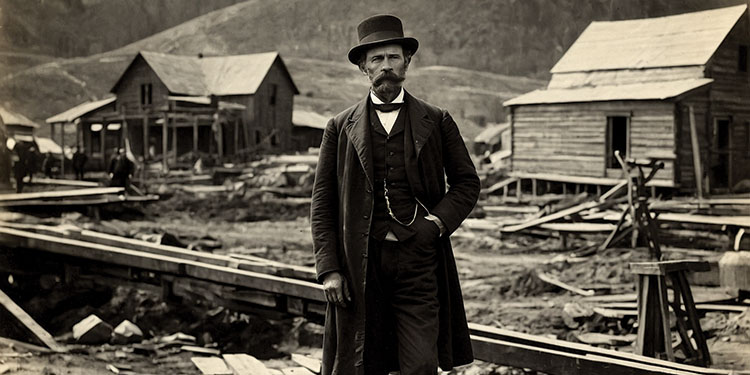
To better understand the concept of the three PPTs, imagine the early period of western expansion in the United States and the distinct personality types of the professionals who drove development. Individuals like Lewis and Clark were early Explorers who focused on mapping and exploring land in the western U.S. They mapped territories that were unknown to most Americans, leaving detailed information for those who would follow. Rather than developing any particular region, they focused solely on exploring and charting whatever lay beyond the next hill.
Town Builders followed, envisioning communities and establishing basic infrastructure like stores, farms, ranches, and schools. These dynamic leaders were able to anticipate increased development and opportunities fueled by river navigation and commerce along railway routes.
As towns expanded, City Enablers stepped in to design systems for growth, improving agriculture, building businesses, instituting governance for increasing populations, and managing services such as water, sanitation, and education.
None of these PPTs are better than the others; in fact, just as in the past, every thriving industry today needs all three. Together, they form the foundation of progress, from the dreamers who imagine the future, to the builders who construct it, and to the stewards who sustain it.
Three archetypes that move every industry
Nearly every profession, from tech to transportation, thrives because of the contributions from these three types:
• Explorers, who dare to imagine what’s next
• Town Builders, who roll up their sleeves to transform vision into structure.
• City Enablers, who ensure that what’s built remains humming smoothly, ethically, and sustainably
This first article focuses on Explorers and Town Builders, the dreamers and doers whose partnership transforms imagination into infrastructure. In Part Two, we will discuss the City Enablers, the ones whose steady hands keep cities, systems, and people moving long after the ribbon-cutting ceremony.
Today, the parking and mobility industry sits uniquely at the crossroads of technology, infrastructure, and policy, where ideas meet operations and public service meets performance metrics. Understanding which PPT best characterizes you and your colleagues helps you to appreciate the diversity of talent required to keep smart cities functional and innovation alive.

The Explorer — turning ideas into light
A quintessential Explorer, the restless innovator Thomas Edison redefined what was possible. He didn’t just invent the light bulb; he reimagined invention itself. After creating the world’s first dedicated research-and-development center at his laboratory in Menlo Park, California, Edison institutionalized curiosity and the art of persistent experimentation.
That same spirit thrives in today’s parking industry. Explorers are the visionaries testing the use of artificial intelligence (AI) in enforcement, rethinking curb management, and piloting cashless and frictionless payment platforms. They thrive in uncertainty, take risks others avoid, and find opportunity in chaos.
Edison famously said: “I have not failed. I’ve just found 10,000 ways that won’t work.”
Explorers in parking innovation share that same mindset. They are the ones willing to evaluate new apps, experiment with dynamic pricing, and pilot autonomous enforcement, learning from missteps, refining systems, and moving the industry forward one iteration at a time.
Explorers exhibit the following key traits:
• Innovation and creativity: They constantly generate new ideas and solutions.
• Curiosity: They are always learning, evaluating, and asking, “What if?”
• Risk-Taking: They are comfortable with uncertainty and occasional failure.
• Resilience: They are able to recover quickly when the going gets rough.
• Vision: They see potential where others see impossibility.
Explorers remind us that every breakthrough begins with someone who’s willing to think differently, whether lighting a city street in 1880 or installing the first smart curb sensor today.
The Town Builder — creating order from innovation
If Edison imagined the light bulb, the investment banker J.P. Morgan built the grid that made it shine. Morgan was not an inventor; he was a system architect, turning discovery into durable industry. Known as one of the most influential financiers in American history, he epitomized the Town Builder: pragmatic, disciplined, and unafraid to bring structure to chaos.
Morgan understood that growth required stability. His ability to see interlocking systems — how industries, markets, and people connected — enabled him to anticipate crises and design large-scale solutions.
The following examples exemplify Morgan’s Town Builder mindset:
• General Electric (1892): He consolidated Edison General Electric and Thomson-Houston, anticipating a unified future of electrification.
• U.S. Steel (1901): He merged competing companies to stabilize pricing and bring long-term sustainability to an erratic industry.
• The Panic of 1907: When the banking system teetered on collapse, Morgan personally organized a multi-bank rescue, effectively serving as America’s first central banker several years before the creation of the Federal Reserve.
Today’s parking and mobility leaders perform similar acts of quiet heroism. As cities shift from coin meters to digital platforms, Town Builders are the ones designing integrated ecosystems, connecting enforcement databases, payment systems, and mobile apps into coherent, scalable operations.
Their genius lies not so much in invention, but in execution. They turn creative sparks into civic systems that serve millions, ensuring the power stays on, the meters sync, and the budget balances.
Town Builders might not chase headlines, but they deliver results. Without them, every grand idea stays parked in neutral.
When Explorers and Town Builders collaborate
When Explorers and Town Builders collaborate, progress happens. Edison needed Morgan to commercialize his ideas; Morgan needed Edison’s imagination to build his empire. The same interplay exists in every modern parking agency or startup.
Explorers see possibility. Town Builders see process. Together, they create transformation, even if the process sometimes feels like two GPS systems arguing about
the route.
In our field, that dynamic plays out between the tech innovator developing an AI-based management and enforcement system and the municipal leader tasked with actually implementing it. Explorers say, “Let’s launch next week.” Town Builders reply, “Let’s run a pilot, verify the funding, and brief the legal department.” Both approaches are valid because progress requires momentum and method.
The healthiest organizations honor both mindsets. Explorers fuel innovation. Town Builders ground it in systems that will work on Monday morning.
Modern reflections: the power of transition
Here’s the interesting part: None of us stays “parked” in one lane forever. Over time, Explorers can evolve into Town Builders, and Town Builders frequently transition to the role of City Enablers, those skilled professionals who fine-tune, sustain, and lead with wisdom born from experience.
Professor Donald Shoup, the late UCLA economist and author of “The High Cost of Free Parking” (2005), is a perfect example. He began as an Explorer, challenging decades of parking orthodoxy with radical ideas about economics, pricing, and urban equity. His early work disrupted conventional thinking as well as plenty of city council meetings.
Shoup’s conceptual innovations took the form of the following parking policies:
• Abolishing minimum parking requirements. He argued that zoning codes that force developers
to provide a fixed minimum number of parking spaces for every new building are a primary source
of urban land use problems.
• Charging the right price for curb parking. He called for performance-based pricing to ensure that curb parking is well used but also readily available.
• Returning parking revenue to the neighborhood. To make variable-rate curb pricing politically palatable and socially equitable, he advocated for the creation of parking benefit districts.
Over time, Shoup became a City Enabler, transforming those ideas into policy frameworks that helped cities worldwide. His “performance-based pricing” and “parking cash-out” programs are now standard practice, proof that explorers can mature into enablers without losing their curiosity.
Similarly, J.P. Morgan shifted from Town Builder to City — or in this case National — Enabler during the Panic of 1907, leveraging his influence to stabilize the economy. Thomas Edison was always an Explorer by nature, but he shifted into the role of a Town Builder with the founding of the Edison Electric Light Company, channeling inventive energy into successful business ventures.
Balancing public accountability with technological evolution
In our own era, David G. Onorato, PTMP, the executive director of the Pittsburgh Parking Authority, exemplifies the modern evolution from Town Builder to City Enabler. Under his direction, Pittsburgh has been recognized for integrating technology, improving enforcement efficiency, and maintaining public trust, all while keeping mobility systems adaptive to change. Onorato’s approach reflects the modern parking leader’s challenge of balancing public accountability with technological evolution.
Top Innovations at the Pittsburgh Parking Authority include:
• Pay-by-plate technology. In 2012, Pittsburgh became the first U.S. city to commit fully to an on-street pay-by-plate system on a large scale. This involved replacing coin-operated single-space meters with multi-space kiosks in which customers enter their license plate number to pay, facilitating credit and debit card payments.
• Mobile parking payment apps. In 2015, Pittsburgh rolled out multiple phone apps to offer customers an option for mobile payment for on-street and surface lot parking. By January 2019, nearly 50% of parking transactions were conducted through the phone app.
• Automated parking enforcement (ticket-by-mail). The Pittsburgh City Council unanimously approved legislation in March 2024 to amend the city code, allowing the parking authority to issue on-street tickets by mail. This process includes using AI cameras and automated license plate recognition (LPR) technology for enforcement in areas like smart loading zones, bike lanes, surface lots, and street cleaning zones to improve efficiency and accuracy.
• Smart loading zones. Monitored by cameras and AI technology, paid smart loading zones make it easier for delivery drivers to park for short periods. The program uses LPR for automatic payment and has resulted in a reported 95% reduction in double parking instances in these zones.
Onorato’s success lies in blending the Explorer’s openness to technology, the Town Builder’s mastery of systems, and the Enabler’s commitment to public trust.
Lessons for today’s parking professionals
Recognizing when you’ve transitioned from one PPT to another is key. It doesn’t mean abandoning your roots; it means integrating them. The Explorer who once broke new ground may now be mentoring others. The Town Builder who once constructed systems may now be ensuring they endure. Growth is not about changing who you are; it’s about expanding who you’ve become.
Our industry thrives when all three mindsets coexist. Explorers challenge limits and spark innovation. Town Builders scale and stabilize those ideas. City Enablers sustain them ethically and efficiently.
Modern leaders often wear all three hats, sometimes all before lunch. Whether you’re testing new AI enforcement tools, coordinating multiple vendors, or refining citywide parking policy, your ability to switch between these modes is what defines leadership in the modern era.
From the electric grid to the smart curb, every great transformation follows the same rhythm: explore boldly, build intelligently, and enable responsibly.
The future of parking will be written by those who embrace all three approaches, turning vision into value and value into lasting impact. Whether you see yourself as an Explorer, a Town Builder, or an Enabler, remember that real progress begins when the three work together.
Curious about what Professional Personality Type best characterizes you? Take a quick test and find out!
JERRY GREEN is the president and chief information officer of Caryl Technologies LLC. He can be reached at [email protected].