





By Brian Wolff
As technology proliferates in parking, the job of a parking professional is getting harder, not easier.
Before technology, parking cars was less complicated. Location or price were the two big levers, and payment choices were cash or check. That may be an overly simplistic characterization because cash and checks had their own complications, like rampant theft and insufficient funds, but the choices were limited and generally more manageable.
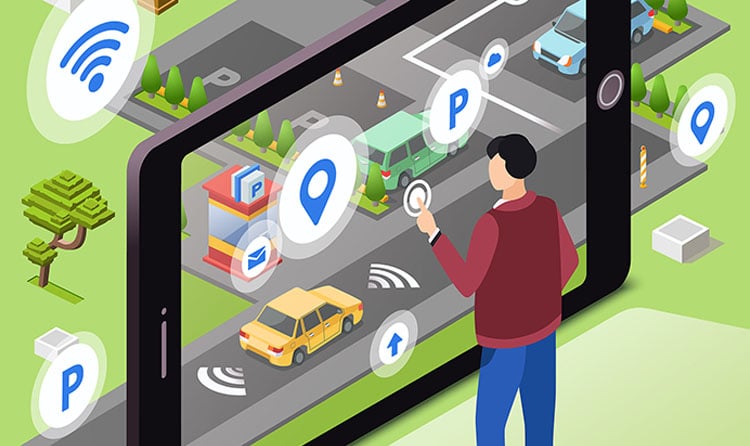
Explosion of choices
Today, the ongoing technological explosion comes with many challenges, especially all the choices. On my “Harder Than It Looks” podcast earlier this year, Todd Tucker — the chief operations officer of Parking Revenue Recovery Services, Inc. — noted how hard it is to create differentiation among his competitors. Selling has become more frustrating and difficult because the noise from the proliferation of choices is so loud.
On the flip side, the operator must make technology choices from the exploding array of new vendors. During a session at this year’s Parking Industry Expo (PIE), Bob Murray — the chief technology officer for CampusParc — highlighted a further problem: Each of these solutions doesn’t quite cover all the scenarios a parking operator might encounter, which leaves gaps.
Those gaps create exceptions, and exceptions create unhappy, unsatisfied, or angry customers. What’s a company to do? Most times they are left with three choices:
1 – “Force” a vendor to tweak their product.
2 – Elicit a promise from a vendor for a feature that exists in concept only somewhere in the ether.
3 – Fill the gap themselves, if they are brave enough to try.
Now instead of parking cars, parking operators face growing pressure to become technologists themselves.
Labor never goes away
Once those operators embrace the technology approach, the danger they face involves viewing labor savings as a major benefit of deploying the solution. It’s been my experience during the two decades I’ve been involved in technological change, in cloud computing and parking, that productivity does rise dramatically with the introduction of new tech, but the labor does not and cannot go away completely. Rather, it changes.
That change introduces yet another challenge to manage. Are operators going to build the technology themselves or are they going to buy all or some of it to complete the solution? Full labor is therefore not saved. Instead, it is shifted in the form of developers if they build it in-house or vendor margin if they buy it.
In addition to build or buy, another aspect of labor replacement often confounds operators. Operators who fully embrace technology must decide if the labor they deploy to handle exceptions, inevitably created by technology, will be provided from within or sourced from outside. Expense cannot be a driver because either path is expensive. One involves either staffing with a software component while the other is a solution that has a technology, labor, and margin component.
AI and the illusion of labor savings
The latest technological innovation, artificial intelligence (AI), is once again shining a light on the illusion of a giant labor savings trade-off. We’ve all seen the commercials where humans are speaking with Google Gemini AI covering a wide range of topics. It’s not a stretch to think Gemini could just as easily handle a customer service call from any parking customer. The truth is it’s much harder than it looks. AI will eventually be smart enough to learn and to solve issues that seem very repetitive. However, today, successful AI deployment in any customer service environment demands these AI agents be given a very specific set of guardrails around the questions that can be asked and the answers that can be given, all based on the specific rules and configurations of the customer service setting.
Those guardrails must be put there by something or someone, and that something or someone is going to be expensive and require expertise that is in very high demand today. In addition to the expertise needed to engineer the solution, many other considerations will arise, like redundancy and quality that must be integrated into the solution. It turns out the AI goes down and doesn’t always give consistent answers, just like a human. Companies looking to capture the value created by AI will need to be prepared to invest a big chunk of the savings into the aspects of the solution that will make it a consistent, reliable, and effective customer service solution, because that’s the job that must be done.
In the end, technological change is making the parking job much more interesting and much more complicated. Operators must declare if they are going to be a builder of technology or a buyer. Both options have their share of challenges. Although saving money may be top priority, my advice is to temper that expectation with the understanding that delivering a first-class experience is expensive no matter which way you proceed. Choose wisely!
BRIAN WOLFF is the president & CEO of Parker Technology. He can be reached at [email protected] or visit www.parkertechnology.com.